A Moon For The Misbegotten review: Druid impress with take on Eugene O'Neill's emigrant tale
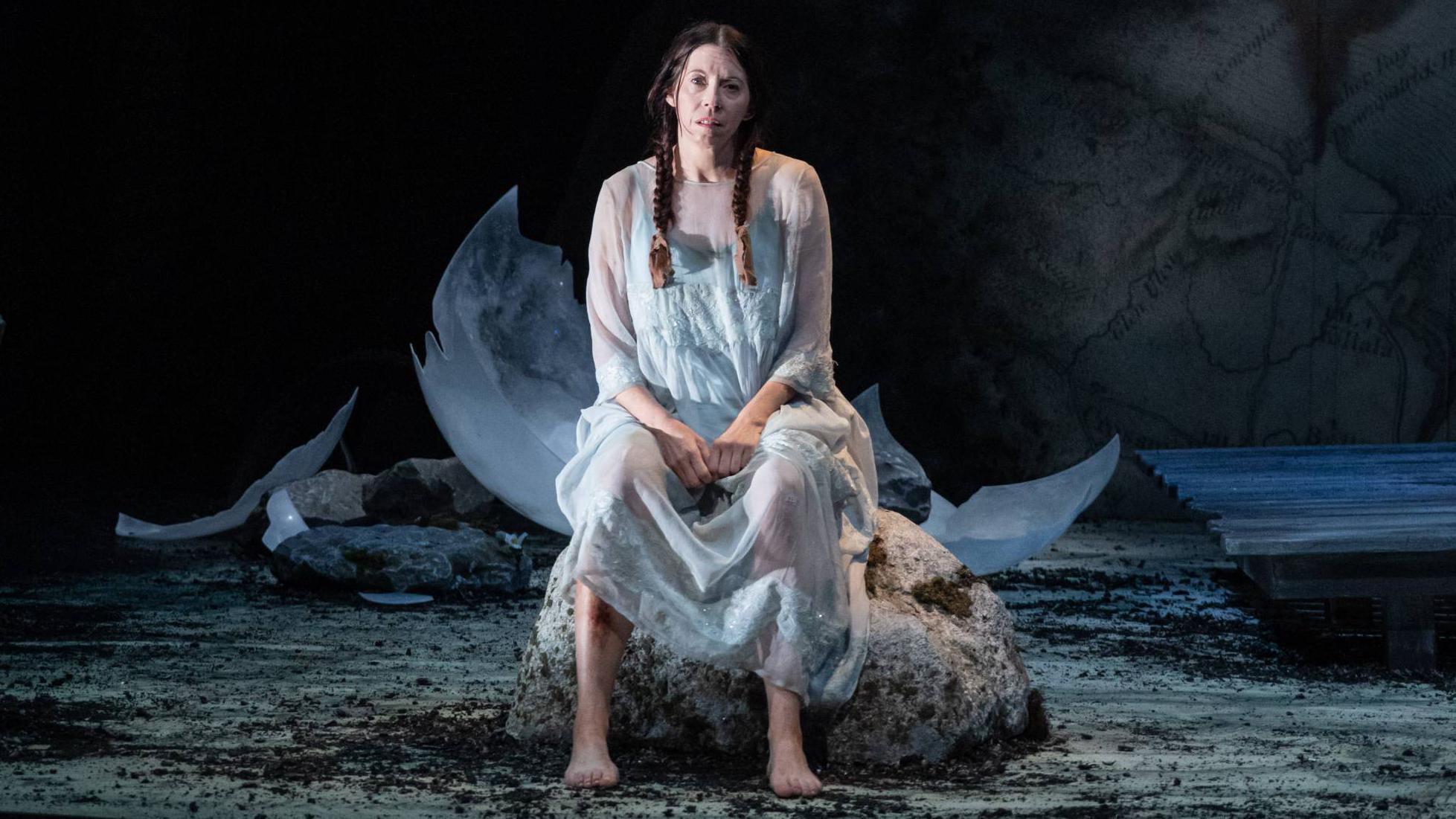
Eileen Walsh as Josie Hogan in A Moon for the Misbegotten. Picture: Ste Murray
★★★★☆
Dion Boucicault’s lively Victorian melodrama and Eugene O’Neill’s sombre, wordy seem unlikely bedfellows. But Garry Hynes has yoked them together this year in a two-play series of productions she has titled
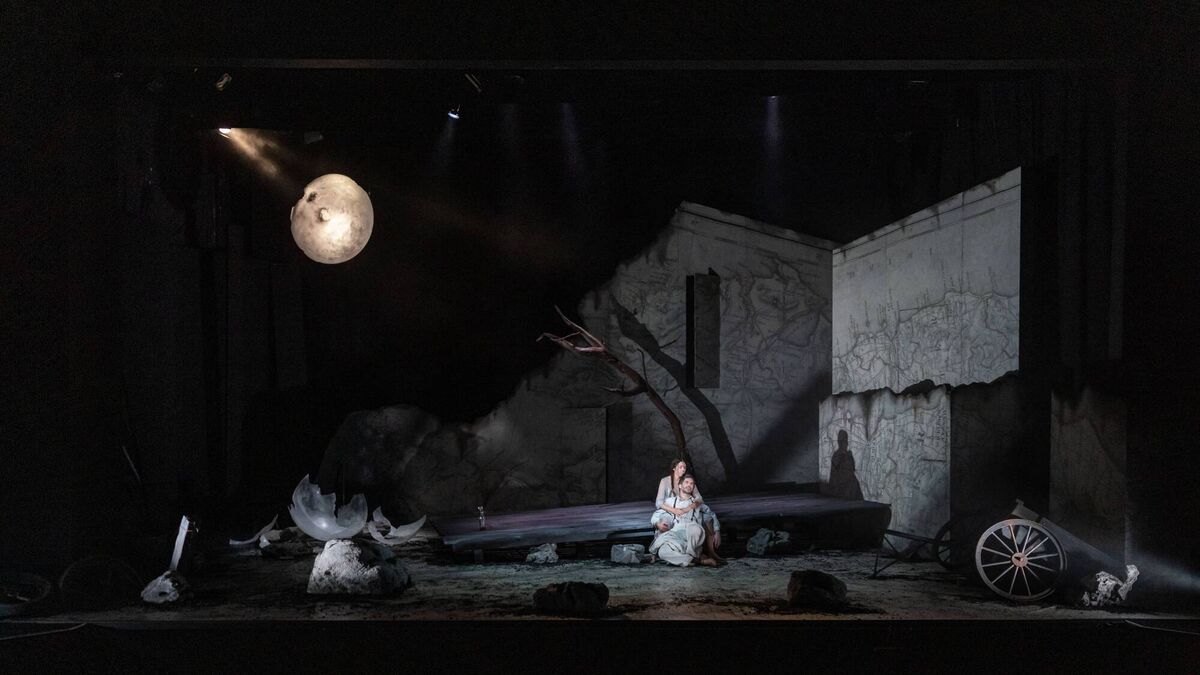
At the Dublin Theatre Festival, after its run in Galway, we have O’Neill’s sequel to In Hynes’s cleverly intertextual staging, the shadow of the hit summer show is long. There, designer Francis O’Connor gave us a giant folded Ordnance Survey map of Ireland as the backdrop. Here, that reappears, torn and burned, a suggestive symbol of things this play unpacks. Is this the result of the postcolonial struggle? A broken, scorched country? Or the thing you can’t leave behind: a legacy of exile?
A windmill, like the one on Dorothy’s farm in seems to grow out of the Mayo coastline. Some kind of America grew out of these shores, Hynes suggests, as she drags O’Neill back towards a land he never visited. We’re not in Kansas anymore, but we are, in a very important sense, slap bang between Donegal and Connecticut.
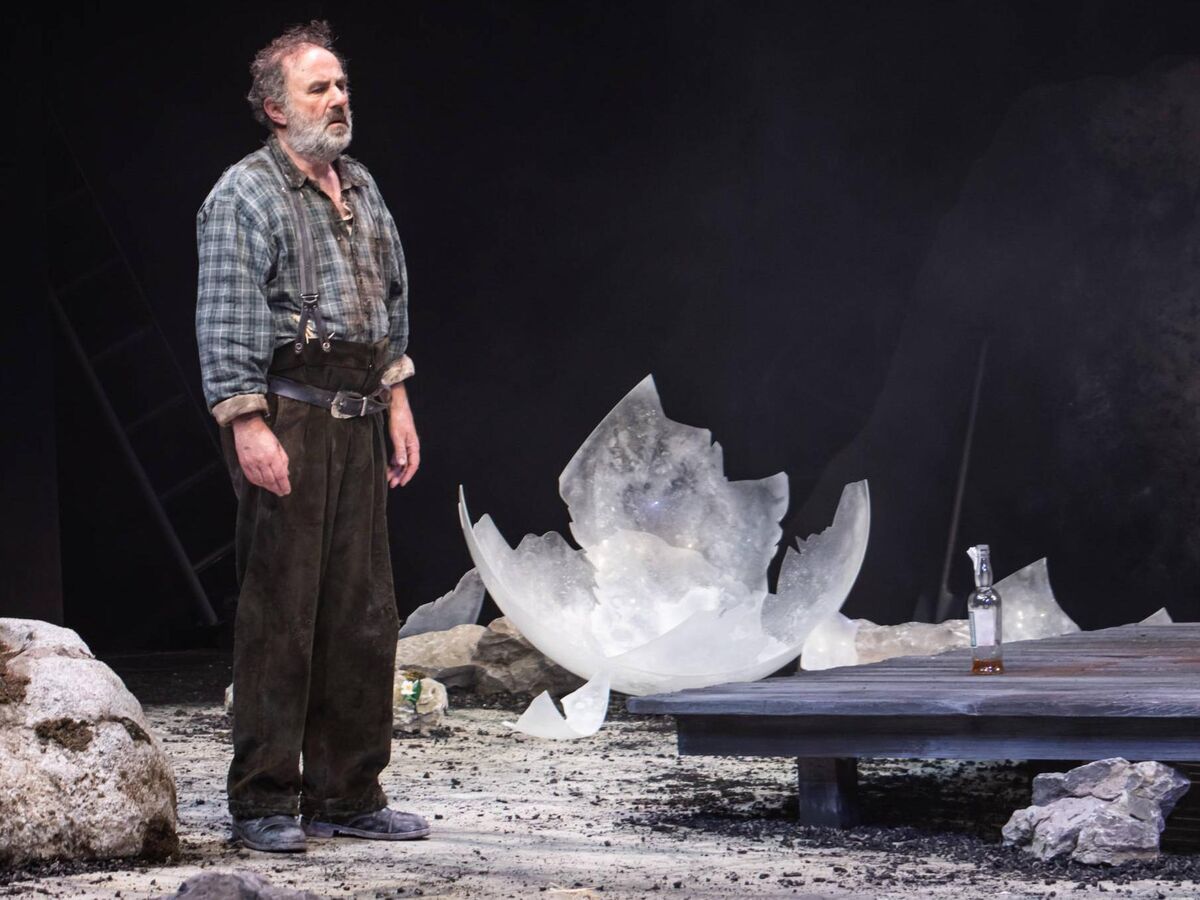
Phil Hogan (a perfectly cast Lorcan Cranitch) is the Irishman transplanted to a world of searing sun and cold, clear night skies. If his cattle could eat rocks, he says, his Connecticut holding would make a fine dairy farm. Abandoned by his sons, he lives with Josie, a hurley-wielding Eileen Walsh, all bravado and vulnerability.
Their opening scenes are alive to language and movement, with Cranitch channelling an untamed maleness, while Walsh excels in that thing she does so well: turning lines on their head, finding comedy and heartbreak side by side in unexpected places.
If Boucicault’s characters were exploited by colonists, here the immigrant Irish face the might of oil money, embodied by Rory Nolan’s rich landholder, T Stedman Harder. Capitalism becomes a new C-word for dispossession and domination. And, in another echo of Boucicault, Phil and Josie exaggerate their stage-Irish act to confuse and intimidate their WASP neighbour. Once more, playing the fool becomes a tool of the downtrodden, a cunning disguise of fecklessness.
Into all this stumbles the Broadway boozer – and accidental landlord – Jim Tyrone. In a Panama hat and dusty white suit, played by Marty Rea, he drags all the hopelessness and doomed addiction of Long Day’s Journey up the road with him from the inn.
A plot revolving around blackmail and greed for land, and plenty more Irish stuff, again recalls Boucicault’s own McGuffins. But it leads us somewhere altogether different: the extreme verbosity of O’Neill’s long scene between Jim and Josie. At times, it seems as vast and dusty as the Great Plains. Its stillness and length test even the considerable talents of Rea and Walsh, and perhaps the patience of the audience.
Maybe that’s the point. It is very convincingly a story told by a drunk, from a world in which women are sainted mothers, virgins or whores. Placed firmly in the saint category is Jim’s late mother, as he relates her death – and his hiring of a prostitute on the same train by which he was taking her body back east for burial.
She is not at all the mother we met in , but the idealised mother Jim lies to himself about. We’re in deeply Freudian territory here. It was his mother, we recall, who called him a hopeless failure. It seems this is the role he can’t resist playing. He gives Josie the role not of lover, but of confessor. In a restaged Pieta, Walsh is left holding the broken baby-man, a bewildered look on her face.
“It’s over now. I’m not hurt,” she tells her father afterwards, falling back into the old double act. Really? Many Irish went to America seeking freedom, or escape. Many ended up with more of the same, and perhaps the realisation that freedom and escape are two very different things. Wherever we go, we find ourselves. That precludes any easy answers – not that Garry Hynes is interested in those anyway.