Cork Folk Festival preview: Recalling how Irish radio was so good for trad music
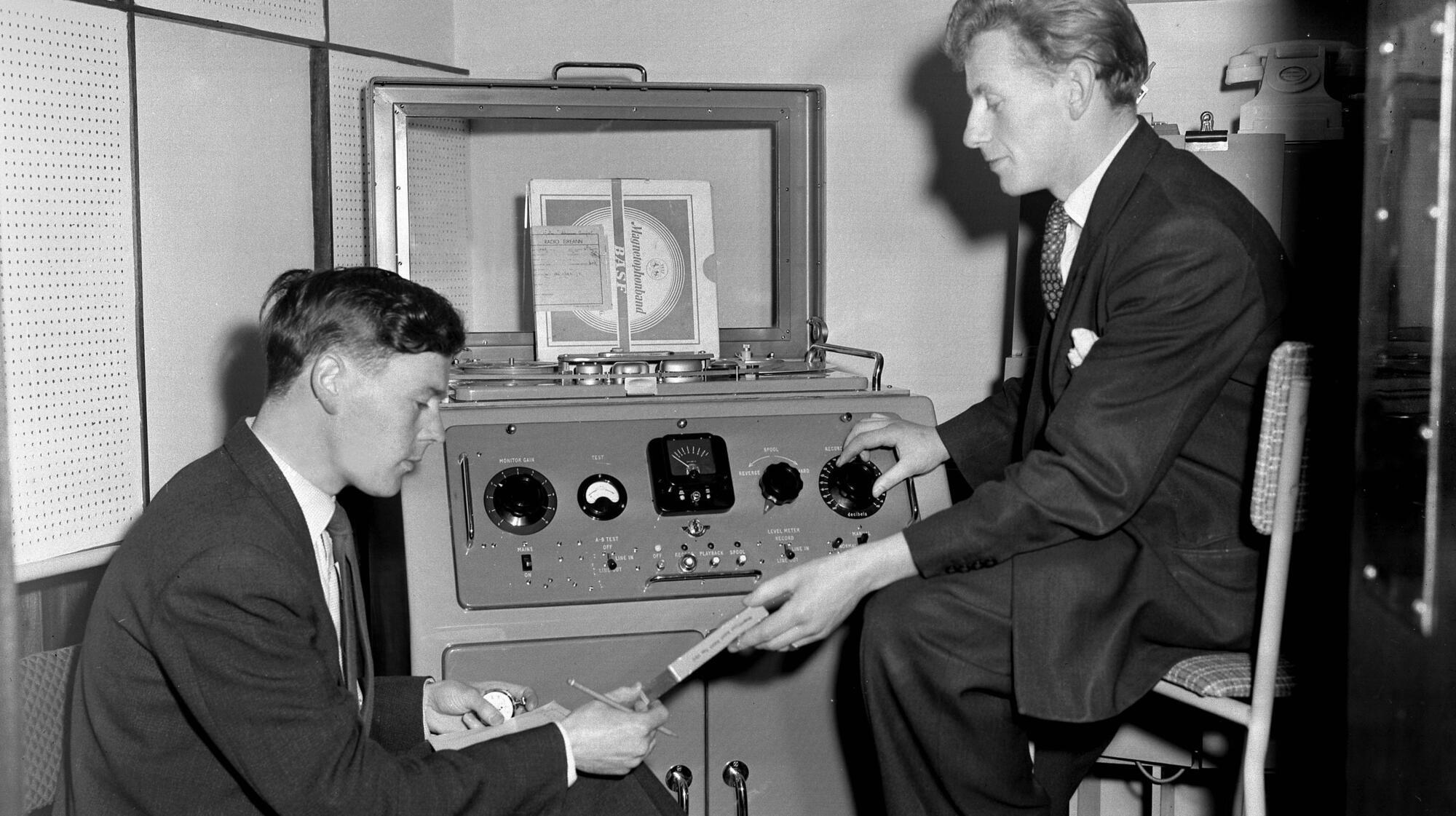
A picture from 1958 showing the new Radio Eireann studios at Union Quay, Cork. Picture: Irish Examiner Archive
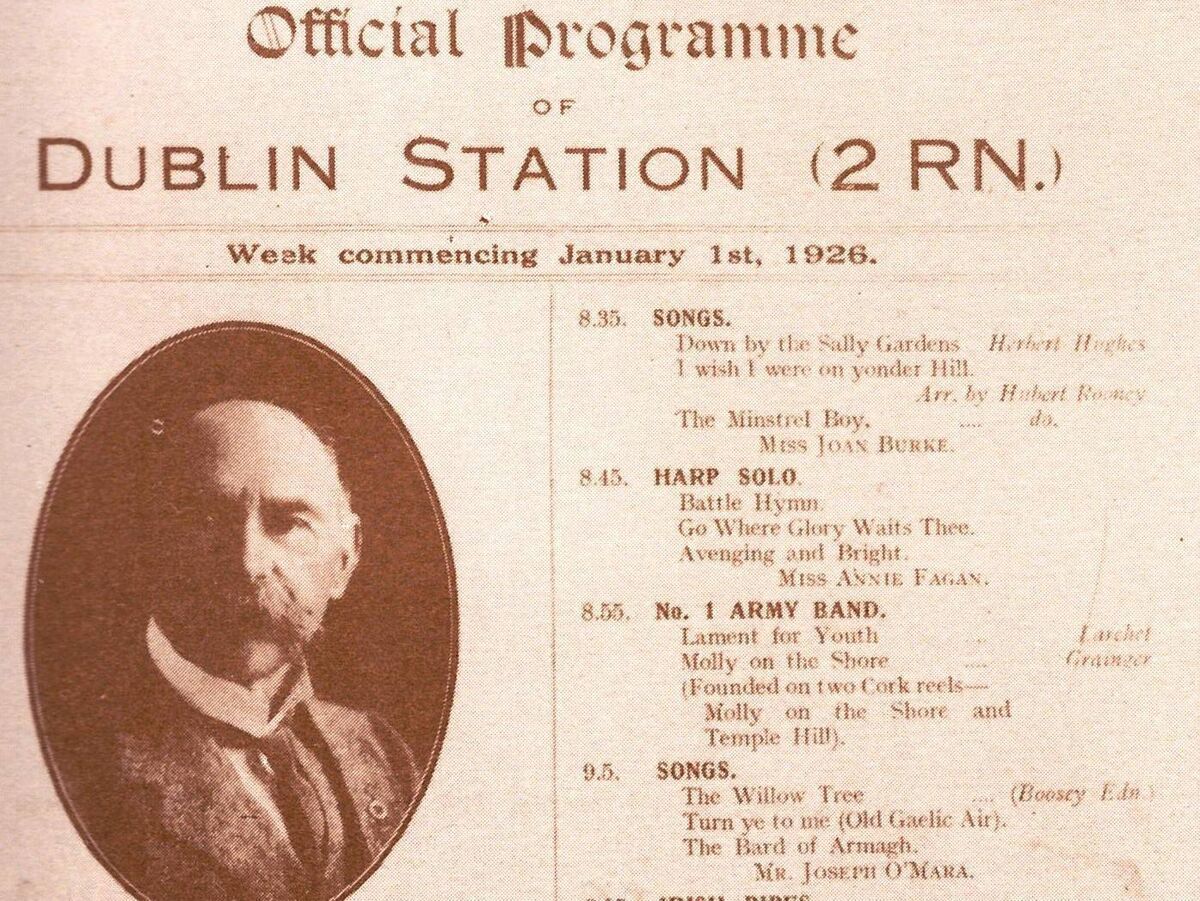
Amid the Army Band numbers, the classical violin and piano solos, and opening speech by future president Douglas Hyde, Irish traditional music played its part in the first-ever broadcast of 2RN on January 1, 1926.
Two uilleann pipers, William Andrews and James Ennis (father of musician Séamus Ennis) performed in the opening concert of the national broadcaster, which after a period as Radio Athlone, was renamed Radio Éireann in 1937 and Raidio Teilifís Éireann upon the advent of Irish television in 1961.
Through technological advances and financial and cultural change, the symbiotic relationship between Irish traditional music and the country’s public service radio broadcaster has endured and developed over the course of a century.
Uilleann piper and former long-serving RTÉ broadcaster Peter Browne, who curates a lecture and a gala concert, both titled ‘Tuning the Radio: 100 Years of Traditional Music on Irish Radio’, at this week’s Cork Folk Festival, says in every decade, technology increased for radio, and traditional music changed.
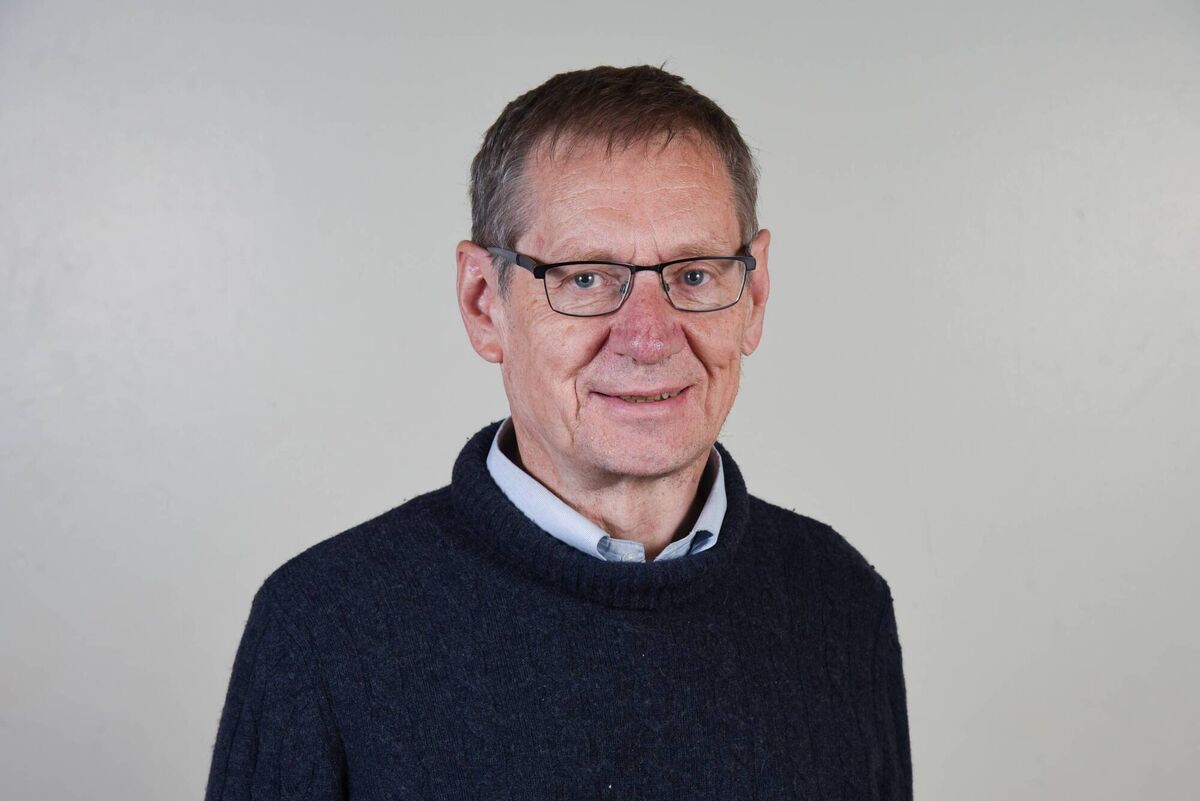
Browne, who joined RTÉ in 1975 as a researcher, becoming a producer and presenting programmes including and in a career spanning over 40 years, admits to a fascination with the connection between radio and traditional music, which was the subject of his masters dissertation.
He traces that relationship from 2RN’s beginnings in a studio in Dublin’s Little Denmark St, with “a very low reach, very primitive transmission equipment, and very few people listening”.
“If you had a good valve radio you possibly would hear, but many people listened on a thing called a cat’s whisker, which was headphones only,” he says. “In some places, people would put the headphones into a sort of enamel basin to give a bit of reverb and they would all be bending down with their ears over the basin.”
From its very early days, he points out, 2RN helped foster the popularity of céilí bands, the first on air being Galway’s Ballinakill Céilí Band in 1929.
Following a studio move to Henry St in Dublin, the post-war era brought more powerful transmitters which increased the station’s reach, and with it the breadth of programme content.
“In 1947 they got the mobile recording unit. A lot of money was put into Radió Éireann because when Éamon de Valera was having a sort of radio duel with Winston Churchill he felt he needed more power in the radio in Ireland,” notes Browne. “That was the first time that the station was able to go round the country and record people in their own places.”
In terms of music, the mobile recording unit allowed Séamus Ennis and later Ciarán Mac Mathúna to record the likes of Willie Clancy and Micho Russell in their local areas. It gave exposure to previously unrecorded musicians and singers from all corners of Ireland, introducing listeners to a breadth of regional styles and creating a valuable archive for subsequent generations.
In Sliabh Luachra, for example, Pádraig O’Keeffe, Denis Murphy, and Johnny O’Leary were among the musicians recorded, as was singer Bess Cronin in Baile Mhúirne, and Kilrush concertina player Elizabeth Crotty.
The 1950s also brought two crucial advancements, Browne adds. “One was the coming of electricity, and that meant that suddenly everyone in the country had radios. The other thing that came after the war was magnetic tape, as opposed to what Séamus Ennis was using, which was acetate discs, which only hold five minutes and are very clumsy, fragile, and you can’t edit them.”
The next decade saw its own revolution in how traditional music was performed, arranged, and perceived by the Irish public. “In the ’60s you have Seán Ó Riada and Ceoltóirí Chualann. This group, which gave rise to the Chieftains, weren’t so much a performing band but they did many radio programmes – Reachaireacht an Riadaigh and Fleadh Cheoil an Radió.”
Raidió na Gaeltachta’s inception in 1972 was a “game-changer”, Browne adds. “And in the ’70s you have programmes like which reflected what was happening in the traditional music scene with Planxty and the Bothy Band, Moving Hearts, and Clannad.
“There’s a very strong connection there and radio was not just reflecting what was going on but was also in a way encouraging it and even helping to create it,” says Browne, whose own 1993 documentaries on Pádraig O’Keeffe gave rise to Castleisland’s annual festival in the Sliabh Luachra musician’s memory.
Today, both radio and the music played on it continue to evolve, as “traditional music is broadening out in different ways – new tunes, new approaches to the music,” he adds.
Browne, whose playing is the subject of Na Píobairí Uilleann’s album launched last week, contrasts the “small community” of musicians in which he learned from pipers Séamus Ennis, Leo Rowsome, and Willie Clancy, with today’s “worldwide fascination with traditional music”. Facilitated by its dissemination on radio, “the burgeoning of the whole thing is just remarkable”, he says.
Saturday’s concert reflects aspects of traditional music and song over the past 100 years as well as featuring up-and-coming musicians including Tove Byers and Cork’s Lily Munday, along with Muireann Ní Shé, Macdara Ó Faoláin, Four Star Trio, Jack Talty, Majella Cullagh, Peadar Ó Riada, Máire Ní Chéileachair, Matt Cranitch, and Jackie Daly.
- Lecture ‘Tuning the Radio’, Thursday 5.30pm UCC Department of Music, Sunday’s Well; Cork Folk Festival Gala Concert, October 10, 8pm, Triskel Christchurch.
- Cork Folk Festival, October 7-11: See: corkfolkfestival.com
Gradam Ceoil 2026 winner Cathal Hayden, Máirtín O’Connor, and Seamie O’Dowd, Triskel Christchurch, 8pm;
Musician and singer-songwriter, Cork’s John Spillane, Triskel Arts Centre 1pm;
Bandon singer-songwriter Martin Leahy, Civic Trust House, 2.30pm;
Breanndán Begley, Cáit Ní Riain, and Colm Murphy, St Peter’s North Main St, 7pm;
Donegal-based folk legends Altan, Triskel Christchurch, 8pm.
Workshops - Sliabh Luachra tunes for melody instruments with Matt Cranitch and Jackie Daly, MTU Cork School of Music, Union Quay, 11am-1pm
Céilí Mór in honour of Timmy the Brit with Ger Murphy and Paul Clesham, Counting House Square, South Main St, 1pm
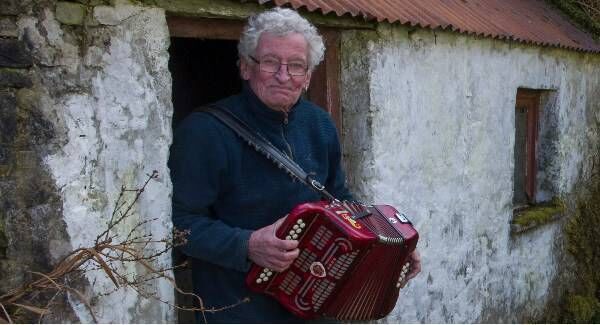
Cork Pipers Club concert featuring Néillidh Mulligan, Naoise Marron, Nicola Uí Aodhgáin, Stevie O’Brien, Muireann O’Connor, and Feargus Walsh, The Merchant, 2.30pm.
Gals at Play with Mary Greene, Mide Houlihan, Suzanne Rowe, Leah Sohotra, and Aoibheann Carey-Philpott, Coughlan’s 5pm;
Tribute to Fermoy-born singer-songwriter Ron Kavana, by Thomas McCarthy, Triskel Christchurch 8pm;
Accordion and concertina concert with Aidan Coffey, Pádraig Mac Aodhgáin, Gráinne Ahern, Ruby Falvey, Amhlaoibh Ó Síocháin Ó Beoláin, The Merchant, 9pm.