Animals review: Blindboy stage adaptation really is a mixed bag
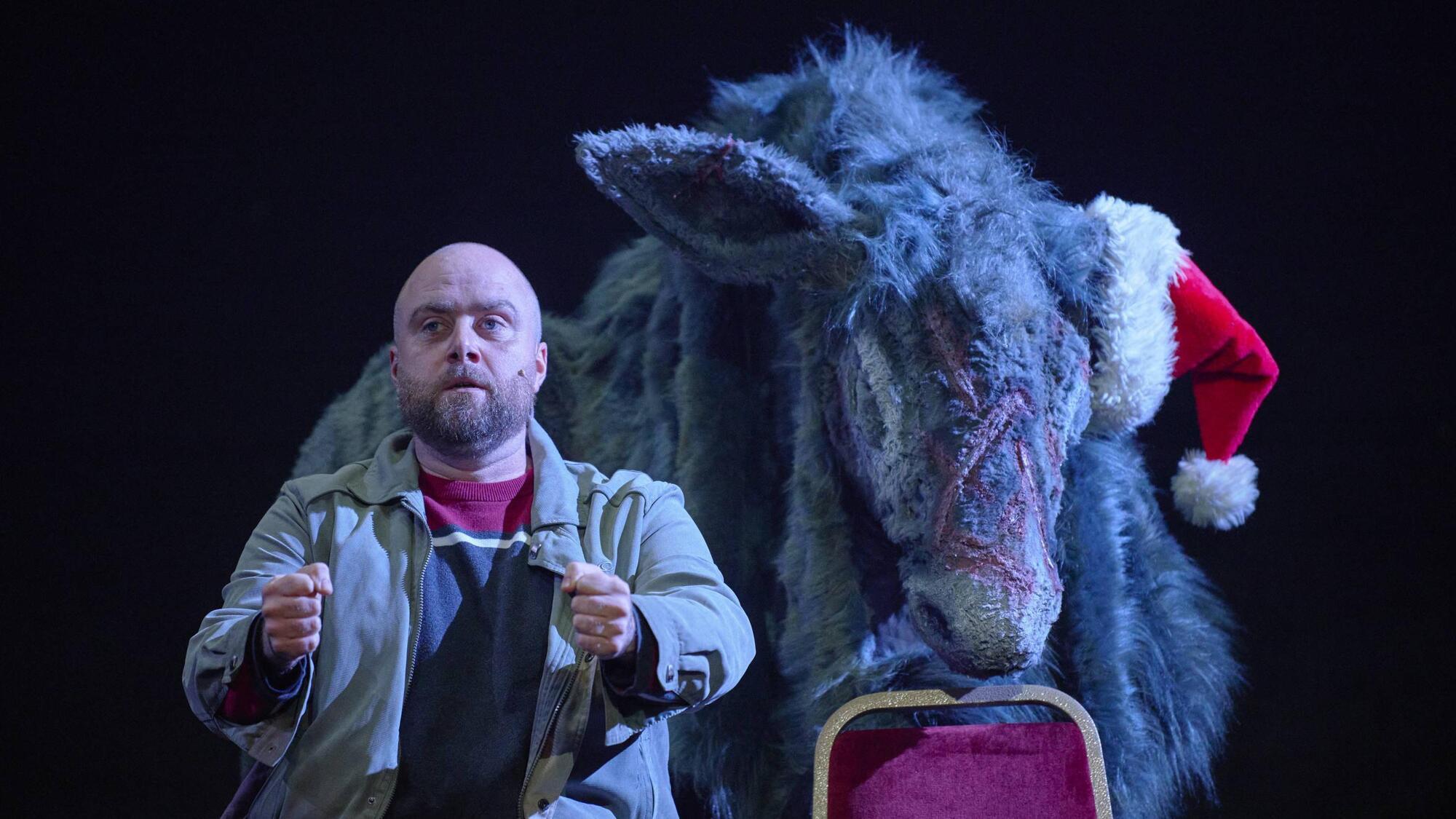
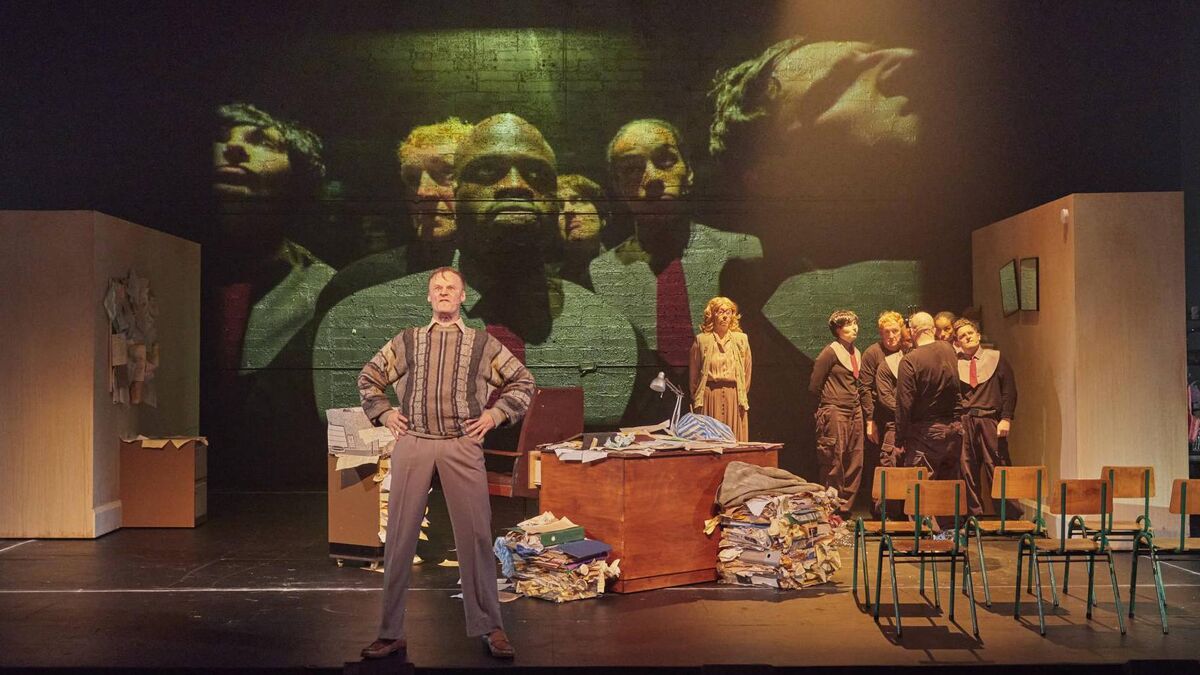
Aidan Crowe in Animals, adapted from the short stories of Blindboy Boatclub, at the Abbey. Picture: Ros Kavanagh
★★★☆☆
is a shaggy beast of a show, fittingly enough. Director Dan Colley, in this sprawling, messy adaptation of short stories by Blindboy Boatclub, makes, in the first few minutes, theatrical magic out of the Limerick man’s freewheeling podcast style.
What follows over the next three-plus hours borders occasionally on theatrical madness. Suffice to say, you’ve never seen shite like this on the Abbey stage before, and never will again. That’s meant literally, by the way, and not as a criticism.
But back to that intro. We find the masked one (or do we?) seated between two ferns and introducing himself. Soon he’s riffing about the nature of theatre and reality, and hopping between allusions and ideas with the autodidactic glee that’s won him so many listeners.
We are invited to consider Bertolt Brecht’s Verfremdungseffekt and Jakob von Uexkuell’s concept of Umwelt. The first refers to the distancing effect of art: not losing yourself in the tale but remaining aware of the artifice. The second concerns the idea that all animal species live in mutually unknowable subjective sensory worlds. Blindboy extends this to individual people too.
Doubly so for the neurodivergent, of whom he is one. Who are we to describe the world to, say, a dog, which smells in stereo and tells time by scent? And how can we ever know how other people experience reality?
That, so far as it goes, might be a blueprint for what follows. Though it’s a teetering structure Colley constructs, unsurprisingly.
We start with a donkey selling Christmas trees, career into a caper involving caffeine-fuelled greyhounds, and find ourselves agog at full-body nude suits cavorting around the gym locker room in a kind of “bropocalypse now” manosphere hellscape.
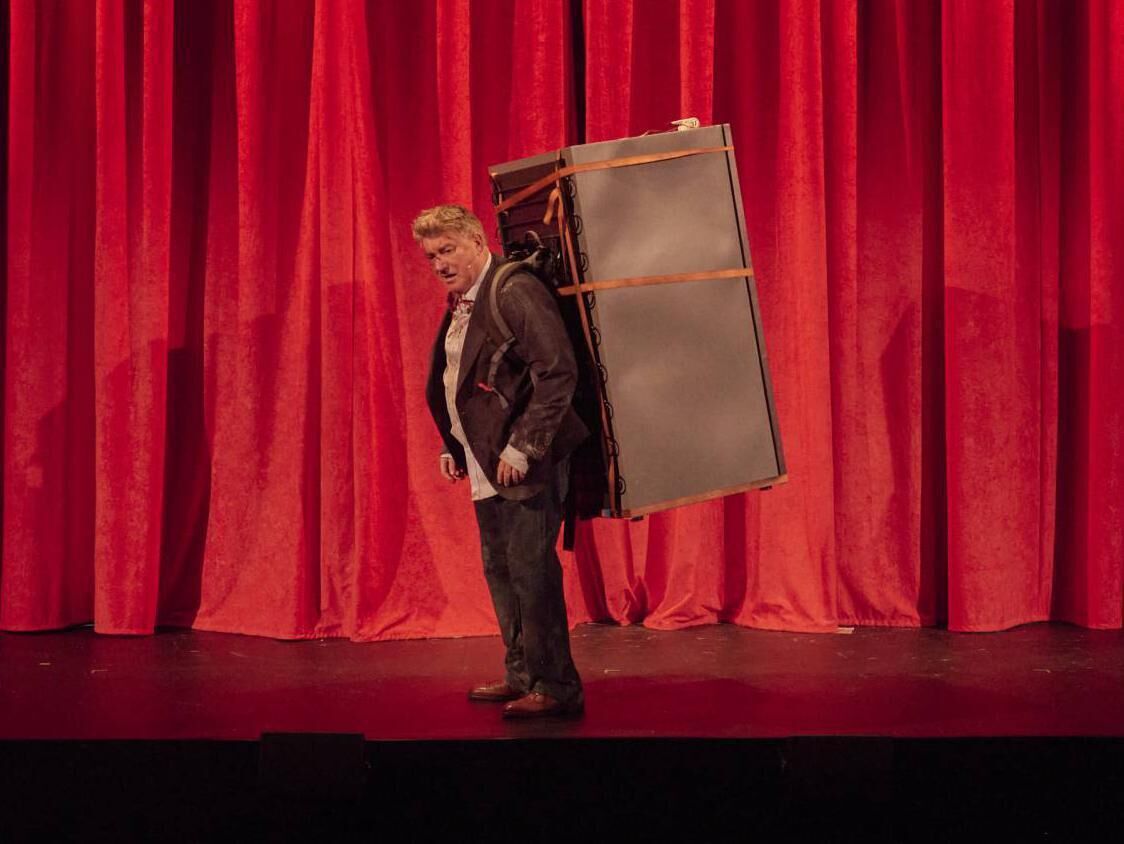
It’s loose, it’s baggy, but Colley, true to form, is never far from a technique or effect that grabs our attention. He also attempts to trace a line through the madness, with Pat Shortt intermittently appearing as a school quiz hero-turned-ruined entrepreneur returning to his “shithole” village with a fridge strapped to his back, all the while cursing “Dublin elitist c**ts”. Shortt is a surprising oasis of calm, and tells his story touchingly.
But not all these tales justify inclusion. A case in point comes after the interval, as Manus Halligan performs a story of ravening faerie cormorants and stolen children. It saps momentum. Elsewhere, while Liz FitzGibbon excels as a feisty solicitor on her dog-track descent, the story is overburdened by a nonsense atomic theory that’s far too close to Flann O’Brien’s familiar one from
The night is somewhat rescued by a staged read-through of an absurd, fantastical and scatological fantasy that pairs Michael Collins and Éamon de Valera in, to use the understatement of the year, an unexpected way. The justification goes back to Blindboy’s introduction: ideas of artistic provocation and catharsis. But this is not what the audience experiences here. The cows ain’t sacred enough no more.
Nonetheless, you’ll probably enjoy this production. You might hate it, of course. Or love some parts and loathe others. But you should not miss it. Go. Go and be charmed, be shocked, be bored, be exasperated. At least you’ll feel you experienced something.
- Until November 7