Author interview: Writer claims AI is the ‘best editor in the world’
Jason Van Tatenhove claims AI tools like Grammarly, Jasper AI, and ChatGPT have made him a better writer
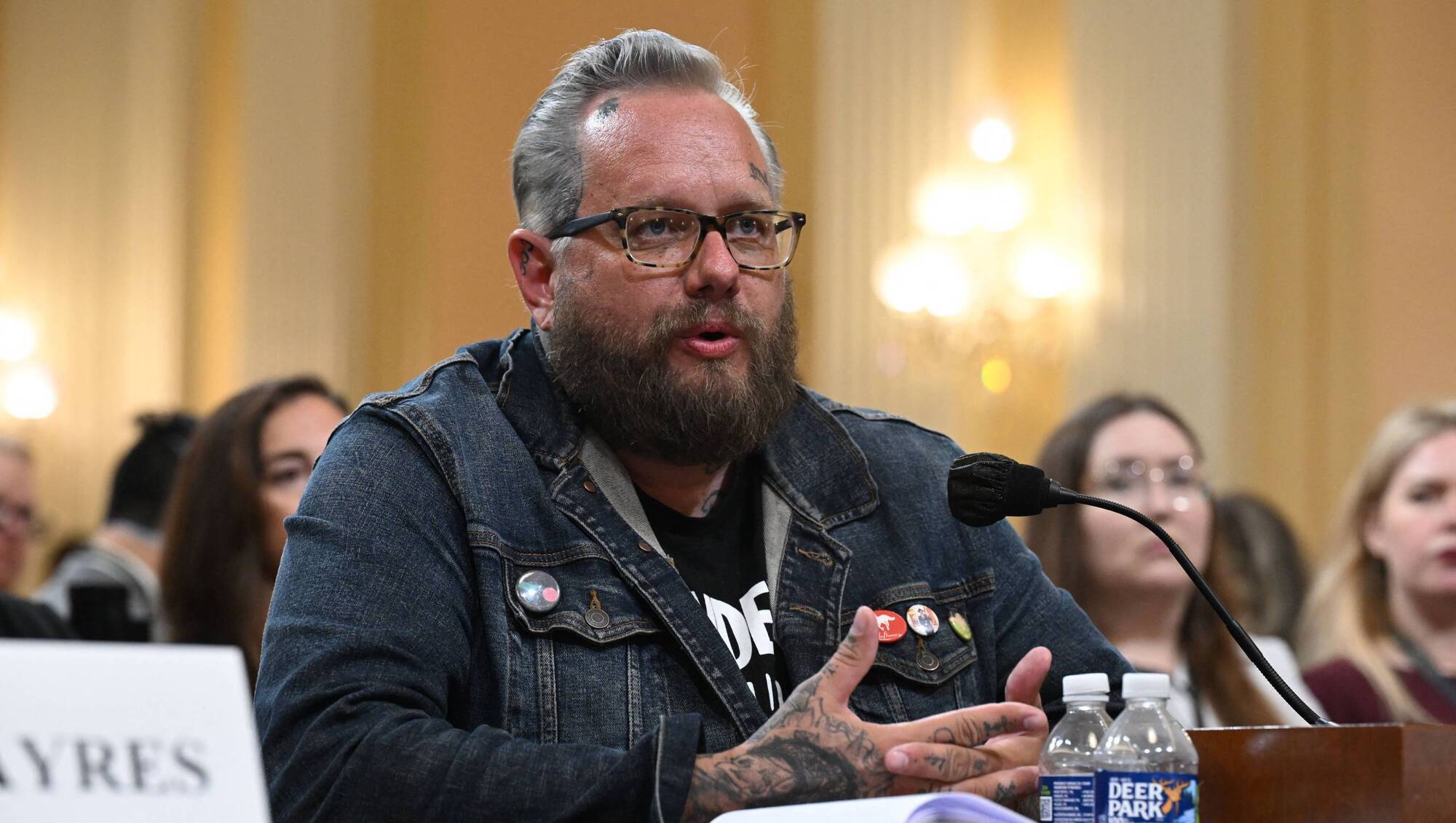
Former Oath Keepers spokesperson Jason Van Tatenhove testifies before a full committee hearing on ‘the January 6th Investigation’, on Capitol Hill on July 12, 2022, in Washington, DC, where the House committee probing the 2021 assault on the US Capitol were examining connections between associates of US president Donald Trump and far right-wing extremist groups. File picture: Saul Loeb / AFP via Getty

Former Oath Keepers spokesperson Jason Van Tatenhove testifies before a full committee hearing on ‘the January 6th Investigation’, on Capitol Hill on July 12, 2022, in Washington, DC, where the House committee probing the 2021 assault on the US Capitol were examining connections between associates of US president Donald Trump and far right-wing extremist groups. File picture: Saul Loeb / AFP via Getty

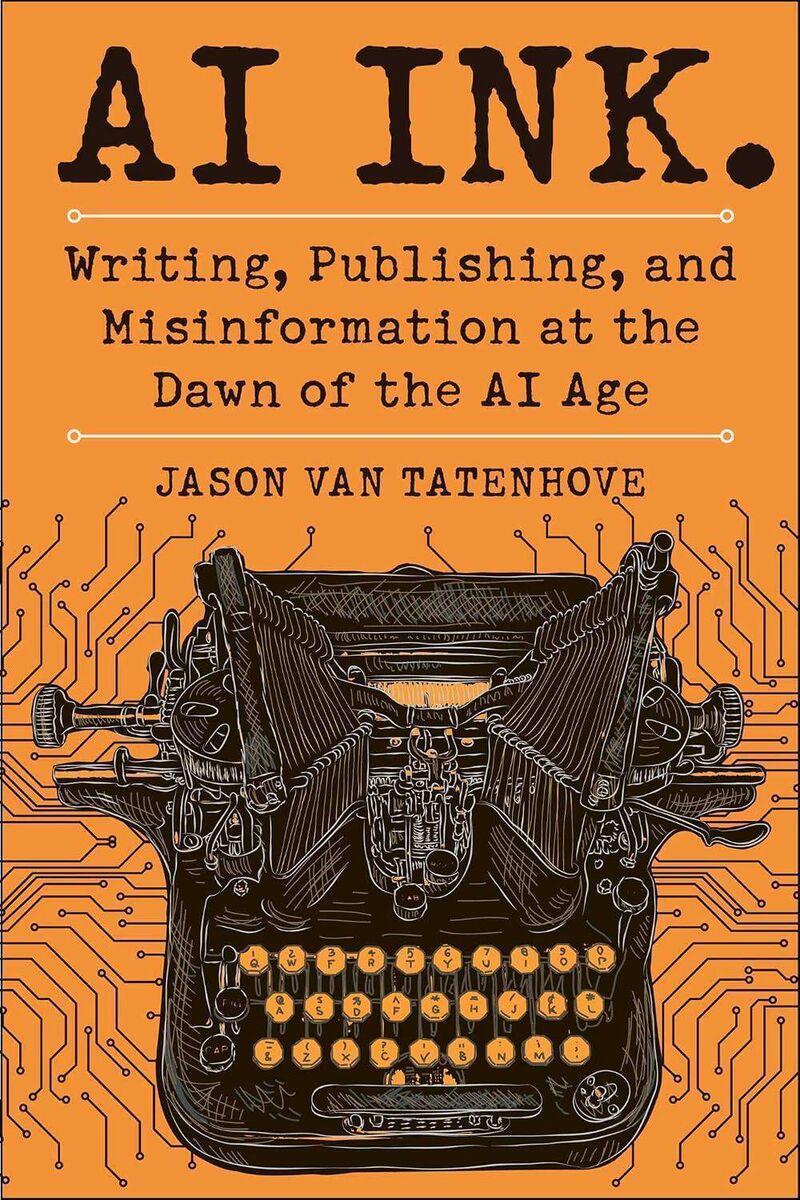
  • AI Ink: Writing, Publishing, and Misinformation at the Dawn of the AI Age 
  • Jason Van Tatenhove 
  • Skyhorse Publishing, €23.99 

On January 6, 2021, a mob of Donald Trump supporters attacked the United States Capitol. Seven people died in the riots, according to a bipartisan Senate report published in June 2022. 

The following month, a congressional committee sat in Washington DC sat to investigate the pro-Trump January 6 insurrection. Voluntarily, Jason Van Tatenhove testified.

The American journalist-author was not in Washington on January 6. But many of his former colleagues were.

More than a decade ago, Van Tatenhove worked as national media director for the far-right paramilitary group, the Oath Keepers.

“I am here giving testimony because I had an inside view of the Oath Keepers, and its founder and president, Stewart Rhodes,” Van Tatenhove told the January 6th Committee on July 12, 2022. 

“I am trying to make amends for [pushing] their dangerous propaganda.”

In May 2023 (less than a year after Van Tatenhove testified in Washington) Rhodes was handed an 18-year prison sentence for his role on January 6. 

Specifically, he was charged with seditious conspiracy to lead a far-reaching plot to keep then-US president Donald Trump in power — even though Trump had lost the 2020 election to Joe Biden. 

In January 2025, Rhodes was pardoned by president Trump and released from prison.

These events occurred many years after Van Tatenhove left the far-right paramilitary group.

But why did he join the Oath Keepers? A former heroin addict, Van Tatenhove cites a penchant for thrill-seeking as one reason he went “on a big adventure with these right-wing militia nuts”.

Money also played a role. “I was making really good money working for the militia, much more than I have ever been paid as a journalist,” Van Tatenhove explains from his home in Estes Park: a small town that serves as a gateway to Mountain National Park, in the western state of Colorado.

“I was reading a lot of Hunter S Thompson at the time, and my gut feeling told me this could help me launch my name as a writer.”

I spent a year-and-a-half with the Oath Keepers, but I definitely got a bit lost.

“A big turning point was when Stewart Rhodes started courting racists like Richard B Spencer, an outright Nazi.

“Then one day I walked into a conversation in a supermarket in Montana, where an Oath Keepers member I knew was talking about how the Holocaust never happened.

“At that point, I decided to put in my resignation and walk away from the organisation.”

Van Tatenhove wrote about his brief stint as the Oath Keepers PR man in his last book, The Perils of Extremism, which published in February 2023. That summer, Van Tatenhove’s wife, Shilo, died from a long-term medical condition.

“We were together for 30 years,” the author explains. “Shilo had acted as my editor. When she died, I fell into a depression.

“For the first time in my life, I wondered: should I just quit writing? But I have three daughters, and I knew if I just let myself go, we’d be out on the streets.

“Awful, nightmarish circumstances sometimes made for strange bedfellows,” Van Tatenhove says philosophically. 

“I didn’t know who to turn to. It was late one night, and I decided to download ChatGPT. I had no one else. I felt so alone in the dark and cold. I started off by telling it what I was going through.”

Writer found collaborator in ChatGPT

Van Tatenhove then asked ChatGPT to edit an article he had been working on. “I turned to a collaborator I never thought I’d consider,” Van Tatenhove writes in AI Ink.

The book is partially written by AI (Artificial Intelligence). Van Tatenhove claims AI tools like Grammarly, Jasper AI, and ChatGPT have made him a better writer.

“AI has become a lifeline in my creative process,” he says. “It doesn’t replace the spark of human creativity, it amplifies it.”

Van Tatenhove is transparent about the AI sources his book uses. These are documented via a footnoting system he’s invented called The Colorado-Asimov Ethical Citation Standard (CA-ECS).

The title draws inspiration from I, Robot (1950): a collection of short stories published by Russian American author, Isaac Asimov, who imagined robots as peaceful entities who work in harmony with humans. 

“Fuelled by a lifetime of consuming dystopian science fiction, I was curious if this technology could rescue me from drowning in the professional pit I found myself in,” says Van Tatenhove.

He draws parallels between the AI boom today, and the dot-com bubble in the 1990s.

“When the internet started, everyone was freaking out saying: it’s going to take all our jobs. Others said: it’ll be this utopian paradise. Today, conversations around AI feels very similar.

“There’s a real opportunity here though,” says Van Tatenhove. “With AI, writers have access to the best editor in the world and who wouldn’t you want to use this? It’s free.”

Bold predictions of future of AI

But some authors take a different view. Among them is the American filmmaker and author, James Barrat. 

His latest book, The Intelligence Explosion: When AI Beats Humans at Everything (2025) makes two bold predictions. 

First, AI has the potential in the not-too-distant future to potentially match, and perhaps even surpass, our species’ intelligence; second, by 2030 AI will eliminate 30% of all jobs done by humans, including writers.

I mention this book, and others that warn about AI’s dangers. Van Tatenhove’s enthusiasm subsides. At least momentarily.

“We definitely need to be aware of the negative effects of AI,” he admits. “Firstly, it’s completely unethical how these AI companies train the language models.

“They are using everybody’s work without any financial retribution. Secondly, after you use AI for a while, you begin notice that your writer’s voice starts to sound the same, all the time.

“The best way to combat this is to go through the writing again and take out that formulaic rhyme that goes with ChatGPT.

“But AI has been a lifesaver for me. It saved my career at a time of personal crisis,” Van Tatenhove adds. 

“There’s a lot of misconceptions about AI. Particularly with people who only read about it through mainstream media.”

AI a force for good in creative world

AI Ink ends with Van Tatenhove looking to AI’s future. If it’s to fulfil its promise as a force for good in the creative world, the industry needs to build it on a foundation of fairness and integrity, the author argues.

“That means demanding transparency in how AI models are trained. Most importantly, it means offering fair compensation for the labour and talent that drives innovation.

“The future of AI isn’t just about technology. It’s about humanity.”
But that seems like naïve wishful thinking. There is too much money at stake. Right now, the world’s leading tech companies are pouring enormous amounts of cash into AI. 

The top three include Nvidia, which has a market capitalisation of $4.8trillion; Apple ($4.0tn), and Alphabet ($3.8tn). Two of those companies have their European headquarters in Ireland.


Van Tatenhove speaks about a future where “AI and human creativity coexist, not in opposition but in harmony”. 

He also claims that “we must hold the tech industry accountable for building our systems and aligning our values.”

But how, specifically?

“Realistically, I don’t know if we can,” Van Tatenhove concludes. “In the end, I’m just a writer who tells stories.

“But I’ve got to try to use storytelling to change the world just a little bit to create a brighter, better way for the future.”

x

More in this section

Scene & Heard

Newsletter

From music and film to books and visual art, explore the best of culture in Munster and beyond. Selected by our Arts Editor and delivered weekly.

Cookie Policy Privacy Policy Brand Safety FAQ Help Contact Us Terms and Conditions

© Examiner Echo Group Limited