Author interview: ‘I grew up in a time where there was so much Irish prejudice’
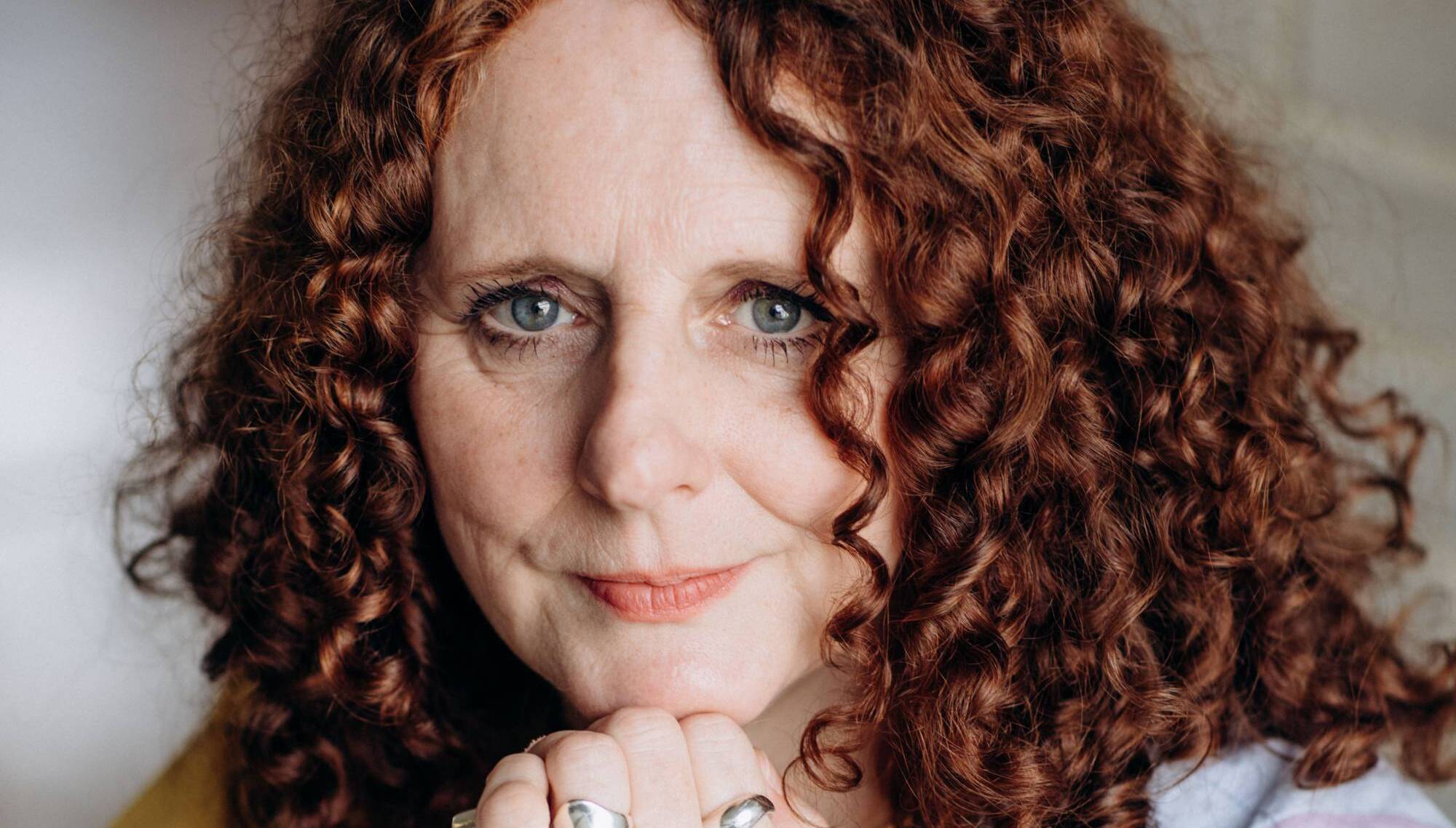
Maggie O’Farrell’s new offering, ‘Land’, hints at a deeper exploration of her Irishness. She tells Marjorie Brennan about how the epic highlights a particularly dark chapter in the country’s history
Maggie O’Farrell turned down an offer of an OBE by the British government for services to literature, claiming ‘it’s not right for me’. Picture: Dasha Tenditna

Maggie O’Farrell turned down an offer of an OBE by the British government for services to literature, claiming ‘it’s not right for me’. Picture: Dasha Tenditna

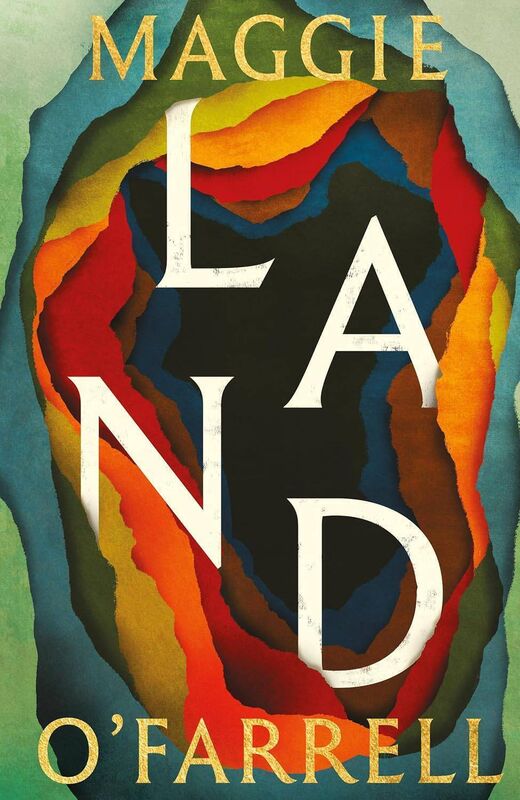
  • Land
  • Maggie O’Farrell
  • Tinder Press, €16.99

Reading a Maggie O’Farrell book is always an enlightening experience, the breadth of her research and knowledge matched only by her gift for crafting an exquisite sentence. 

Meeting her in real life also turns out to be quite educational, though maybe not in the way I had expected.

As the mother of two teenagers, I thought I was well up on Gen-Z slang, but as we sit in a hotel bar in Dublin, she is schooling me on some linguistic usage of which I was previously unaware.

“I really like learning things. My children call me a neek, which is a cross between a geek and a nerd,” she says. “I always think that anything you learn or read about is never a waste.”

One could say O’Farrell hit peak neek while researching and writing her latest book Land: An historical epic set in Ireland in the years after the Great Hunger and traversing several continents and generations.

The story begins with Tomás, who is working on the Ordnance Survey of Ireland, undertaken by the ruling British. 

When Tomás, who is being helped by his 10-year-old son Liam, enters a hidden copse, he undergoes a radical transformation that has huge repercussions for him and his family. 

The characters are inspired by O’Farrell’s own family history and she describes it as the book she has always wanted to write.

O’Farrell’s father is from Dublin and she was born in Coleraine, Co Derry, before her family moved to Britain when she was two years old. 

Since she was a child, she had been told that her great-great grandfather had drawn the first map of Ireland. 

Truth to a family myth

O’Farrell says all families have such myths, but it turned out there was more than an element of truth to this one.

When she closely examined a map which had hung for years in her old family home in Edinburgh, where her parents still live, she was astonished to find a tiny portrait of her great-great grandfather.

She says: “I must have passed that map a thousand times, and one day, around four or five years ago, I just decided to look at it through a magnifying glass, and in the corner, there was a tiny medallion, about the size of a postage stamp, you can see that it’s him, the man I called Tomás in the book, because we recognise him from the one photo we have of him.

“He’s standing behind a British soldier in a red jacket. He looks quite anxious, and I think he’s carrying a measuring chain. He had been hiding in plain sight all that time.

“I’ve been thinking about him for years, and wanting to find him or write a novel about him, and that was really extraordinary.”

When O’Farrell sought out her great-great grandfather in the archives, it took her some time to find the evidence that he had worked on the Ordnance Survey of Ireland.

Like the many Irish people who would have assisted in the mapping, O’Farrell’s great-great grandfather was described as a labourer. 

However, these were often educated and intelligent men, denied the dignity of a job title as well as their names.

“He was hard to find, because if you were Irish and worked doing a survey in 19th century, you weren’t allowed to sign your own name, you had to have your work signed by a British army officer,” she explains.

Study in intergenerational trauma

The book is also a study in the trauma that is handed down through the generations and the struggle faced by Tomás and his wife Phina, who have survived the Famine workhouses.

While O’Farrell knew about the Great Hunger from her parents, writing Land gave her a greater appreciation of its lingering impact, as well as an opportunity to make more people aware of the one of the darkest chapters in Irish history.

“We never learned about it at school,” she recalls. “I went to a comprehensive school in Scotland, and it wasn’t on the curriculum.

“My husband, who’s a Londoner, is pretty well read and knows about history, and the first time I showed him the manuscript, he just came in and said, ‘I had no idea’.

“The weird thing that struck me about it when I was writing the book is that if you are going to tell the history of Ireland, you have to talk about Britain, but if you’re going to tell the history of Britain, it’s quite easy, and a lot of people do tell the whole story, without even a mention of their closest neighbour, which is a really strange imbalance.”

While nationality and cultural identity is a topic she has dealt with previously in her work — most notably in Instructions for a Heatwave, about a family of Irish emigrants in London — in Land, there is a sense of O’Farrell exploring her Irishness at a deeper level. 

She has often spoken about the tension between feeling Irish in Britain and British in Ireland.

Prejudice against Irish in Britain 

“I grew up in a time in Britain where there was so much Irish prejudice,” she says. 

“It was the era of the Guildford Four and the Birmingham Six, and we had it every day we were going to school, we didn’t require any education in that, unfortunately.

“I used to get asked all the time why I didn’t wear a balaclava to school, was my daddy in the IRA.

“We got it from teachers as well, and endless Irish jokes, we just had to work out ways to fend them off.”

Another incentive for writing Land was the offer of an OBE by the British government for services to literature, which she declined.

O’Farrell says that the ‘empire’ association was problematic, as well as the fact that she couldn’t be part of a system that had honoured Charles Trevelyan, who described the Great Hunger as an act of God.

“Straight away, as soon as I opened the first letter, I just thought, oh, I can’t have that, it’s not right for me,” she says.

In the time that she was researching and writing Land, O’Farrell was also working on the screenplay adaptation of her bestselling novel Hamnet.

“I found adapting a screenplay so different from writing a novel. It was almost like an entirely different job. You’d think on paper they were quite similar, but it didn’t feel like that to me,” she says.

The screen rights to Land have been sold to the same producers that made Hamnet and although the development is at an early stage, it is likely that O’Farrell will take on the adaptation again. Jessie Buckley won an Oscar for her role as Agnes in Hamnet so there is sure to be keen interest in the casting of the roles for Land. O’Farrell won’t be drawn on whether she has any ideas of her own.

“We are really spoilt for choice, aren’t we? There are so many incredible actors in Ireland. Depends on how busy they all are,” she laughs.

O’Farrell is fairly busy herself. She is off to start the Irish leg of her book tour in Belfast right after we finish, followed by sold-out events in Galway and Cork, where the packed audience at St Luke’s gives her the kind of adoring reception normally reserved for rock stars. 

She seems to have an endless supply of creative energy — what keeps her going?

She says: “I don’t know. I’m always a bit baffled when I hear writers say, oh, you know, it’s so hard. And I think, is it though? Because actually we’re just sitting at home talking to our imaginary friends.

“Writing is all I’ve ever really wanted to do. I can’t really remember a time without it.”

x

More in this section

Scene & Heard

Newsletter

From music and film to books and visual art, explore the best of culture in Munster and beyond. Selected by our Arts Editor and delivered weekly.

Cookie Policy Privacy Policy Brand Safety FAQ Help Contact Us Terms and Conditions

© Examiner Echo Group Limited