Kerry is about to go Pete Tong: Superstar DJ on bringing his orchestra to Killarney

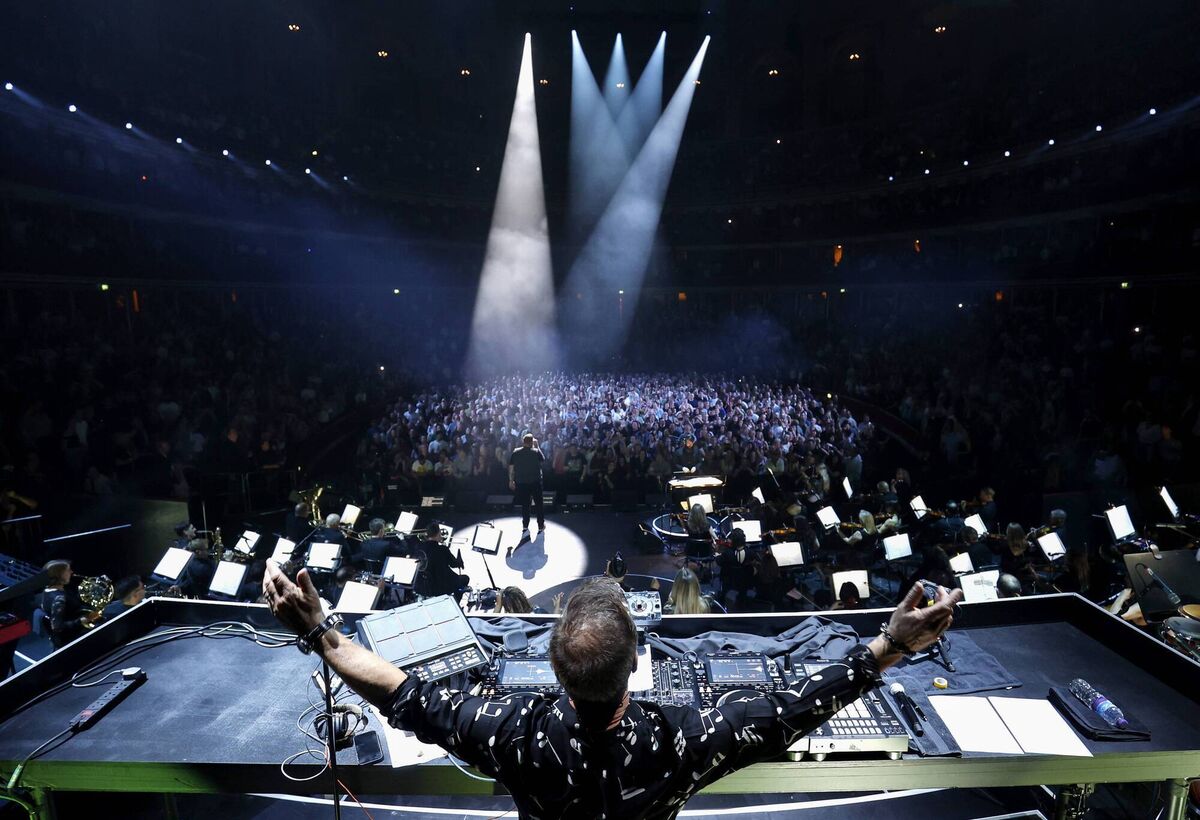
Pete Tong brings his show to the Gleneagle INEC on July 3.
Where did it all go right for superstar DJ Pete Tong? The internationally-acclaimed deck-spinner traces his rise to floor-filling fame to his childhood in Kent in the south of England.
“I was a drummer in a school band. We were doing rock covers and I literally saw a DJ for the first time in my life setting up in front of me when I was playing. We were doing our thing. We got polite applause, a polite reaction. When the DJ went on, it just created a whole different energy and vibe in the room.”
He’s been chasing that vibe ever since, and it’s made him one of the biggest names in house music. In the 1990s and beyond, his legendary residencies at Ibiza clubs such as Pacha and Eden epitomised the era of the superstar DJ and the idea that dance music was not just a genre but a philosophy that celebrated living life to the loved-up limits.
It is impossible to overstate his impact on dance music. If you’ve ever put your hands in the air and waited for a beat to drop, then you are part of the world Tong helped create — whether behind the decks or as the presenter of his influential BBC Radio 1 show,
He will seek to recreate that aura at INEC Killarney on Friday, July 3, where his Pete Tong Presents Ibiza Classics show will conjure Balearic bliss via live reworkings of storied bangers such as and — the grooves spruced up with live accompaniment by a 65-piece orchestra.
Of course, the rave can’t go on forever, and off stage, Tong is thoughtful and quietly spoken. Chatting over Zoom, he is well aware of his reputation as a superstar among superstar DJs, to the point where his name has spawned the rhyming-slang phrase, “it’s all gone Pete Tong” — meaning things have taken a turn for the disastrous.
He has also been around long enough to appreciate that the superstar lifestyle is not, in reality, all that super — once you’ve seen one private jet and VIP lounge, you’ve sort of seen them all.
He loves what he does, and he understands how glamorous the life must seem. But ultimately it comes down to hard work and an appreciation that, along with the perks, the job requires sacrifices too. He talks about the long travel, the exhaustion, and the constant demands on your time.
“When you're on stage for those two, three, four hours it all looks amazing. And maybe if you've got flown somewhere by private jet or something — no one is going to feel sorry for us. It’s an amazing thing to do.”
Amazing, but often gruelling. “It’s a grind. If you get to that point, which few people do, make it to the top kind of thing…Even if you are very successful, the demands on you to make music and fly all over the world and be everywhere all at once.”
He brings up Avicii, the Swedish DJ who experienced severe physical and mental health challenges brought about by the demands of being a top DJ and who died by suicide in 2018, aged 28. “That success obviously has an upside and a downside as well. It’s well documented — things like what happened to Avicii, where it can go wrong.”
When Tong started his Ibiza Classics show a decade ago, the audience was mostly ravers of a certain age. But more recently, he has noticed that the crowd has become more diverse — with Gen Z-ers holding their hands aloft alongside those old enough to be their parents.
He puts that down to the old-school magic of house music and its analogue roots, which extend back to DJs mixing two platters of vinyl on a turntable.
“In a world where everything is instant, everything is TikTok and Instagram…The real analogue nature of the past and how these records were made and why they’re important — the younger generation has become more and more curious.
"It is a generation now that is much, much more curious about what’s real. They grow up wise to the fact that not everything you see on TikTok is true. We’ve definitely seen the audiences change for Ibiza Classics shows.
"Ten years ago, it was definitely lapsed ravers. People who don’t go out to clubs anymore but never stopped loving the music. And yet last week, I played Cardiff Castle to 9,000 people and probably half the audience were under the age of 30.”
He sees the shows as a celebration of dance music and a reminder of its cultural impact, not just on European dance floors but in the US, too.
“The environment Ibiza had created for this music to break into the mainstream and the psyche globally — there is so much that has come from Ibiza that isn’t always understood or fully appreciated. America would never have come back online if it hadn’t been for Ibiza.
"The record that broke the doors open for EDM [a popular style of dance music largely originating in the US] was by David Guetta and Black Eyed Peas. [Black Eyed Peas leader] Will.i.am came to Pacha one night, saw David Guetta play, went back to David’s hotel room, and wrote that night.
"There’s a lot that comes from Ibiza that needs to be recognised.”
The orchestral element of Ibiza Classics is a natural evolution from 1990s house music, he feels. Recall that house’s predecessor, disco, used strings at every opportunity. They were as central to the disco aesthetic as slick grooves and spinning mirror balls.
“If you go back as far as disco, when budgets were not an issue, all disco records tended to have a string section. Obviously, a lot of the composers that got into disco were proper orchestrators in another discipline: they might have been doing film soundtracks or something.
"So when house music came along, and those early records were made in Chicago and New York, those young key producers… they just had a keyboard with some buttons in it that said, ‘strings’.
"They never had a chance to work with real instruments. They were influenced by disco, but they didn’t have the budget or know-how to get real players on those records. Thirty, forty years later, we’re able to add real orchestra to those records.
"That’s the reason the whole thing works together. Look at a record like by the Shapeshifters [a banger from 2004 which features in the Ibiza Classics set]. They wrote that incredible strong part for the chorus — but it was all samples. We’re going back and putting real players on it.”
The ultimate reason this sort of music never goes out of fashion, he feels, is because it brings people together. In an ever more divided world, that is not to be scoffed at.
“I liken it to the way that football is on 24/7, 12 months a year. You don’t really need to go to a match. But people want to go to matches. They want to experience it with 60,000 people.
"That’s why the live business of clubbing is still so ridiculously healthy. Small clubs have suffered — that’s a whole other story. People generally want to go out and experience the music.”
- Pete Tong Presents Ibiza Classics is at INEC Killarney on Friday, July 3