Kilkenny Arts Festival: Top-class opening weekend of music, history, and wonder
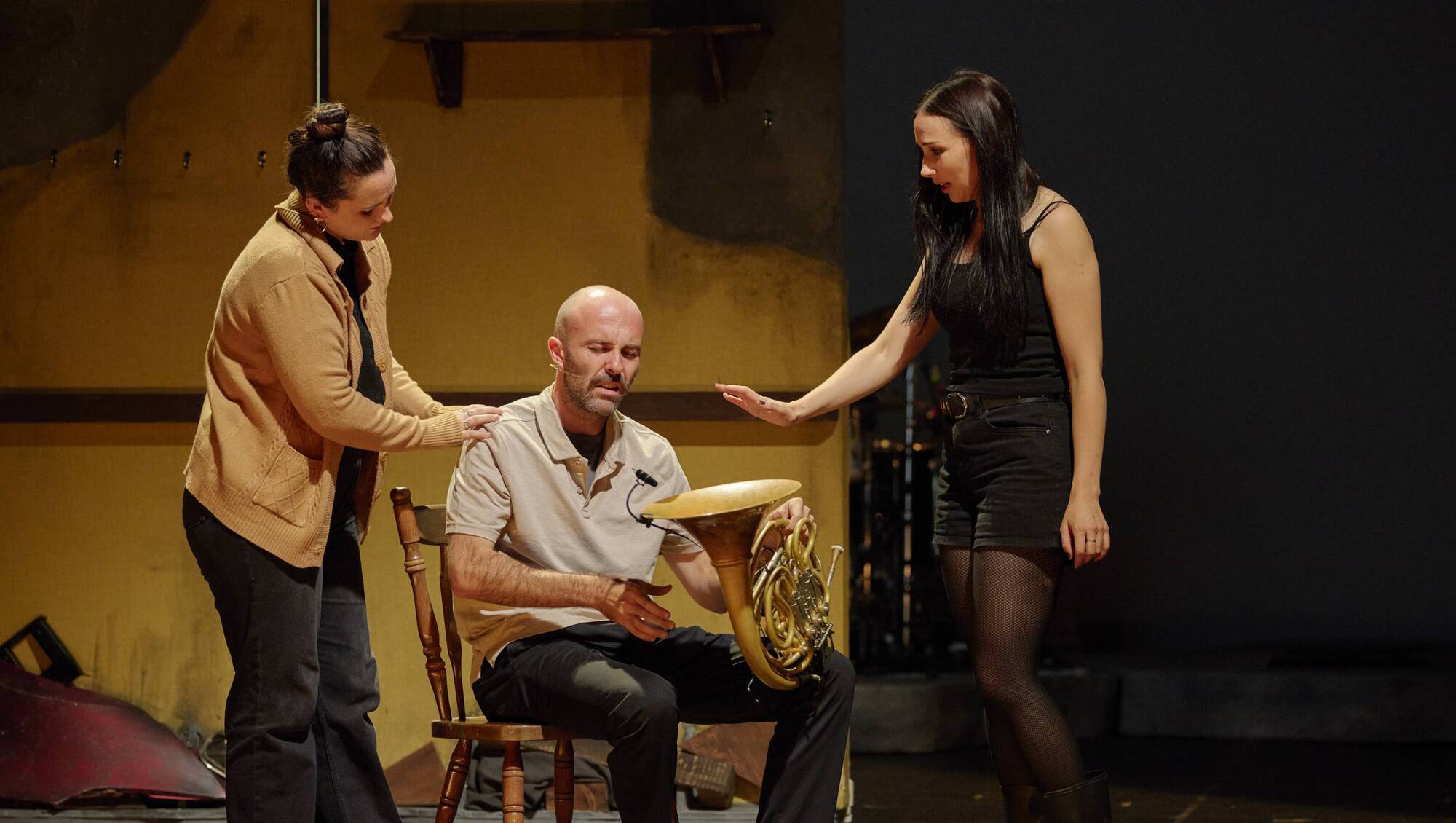
The Curing Line's music is played by an ensemble of multi-instrumentalists, all present on stage
★★★★★
It’s not hard to imagine certain areas of Kilkenny life that would baulk at the idea of a Cork manager, but when it comes to jewel in the Marble City’s cultural crown, its August arts festival, now in its 53rd year, Cork woman Olga Barry is doing a superb job at the helm, exploring new ground while being true to the festival’s uncompromising tradition of presenting the best in classical and new music.
New and old clashed in the most pleasing way on the opening weekend, where a medieval priory, a 13th-century abbey, and the magnificent St Canice’s Cathedral were the hosts for three concerts of extraordinary scope and beauty. This is how the festival insinuates itself and its audiences into the city: non-specialist venues which breathe history, and add a spiritual element to music that asks us to open ourselves to wonder.
This was certainly the case at the Black Abbey, where artist-in-residence Francesco Turrisi brought together an ensemble of singers and players for an exploration of the medieval troubadour tradition that took us all over the Mediterranean, from Corsica to the Arabic world. At a time when that sea is becoming a frontier, this was a line traced in human commonality: in love, faith, devotion. It was an extraordinary musical voyage, but, like everything in these venues, rooted in place. In one old Occitan lament for a dog killed by a wild boar, barking could be heard outside, prompting a smile from the singer and laughter in the audience.
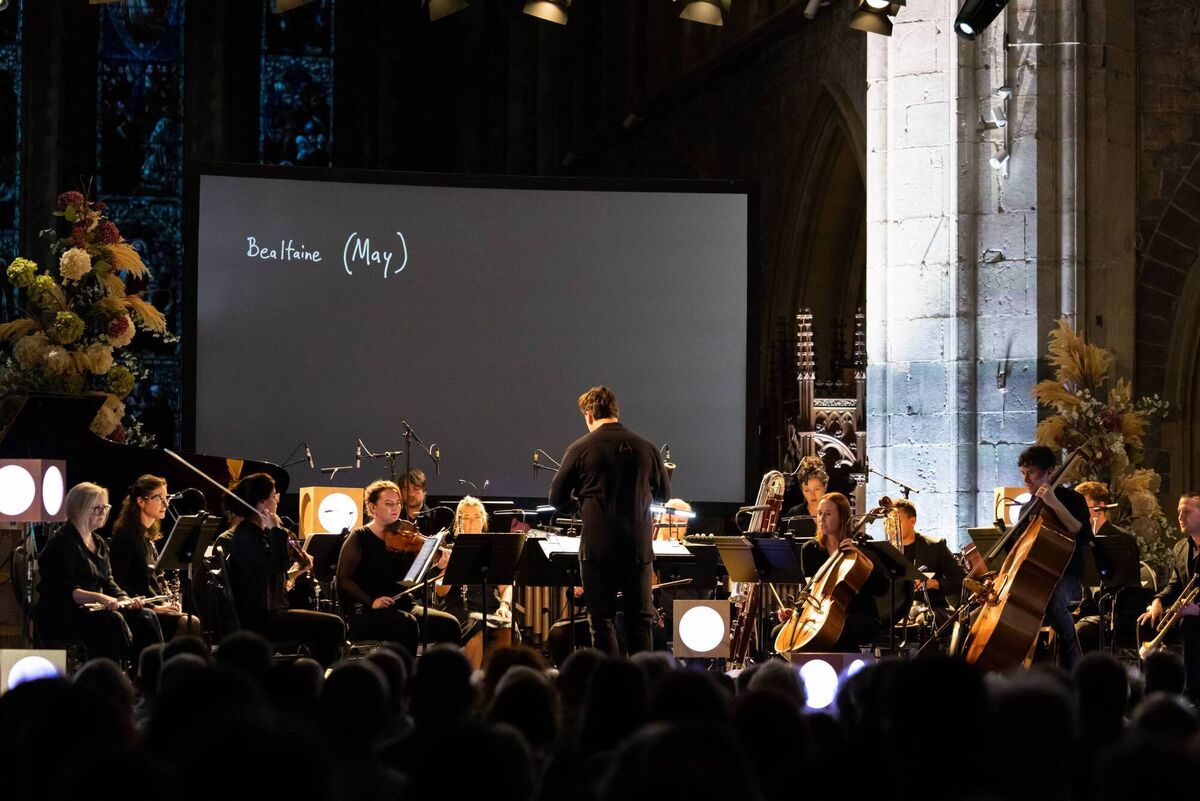
An alarm in the street was not so welcome in the ambience of St John’s priory, where the US pair of Timo Andres and David Kaplan performed pieces for two pianos. Luckily enough, the tumult of John Adams’s was relatively undisturbed, in a programme that showcased the pair’s depth of mutual understanding. The centerpiece was the premiere of Donnacha Dennehy's an expansive soundscape in seven movements that brings us from Kerry to Dublin and on to Manhattan. Later, at St Canice’s, his was given a stirring rendition by the Crash Ensemble.
The highlight of the opening weekend added drama to the rich musical offering, in the shape of Michael Gallen’s latest opera, Co-directed by Gallen and Shawn Fitzgerald Ahern, with a libretto by the former and Annemarie Ní Churreáin, this is an intense, inventive and extraordinary exploration of the folk-Irish healing tradition, of how “the cure” is handed down across generations as a gift and a burden for its bearer, fated to be something of a witch and a celebrity in a rural community.
Crashing drums and insistent self-help questions assault us first. “Something will happen tonight,” we are promised. “Can you feel it? The veil is growing thinner.” And so it does. We are in the 1990s, where we meet Eileen (Sarah Shine), the healer’s daughter, and Cora (Amy Ní Fhearraigh), his adopted child. They form a foul-mouthed irreverent pair that would put you in mind of a rural but when their father passes the gift for curing respiratory illness to his foster daughter, it creates a disastrous rift.

That’s the story. But it’s all in the telling, or, rather, the staging here. A televangelist interrupts to speak to the audience like a huckster, undermining belief and faith as he shouts a premium phone number for Cora, or insists to us that the cure is with us. As befits a contrasting world where fairy lore meets joyriding in the Dundalk suburbs, the work includes deft use of live video and recorded testimony, creating a rich, multi-layered experience.
The music is played by an ensemble of multi-instrumentalists, all present on stage. A French horn assuming the role of the human voice for one asthmatic is a typically ingenious moment. The score, conducted by Clara Baget, ranges from raucous, bass-heavy rock, to swinging lines, propulsive modern chamber music, and Irish airs as demanded by the drama. The libretto is as earthy as the content: with some salty, creative swearing worthy of Conor McPherson, and passages in beautiful Irish that wouldn’t look out of place in the works of the late philosopher John Moriarty.
As the teenagers Cora and Eileen might have it, this is two fingers to anyone who thinks opera is stale and dated. work can be seen in the autumn in Strasbourg and Paris – it would by itself justify a city break to either fine city.
As the festival continues this week, another Cork (and Paris) connection emerges, in the shape of Gare St Lazare’s operatic staging of at the Watergate Theatre this Friday and Saturday. Another musical adventure from Francesco Turrisi is at Cleere’s Theatre on Friday, while the ever-reliable Martin Hayes hosts a finale concert at St Canice’s on Saturday.
- Kilkenny Arts Festival
- Various venues