Author interview: Ní Ghríofa brings women of Our Lady’s out of the shadows
Marjorie Brennan spoke with the extraordinary Doireann Ní Ghríofa who has channelled a chorus of ghostly voices to tell the story of female patients of the former Cork psychiatric hospital
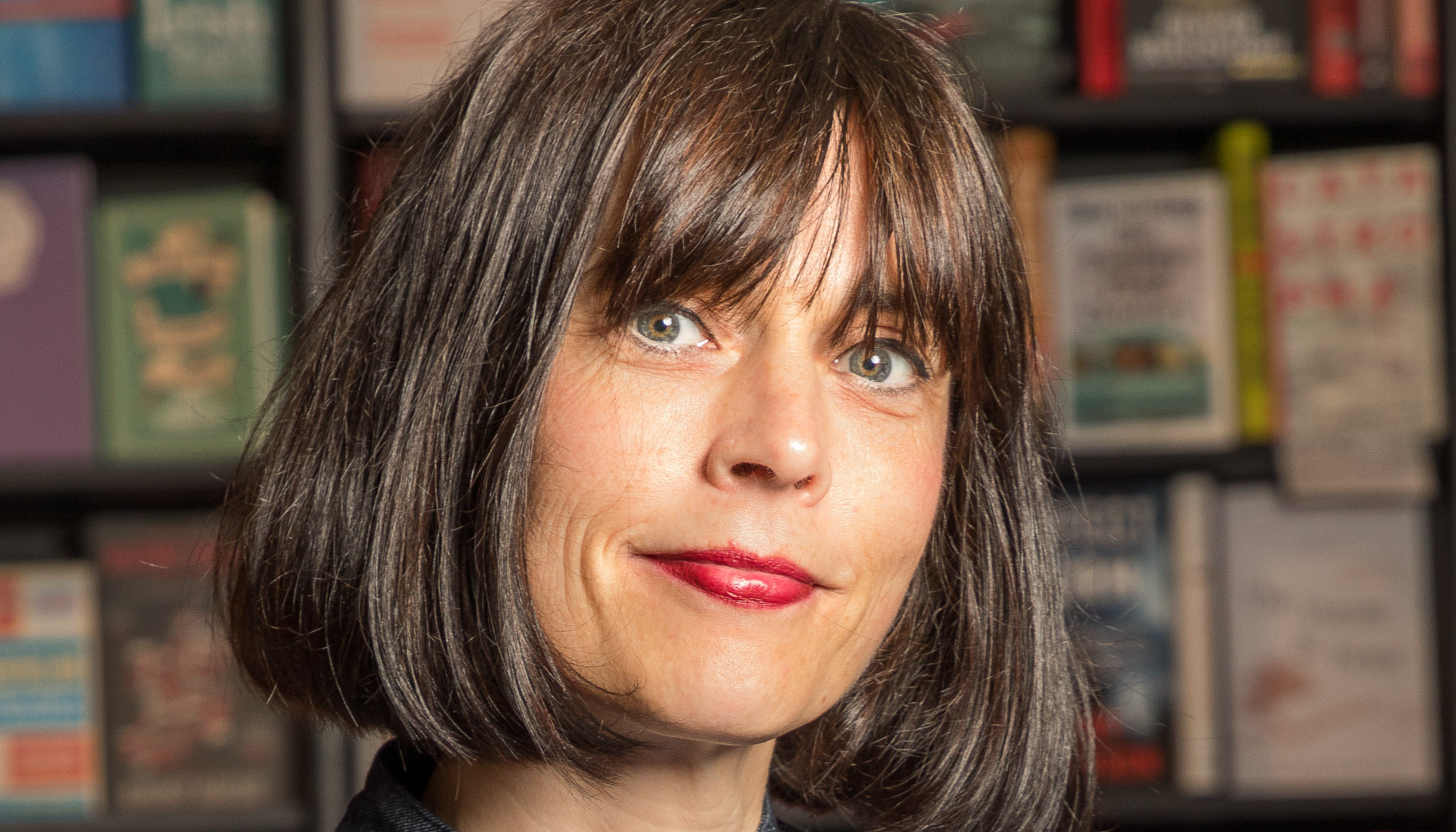
Doireann Ní Ghríofa at Waterstones, Cork, launching ‘Said the Dead’. When parked at Our Lady’s: ‘I could feel the sense of a shadow moving across and making its way into the car, through my body, through my fingertips into the book that I was trying to write.’ Picture: David Creedon

Doireann Ní Ghríofa at Waterstones, Cork, launching ‘Said the Dead’. When parked at Our Lady’s: ‘I could feel the sense of a shadow moving across and making its way into the car, through my body, through my fingertips into the book that I was trying to write.’ Picture: David Creedon

  • Said The Dead
  • Doireann Ní Ghríofa
  • Faber & Faber, €16.99

I meet Doireann Ní Ghríofa in the bustling Farmgate Café in Cork’s English Market, one of her favourite places in a city that, thanks to her unquenchable curiosity and exploring spirit, she knows better than many natives. 

Raised in Clare, Ní Ghríofa has lived in Cork since arriving as a student at UCC when she was 17.

The superlatives have deservedly been flying for Ní Ghríofa’s latest book Said the Dead, with ‘extraordinary’ the word that seems to crop up the most often.

Ní Ghríofa herself also merits the description, as she seems to operate on a creative plane beyond the realm of the ordinary, both in terms of talent and practice, as a poet, author, and multi-media artist.

Her debut prose book A Ghost in the Throat was a sign of things to come, a hugely inventive blend of essay, auto-fiction, and poetry probing a connection across the centuries with Eibhlín Dubh Ní Chonaill, author of the famous 18th century lament Caoineadh Airt Uí Laoghaire.

In Said the Dead, Ní Ghríofa takes on the mantle of historian, geographer, and medium, channelling a chorus of ghostly voices from the past to tell the stories of the women who were residents in a former Cork mental hospital more than a century ago.

Ní Ghríofa, who lives with her husband and four children in Tower, was drawn to the derelict hospital as it was being developed for housing. 

When she discovered that the Cork City and County Archives in Blackpool held the casebooks rescued from the site, what she describes as her “quest” began. 

Once a district asylum and most recently known as Our Lady’s, the psychiatric hospital has loomed over Cork City from its sloping site on the northside for generations, and remained open until the early 1990s.

“You look at that hospital, and you are going to find all of Cork’s history swirling around it. My gaze would be drawn up to it, it’s such a huge part of my own landscape of the city.”

I feel like you can extrapolate a whole vivid sense of the city’s history by looking at a particular single building within it.

In the archives, Ní Ghríofa discovered the remarkable figure of Dr Lucia Strangman, assistant medical officer at the hospital. Lucia and her sister Mary grew up in Waterford and were among the first female medical graduates in Ireland.

While Mary became Waterford’s first female councillor and has been honoured in various ways by the city, Lucia’s achievements were lost in the fog of history. 

Through her casebook entries, Ní Ghríofa discovers the stories of many of the women who passed through the doors of the asylum between the 1890s and the 1920s. 

It is an immense work of scholarship and imagination, executed with a singular creative vision.

“It took a lot of work. I would get to a certain point in this book where I would feel myself almost getting lost in it, often about the 100,000 words mark, and I would go back and start from scratch.

“It felt like every new woman I encountered there, every new voice felt so pressing and vivid that I wanted to include them all.

“It was among the privileges of my life to just make myself a loyal servant to the women who were held in that institution, to slowly discover the shapes of their lives, their very distinct rages and griefs, loves and broken hearts.”

Severe mental distress experienced by those in the asylum

The root causes of the severe mental distress experienced by many of those admitted to the asylum were poverty and the condition of just being a woman — some of the descriptions entered in the casebook include ‘lactational insanity’, ‘menstrual derangement’, and ‘climacteric’, a term used to describe menopause.

“A lot of these women were extremely hungry coming in, they were emaciated, they had scars of vermin bites.

“There was no family planning, so you add nine or 10 children when you’re in your 30s, and you are having difficulty finding the money to put food on the table to feed them.

“A lot of the women were clearly suffering from post-natal depression. They were walking up the hill to that hospital, hoping to be helped, hoping to be looked after.”

There is a real sense that Lucia gave them that help and care, and that she was a devoted and progressive physician, later opening a clinic with her husband John FitzGerald, also a psychiatrist in the hospital.

Ní Ghríofa spent five years on Said the Dead, and it was an all-consuming experience. Like A Ghost in the Throat, most of it was written in her car.

“I used to park in front of Atkins Hall, what it’s called now, so that I could feel the sense of a shadow moving across and making its way into the car, through my body, through my fingertips into the book that I was trying to write.”

War of Independence and the Civil War

The political conflict which played out on the city’s streets during the War of Independence and the Civil War is also one of the many layers in Said The Dead.

“It is impossible not to write about the history of Cork from the 1890s to the 1920s without writing about the fact that it was a war zone.

“You’re considering the inner landscapes of people’s minds and what drives them to be brought to or seek help from an institution, then when you land an actual war on top of it, people are seeking shelter and care from what’s happening. 

“Then there’s the whole fact of how the hospital itself is suddenly functioning as a hiding place for people.”

One of Lucia’s patients who was very much bound up with that history was Muriel MacSwiney, wife of Terence MacSwiney, the Lord Mayor of Cork who died on hunger strike in Brixton prison. The couple were also friends with Lucia and her husband.

Muriel suffered paralysing bouts of depression and after her husband’s death, traumatised and estranged from her wealthy and conservative family, she moved to Europe and never returned to live in Ireland. Delving into Muriel and her links with Lucia was an enlightening experience for Ní Ghríofa.

“Muriel is a daughter of Cork, a complicated, strong, radical voice, and I don’t feel she’s had her dues in modern Ireland. I found her to be magnificent and difficult.

“I often thought, as I was writing this book, what I would give to write a book about Muriel.”

The book may be finished but the women she encountered on its journey are still very much with Ní Ghríofa. As for her next project, she is open to whatever the universe delivers.

“I’m still learning about the kind of writer I am. It’s a process of continual astonishment. 

“There are often lots of different things that I’m really interested in, and I don’t know which one of them will become a book; sometimes they become poems.”

However, she does have one aim related to her writing, even if it does come with certain conditions.

“One of the things I hope I’ll be able to figure out is getting out of my car. I really want to rent myself a little attic room in the middle of the city, so that I can be in Cork, in the fabric of things, and let the city reveal itself to me in a different way.

“I need someplace weird, not one of those cool, fancy office spaces — I need ghosts, not real people.”

More in this section

Scene & Heard

Newsletter

From music and film to books and visual art, explore the best of culture in Munster and beyond. Selected by our Arts Editor and delivered weekly.

Cookie Policy Privacy Policy Brand Safety FAQ Help Contact Us Terms and Conditions

© Examiner Echo Group Limited