Book review: Lanchester is a master of writing topical tales that entertain

'Look What You Made Me Do' deals with some weighty topics but also reads as if it was fun to write
Book review: Lanchester is a master of writing topical tales that entertain

John Lanchester is also known for his expertly interrogated non-fiction and long-form journalism on topics such as the financial crash, Brexit, and AI. Picture: Roberto Ricciuti/ Getty

    • Look What You Made Me Do
    • John Lanchester
    • Published by Faber

    IN AN excruciating scene in John Lanchester’s latest novel, Look What You Made Me Do, architect Jack pompously proclaims that celebrity chef Yotam Ottolenghi, darling of the bourgeois dinner party, has “done more damage to this country than the Luftwaffe”.
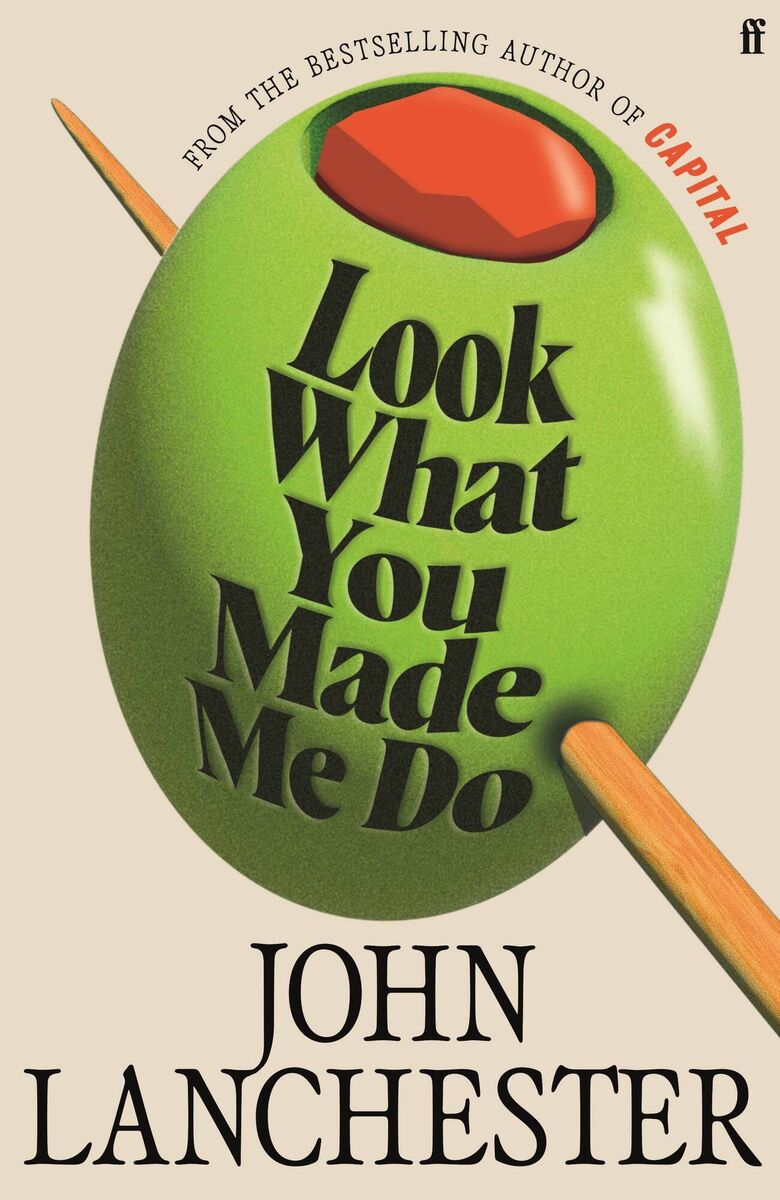
    In that one phrase, Lanchester communicates everything we need to know about Jack and the world he inhabits. It also illustrates why Lanchester is one of Britain’s sharpest writers, with a reputation for nailing down the zeitgeist in state-of-the-nation novels, including Capital and The Wall, as well as in his incisive non-fiction.

    Look What You Made Me Do is less obviously topical, but captures something of the moment. It begins as a portrait of the seemingly happy (some would say insufferably smug) marriage of Jack and former art historian Kate, before taking a darker turn when Jack dies suddenly.

    A hit television show by young screenwriter Phoebe mirrors intimate details of Kate’s life and leaves Kate reckoning with what appears to be an inconceivable betrayal.

    Jack and Kate are part of the London creative classes, whose comfortable lives are built on job security and vastly appreciating property, concepts that are alien to Phoebe.

    She is dealing with a difficult mother, whom she sees as emblematic of the “narcissistic” older generation. 

    Phoebe is determined to take Kate down for reasons that unfold in the back story of her marriage, related in a satisfyingly page-turning fashion by Lanchester.

    Lanchester, a 64-year-old writer who lives in London, could be seen as analogous to Kate and Jack and their cohort, but that wasn’t his initial intention. He bats off any ‘boomer’ comparisons, while acknowledging the financial inequalities faced by younger generations.

    Lanchester says: “My sons are in their 20s, so I do have this divided perspective and it is something I reflect on. In crude terms, when it comes to the net contribution to the state made over the course of a lifetime, people my age are getting a completely different deal from what the younger generation will get, just as a matter of simple mathematics.

    “It wasn’t consciously on my mind when I was writing the book. I was thinking of it as a psychological dynamic between the two characters. Then when I was working on it, after finishing the first half, it jumped out very clearly.”

    Sympathies change

    While the reader’s sympathies may initially lie with a grief-stricken Kate, this changes as her personality comes into clearer focus, and the initially abrasive Phoebe becomes more sympathetic.

    Lanchester says: “Kate gets harder to like as we gradually realise she’s not who she seems. With Phoebe, I’ve always been interested in people who deliberately aren’t particularly nice. And she’s absolutely that person. Then, as we get to know her, gradually, we realise that it’s more complicated. She’s more soft-centred than maybe even she realises.”

    Lanchester is also known for his expertly interrogated non-fiction, and long-form journalism on topics such as the financial crash, Brexit, and artificial intelligence. The balance keeps him in touch with what is happening in the world, which, he says, is an important part of being a writer.

    “One of the things I’m interested in is why writers go off, why their work gets less good, and I think one of the reasons, sometimes, is that if a writer gets to the point where they’re sufficiently successful, and can just stay at their desk the whole time, their world can narrow.

    But if you want to write books that have some sort of connection with the world around you, you have to maintain a connection with the world around you.

    “By chance, some of the issues I’ve been interested in have turned in to something — for example, bitcoin, and some of the tech stuff — because it is so increasingly pressing in the culture. It has kept me looking out the window.”

    Lanchester’s keen eye for the topical means that his novels are also often ahead of the cultural curve. This was especially evident in his 2019 Booker-longlisted novel The Wall, which is set in the near future: Britain has erected a massive barrier to stave off rising sea levels and keep out refugees.

    Lanchester says: “People do say to me that The Wall seemed truer by the day. In a sense, I was writing it to try to avert the future. I wish it weren’t true, but we are closer to the world that it describes than we were when I wrote it. As I said at the time, Brexit was somewhere on the spectrum between a mistake and a disaster.

    “It was also a kind of forerunner of the chaos and disruption that’s come to places that used to look like settled liberal democracies. Let’s hope the pendulum swings back the other way, everywhere.”

    While Look What You Made Me Do deals with some weighty topics, it does read as if it were more fun to write.

    Lanchester says: “I would maybe use the word ‘escape’. One of my ambitions for the book is that while you’re reading it, it’ll stop you thinking about the news and it stopped me thinking about the news while I was writing it. That might sound like a small ambition, but I think, at the moment, it’s actually a pretty big ambition.”

    Could translate well to the screen

    Look What You Made Me Do is also the type of book that feels as if it would translate well to the screen. Capital, about the residents of a gentrified London street who begin to receive mysteriously sinister postcards, was successfully adapted by the BBC in 2015. When I suggest to Lanchester that Look What You Made Me Do would now be picked up by a streamer, he says this in itself is indicative of the huge changes in the creative landscape even in the last decade.

    Lanchester says: “Between Capital, which was written in 2012 and adapted in 2015, and The Wall, which I did an adaptation of that wasn’t made, the whole landscape had completely shifted. 

    "With Capital, there were basically three places that would show it: BBC, ITV, and Channel Four. By the time The Wall was published, there was a whole other menu of streamers and an entirely different set of parameters. It’s very cyclical, that business. 

    "The person adapting it is trying to second-guess what the person with the power wants, who second-guesses what the audience is going to want in 18 months. It’s like trying to hit a moving target. I’m thrilled when things get picked up, but, for me, the book is an end in itself, and if it has another life, that’s great, but it’s a separate life.”

    There is no shortage of non-fiction material for Lanchester to mine, but waiting for the novelistic muse to strike is a trickier prospect.

    “You can write non-fiction about anything that interests you. And the indispensable condition is that it does interest me. But novels, it’s subtler and stranger; you can’t quite explain what it is about. I can’t really explain why I wrote this particular one, other than the idea wouldn’t quite leave me alone.”

    x

    BOOKS & MORE

    Check out our Books Hub where you will find the latest news, reviews, features, opinions and analysis on all things books from the Irish Examiner's team of specialist writers, columnists and contributors.


    More in this section

    Scene & Heard

    Newsletter

    From music and film to books and visual art, explore the best of culture in Munster and beyond. Selected by our Arts Editor and delivered weekly.

    Cookie Policy Privacy Policy Brand Safety FAQ Help Contact Us Terms and Conditions

    © Examiner Echo Group Limited