Book review: Classic mixed with current

Mary O’Donnell is not afraid to take her time, to let this layered novel gradually build to a fizzy, affecting denouement.
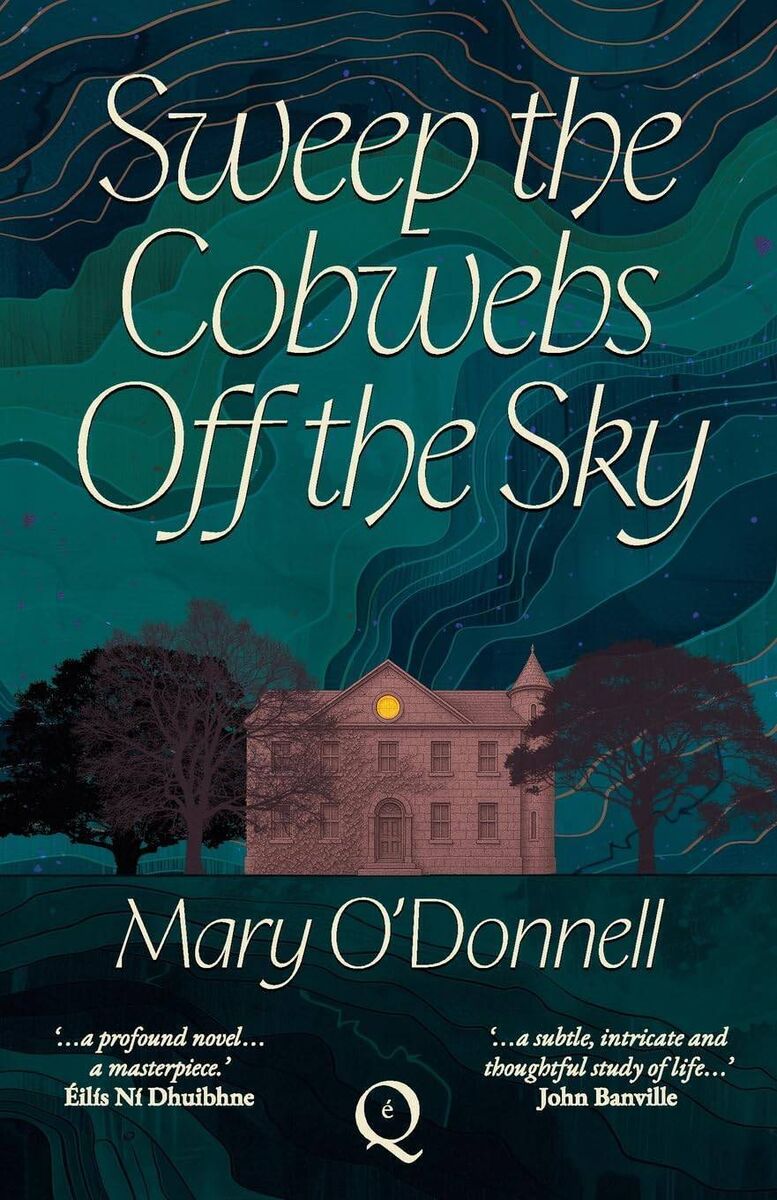
- Sweep the Cobwebs off the Sky
- Mary O’Donnell
- Époque Press, €12.99
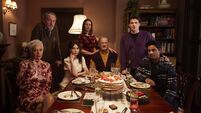
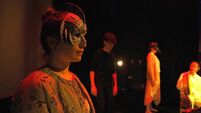
If the revival has you hankering for more family drama shadowed by the ghostly gothic, , the latest offering from the award-winning Mary O’Donnell, feels both chordally classic and replete with current literary appeal.
A prolific novelist, poet and essayist, O’Donnell writes with all the assurance you would expect from an author of her experience, be it in luscious descriptions of landscape or sharp observations on familial frustrations.
In a draughty country house at the end of a tree-lined avenue in Co Monaghan, 66-year-old Frankie has temporarily decamped to the grand setting of her childhood — Kilnavarn House — to care for her elderly mother during the initial days of the pandemic.
Frankie’s dependable husband, Christoph, is back in Tipperary while her unpredictable younger sister, Tess, is due in from New York to help with Elma, the temperamental 92-year-old matriarch:
“In old age my mother has polished her obstinacy so that it radiates, its emotional neutrons, beta particles and gamma rays sometimes striking others like a jolting current.”
Read More
As with the aforementioned 19th century novel, the window motif plays a pivotal role here, chiefly an oculus window “installed in the 1860s by the house’s most adventurous owner, Roddy Boyd” who kept a Caspian tiger as a pet.
Roddy’s presence in the house extends beyond his architectural choices — Frankie, an imaginative writer, has grown accustomed to spectral happenings in her bedroom over the decades:
“Sounds disturb me at night as I lie in the dark. Despite this, the house itself always carried interior goodness in soft drifts, the layers of each generation that had lived there seeping into the hand-made bricks.”
The Gothic is a footnote rather than a focus, O’Donnell’s primary concerns are parental dynamics, sisterly rivalry, the call of the artistic life, and the losses and gains experienced by a woman as she ages.
The house holds unspoken, troubling memories for both the Esmond sisters, who experienced different sides of their difficult mother growing up: “The truth unrolls like a filthy sheet, the stains hanging before me in the dark…”
Their father, a doctor, died 18 years previous and appears to have wilfully ignored his wife’s harsher parenting approach.
Despite its sometimes heavy material, O’Donnell displays signature comic timing via aging Elma’s antics, and her poetic touch can be seen throughout the prose:
“I watch, feeling the night stillness enclose me, the scent of grass and earth rising to meet the crescent moon, on which I would like to perch, one leg hanging free, dropping a fishing-rod down into the world.”
Frankie’s connection with a young male mentee offers a fresh spin on the literary muse while the pandemic is, mercifully, a device for ruminating and remembering rather than a foregrounding concern.
Illustratively, everyday preventative tasks act as portals to the past:
“I adjust my masks and hook them behind my ears, trying to keep the strings free of my earrings. My ears stick out. They are like faun’s ears, a man who used to flirt with me once said.”
Reading contemporary fiction can sometimes feel like skirting a racetrack of quips and metaphors, destined to keep our wavering attention spans spinning onwards.
In Brontësque fashion, O’Donnell is not afraid to take her time, to let this layered novel gradually build to a fizzy, affecting denouement, devoid of fireworks, perhaps, but illuminated with the strains and struggles of the enchantingly ordinary.
A theatrically rousing scene in which the sisters clash feels both stylistically flawless and rawly real, indicative of this remarkable novel as a whole.
“There were times when she gave to me and I gave to her, in the broken graces between us.”
BOOKS & MORE
Check out our Books Hub where you will find the latest news, reviews, features, opinions and analysis on all things books from the Irish Examiner's team of specialist writers, columnists and contributors.