Book review: A four-decade fight for justice for 48 victims
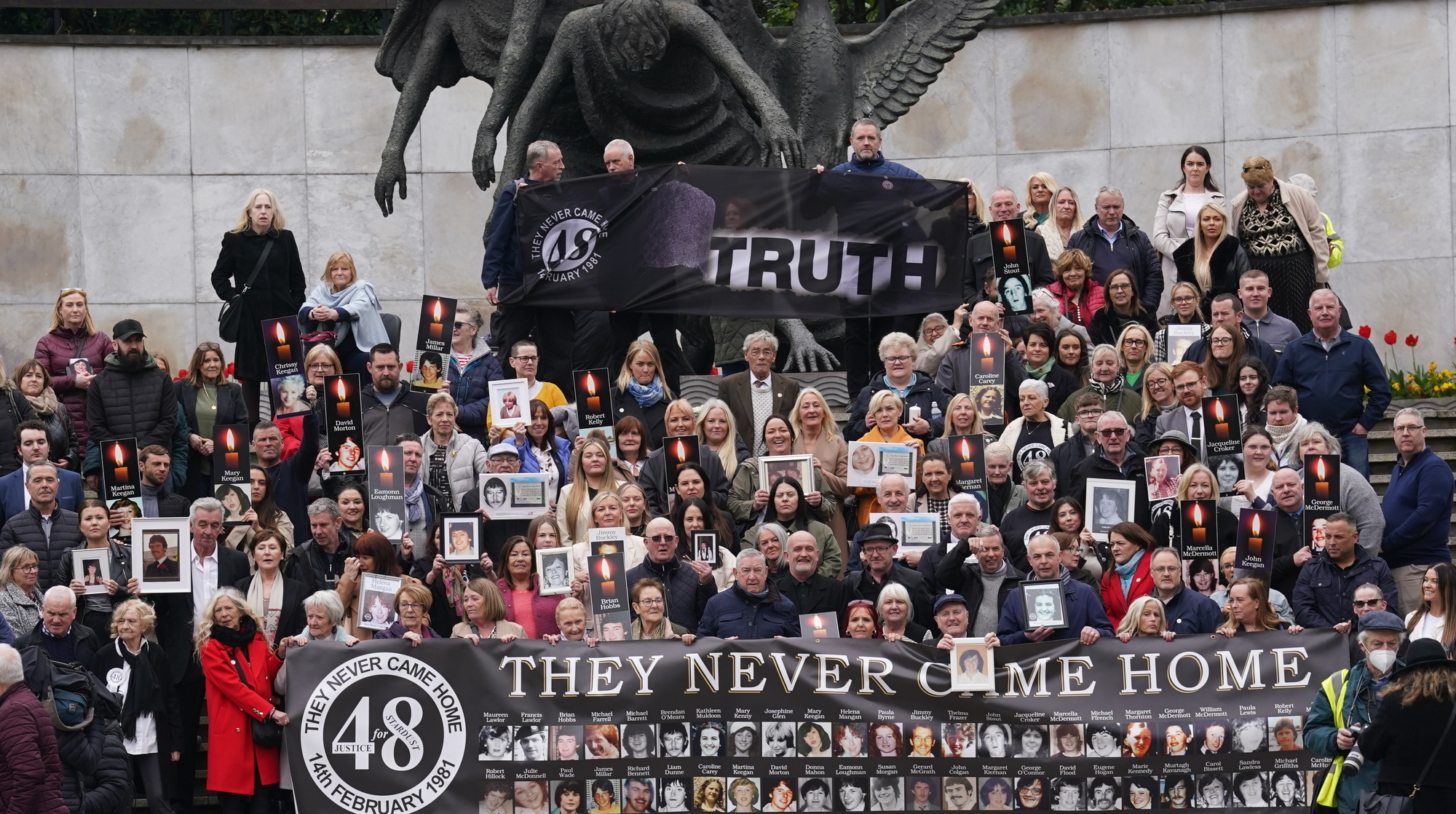
The Last Disco cannot be read without feeling tremendous admiration for the families who fought for the reputation of their loved ones
Book review: A four-decade fight for justice for 48 victims

The families, relatives, neighbours, and friends of the 48 people who lost their lives in the fire have carried the burden of that event since it ripped through the Stardust nightclub early on Saturday, February 14, 1981.

  • The Last Disco: The Story of the Stardust Tragedy 
  • By Sean Murray, Christine Bohan & Nicky Ryan 
  • Bonnier Books 
  • Review: Diarmuid O’Donovan

ANYONE living in Artane — anyone living in Ireland — has lived in the shadow of the Stardust tragedy for the last 43 years. In Artane, however, the families, relatives, neighbours, and friends of the 48 people who lost their lives in the fire have carried the burden of that event since it ripped through the Stardust nightclub early on Saturday, February 14, 1981.

The Last Disco, written by a trio of authors, Sean Murray, Christine Bohan, and Nicky Ryan, looks at the tragedy from the opening of the premises in 1978 to the fire of 1981 and beyond, capturing the whole story in a concise and vivid fashion.

The book cannot be read without feeling tremendous admiration for the families who fought for the reputation of their loved ones. There is an equal degree of frustration with the bodies of the State who, it appears, wanted the Stardust tragedy to just go away.

The first tribunal, under Mr Justice Ronan Keane, took place remarkably quickly. It opened on April 6, 1981 — seven weeks after the fire. This inquiry heard about the terror of the night, but it was Justice Keane’s conclusions that compounded the grief of the families for the next four decades.

The report concluded “The cause of the fire is not known and may never be known. There is no evidence of an accidental origin and equally no evidence that the fire was started deliberately.”

The report added: “In these circumstances, the tribunal has come to the conclusion that the more probable explanation of the fire is that it was caused deliberately.”

Shadow

It was this unproven statement that tore at the hearts of the Stardust families. It coloured the reputations of the 48 victims and it coloured the opinion of the general public for more than 40 years. The grief was compounded further by the fact that the Butterly family, the owners of the Stardust, sought £3m in damages from Dublin Corporation.

One of the sad parts of the next 30 years is how parents and siblings coped with their loss as this shadow hung over them. 

There is the account of John Keegan, husband of campaigner Christine Keegan and father of two daughters, Martina and Mary, who lost their lives at the Stardust. John died of cancer at the age of 49 — of a broken heart, essentially. 

Then there is the McDermott family who lost three children: George, Marcella, and William. The authors remove stories like these from mere statistics and recreate them as the real people they were.

Support

After the families, the credit for the eventual resolution of the Stardust story must go to those who joined the Stardust Campaign for Justice in the last 10 years and in particular to Darragh Mackin and the Phoenix Law group. 

It was Mackin’s idea to drop the demand for another inquiry and call for inquests into the deaths of each of the 48 victims. This was eventually granted.

The coroner, Dr Myra Cullinane, also played an important role. Her sympathetic manner, her knowledge, and her ability to withstand several attempts from the Butterly legal team to remove “unlawful killing” from the range of verdicts available to the jury, were vital.

The Last Disco has managed to weave together the cold facts and the human stories of the Stardust fire. It is an absorbing read about one of the greatest tragedies of our country since gaining our independence in 1921.

The story of the Stardust families’ quest for justice highlights the fact that for most of the 20th century the State, through its offices, struggled in its duty to treat all citizens equally. 

It took four decades to get justice for the families and for the 48 victims who went to a disco on that ill-fated night and never came home.

x

BOOKS & MORE

Check out our Books Hub where you will find the latest news, reviews, features, opinions and analysis on all things books from the Irish Examiner's team of specialist writers, columnists and contributors.
More in this section

Scene & Heard

Newsletter

From music and film to books and visual art, explore the best of culture in Munster and beyond. Selected by our Arts Editor and delivered weekly.

Cookie Policy Privacy Policy Brand Safety FAQ Help Contact Us Terms and Conditions

© Examiner Echo Group Limited