Shane Casey: 'I don’t want to be typecast - I want people to be second-guessing themselves'
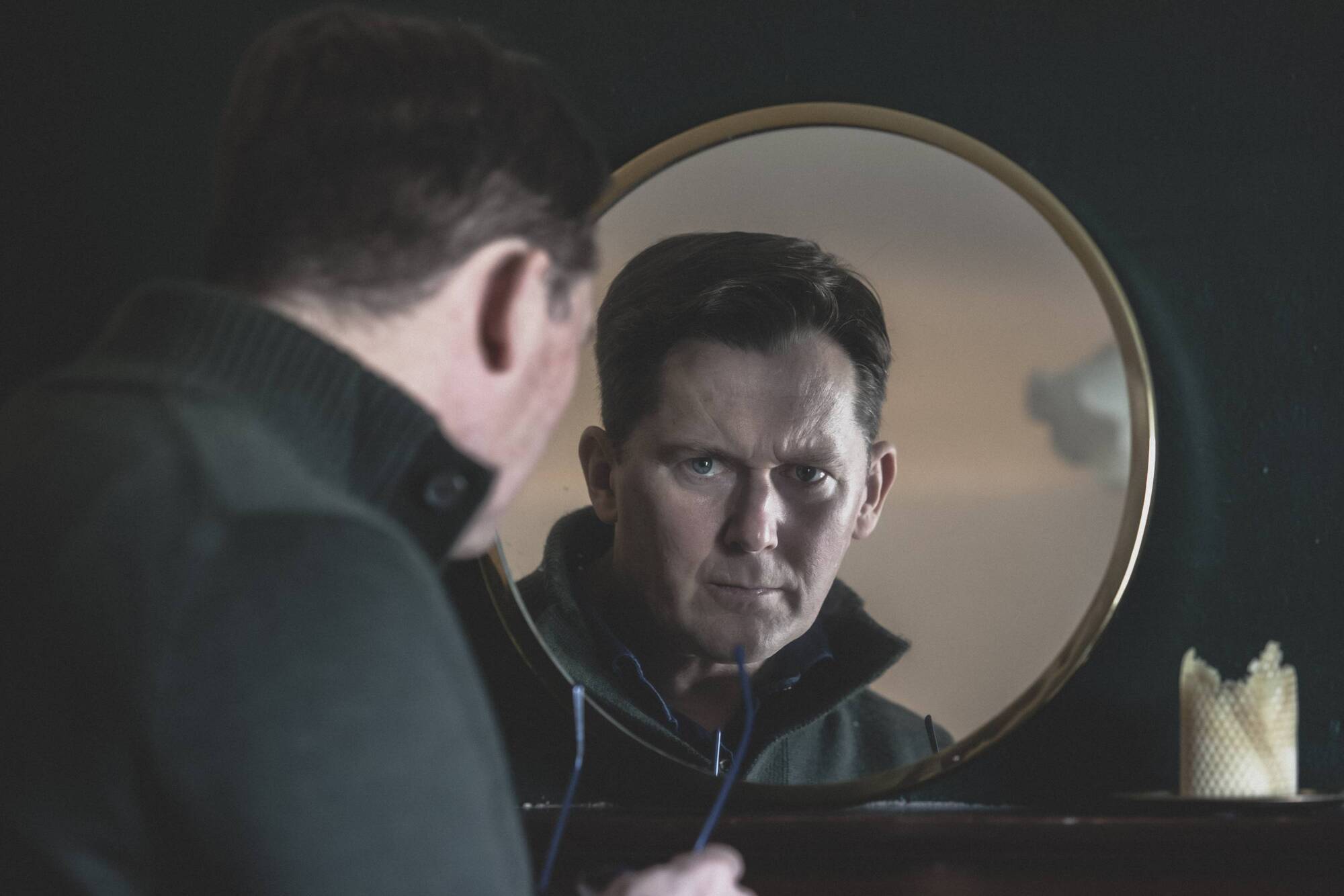
Shane Casey returns to ‘The Young Offenders’ next year – in the meantime he’s back with his second self-penned play, writes Pat Fitzpatrick
Shane Casey: "I was the least likely person to be in a musical. I could hold a note, but I couldn’t dance, so I was stuck behind everyone else". Picture: Enrique Carnicero

Shane Casey: "I was the least likely person to be in a musical. I could hold a note, but I couldn’t dance, so I was stuck behind everyone else". Picture: Enrique Carnicero

Shane Casey pops up on Zoom in front of a poster for Alfred Hitchcock’s 1954 movie, Rear Window, with the text in Spanish.

I tell him he’s pretentious and that must be in preparation for an interview with The Guardian.

“That’s exactly it!” he laughs.

“Where we live now, we can see into the houses of all our neighbours, it’s like a movie set. It’s very like Rear Window. And that’s the closest Grace Kelly has ever looked to my wife!”

You could half-imagine that coming from Billy Murphy, the character Casey plays in the runaway success, The Young Offenders. But I get the sense that Casey is trying to put some distance between himself and his most famous character, if nothing else, for the benefit of his career.

After graduating from Coláiste Stiofáin Naofa and acting in amateur theatre productions for a year, Casey got a part in Singing in the Rain.

“I was the least likely person to be in a musical. I could hold a note, but I couldn’t dance, so I was stuck behind everyone else. How I got the gig is beyond me. But it gave me a bit of momentum.”

Shortly after that, he became friendly with Hilary Rose (who plays Mairéad in The Young Offenders, and is married to the creator of the show Peter Foott) when she and Casey were acting in The Granary Theatre.

He played opposite her in Handy Sandie on The Republic of Telly as her boyfriend, but it didn’t sit right.

“Eventually I said, I don’t want to be doing this, the working-class stuff, I don’t want to be typecast.

“Peter [Foott] said: ‘Your priority should be to work, not worry about being typecast’. Two years later he asked me to audition for the guard in The Young Offenders film, I didn’t get the part. He said my audition was crap, like, but there is the other part, Billy Murphy. I said: ‘Hang on, the working class scumbag, why would you want me for that?’”

Casey laughs at this. But as he looks forward to the latest season of The Young Offenders hitting our screens next spring, he’s also keen to put his own writing talents on display.

Shane Casey: "I don’t want to be doing this, the working-class stuff, I don’t want to be typecast". Picture: Enrique Carnicero

His play Wet Paint had a successful national tour in 2019 and he’s back now with The Man Who Talks to Statues. 

This is starting out life as a radio play on Newstalk, with plans for stage and TV versions later. He strikes me as someone who’s bulling to stretch himself creatively and to break new ground.

“I was writing this pre-covid. I’ve been sitting with it for a long time. I went down to Cormac O’Connor [an accomplished sound designer based in Ringabella] and I told him it could be a play, a radio play, a novel, and maybe a TV show. He said let’s get the radio play done first.

“We got to a point, but we weren’t sure how to end it because I was already jumping ahead thinking how would I do it as a play.

“So, I went off to Ruth Hayes, she won an IMRO award for her radio play, Whispers. I said: ‘You might be the person to get this over the line’. She got us production money, we went back down to Cormac O’Connor and re-recorded it with extra voices other than mine, so it’s palatable to listeners.”

The Man Who Talks to Statues is confusing in all the right ways.

The narrator, Darren, has a car crash on his way to a Tinder date, in North Cork, and ends up playing racquetball on the streets of Limerick with a statue of Richard Harris, while Terry Wogan provides commentary. It’s light and shade, funny one minute, dark the next.

“I wasn’t too hung up on the class thing in this story, Darren is closer to me, he’s not in the crime fraternity. He’s a lad who probably did Arts in UCC.

“The audience will be going, this fella is a bit mad. Oh, he crashed the car, oh he’s robbing a car, oh he’s on the piss in Limerick and he’s messing in the bar, and then it takes a massive turn and he’s talking to these statues and you’re wondering, what’s going on here?

“And then there’s a big confrontation. I want the audience to be second-guessing themselves.”

Darren feels lost, with more than one other character asking him if he’s alright. Are we supposed to pity him?

“I feel sorry for him, the frustration of trying to communicate and getting things wrong. But this is a male fantasy, going on a road trip. When I lived in Dublin, I remember seeing a guy going into the Boar’s Head pub, it was a couple of days after the All Ireland and it was obvious this guy was on the lash for a few days.

“I think there’s a macho element surrounding drink, he goes for a few pints here, and then another couple over there – it’s the big man scenario. We’re just on the cusp of dealing with male mental health, talking about stuff a bit more. This guy struggles to talk about stuff.”

Men talking, or not talking, is a familiar topic for Casey, one he explored in Wet Paint. Why did he choose to use statues here?

“I liked the idea, The Man Who Talked to Statues. I said it to Emelie Fitzgibbon, who I know from my time at Graffiti (Theatre Company), she thought it was a great title, I should write that. So I think I’m trying to impress my teacher,” he says, laughing at himself again in a very Cork way.

Shane Casey: "I want to contribute to the tapestry of the city — I’m going to do what I like to do, but I like knowing there are other people around doing good work". Picture: Enrique Carnicero

There is a rough edge to Shane Casey. If he’s not acting, writing, hosting workshops, or helping promote Irish Guide Dogs for the Blind, you might find him in a kick-boxing ring.

“It was something I always wanted to do. Light contact fights, now. I actually got smashed up in one of them, I turned to the referee and said, ‘light contact my hole — your man was trying to rip my head off!’”

He’s back in the city now, after a period renting in north Cork.

How’s he finding it?

“I love Cork city. I love the coffee-shops, bars, and little restaurants. Douglas St is great. I’m trying to contribute to my place in the city — I need to go to more plays. I went to the Cat Club recently, I’m really glad it’s still there.

“I want to contribute to the tapestry of the city — I’m going to do what I like to do, but I like knowing there are other people around doing good work.”

Casey is keen to point out he couldn’t have made his latest play alone. “I found really good scaffolding this time. Ruth Hayes, Brian Desmond [the director], Cormac O’Connor, and Michael Sands came in and started playing other parts as well.”

There was one other inspiration.

“I was working with Bill Nighy in Rome — that’s my name drop — he was very encouraging when I told him about my idea for The Man Who Talks to Statues. He said: ‘Shane, you have to make this play, because if you don’t, it’s not going to happen’.”

It’s happened. And I’m sure Bill would approve.

  • The Man Who Talks to Statues, Newstalk, Sunday November 19, 7am. Repeats Saturday November 25 at 9pm

x

More in this section

Scene & Heard

Newsletter

From music and film to books and visual art, explore the best of culture in Munster and beyond. Selected by our Arts Editor and delivered weekly.

Cookie Policy Privacy Policy Brand Safety FAQ Help Contact Us Terms and Conditions

© Examiner Echo Group Limited