Cork In 50 Artworks, No 24: Small Rosc Symbol, by Patrick Scott
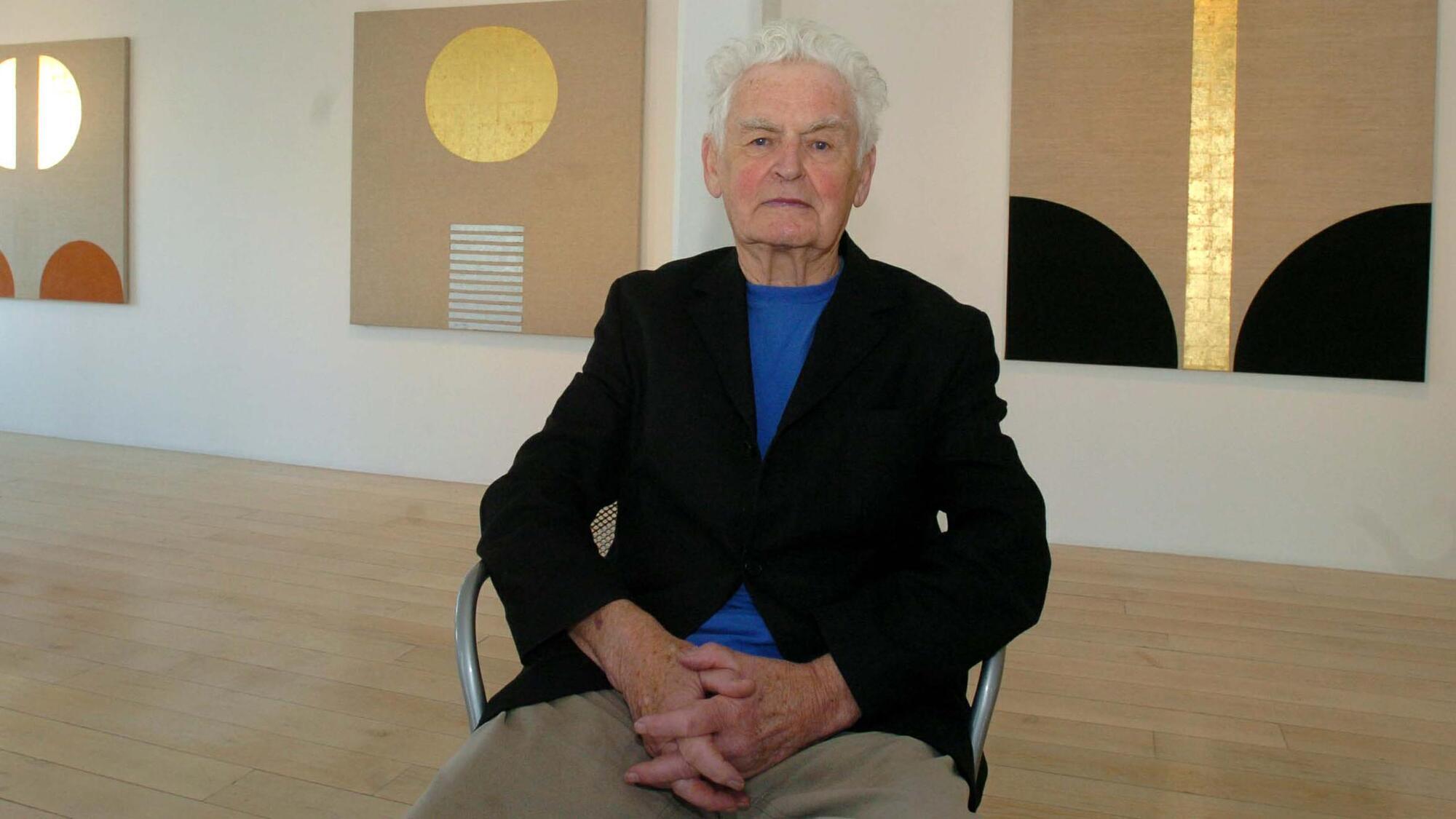
The late Patrick Scott, pictured at the Fenton Gallery, Cork. Picture: Maurice O'Mahony
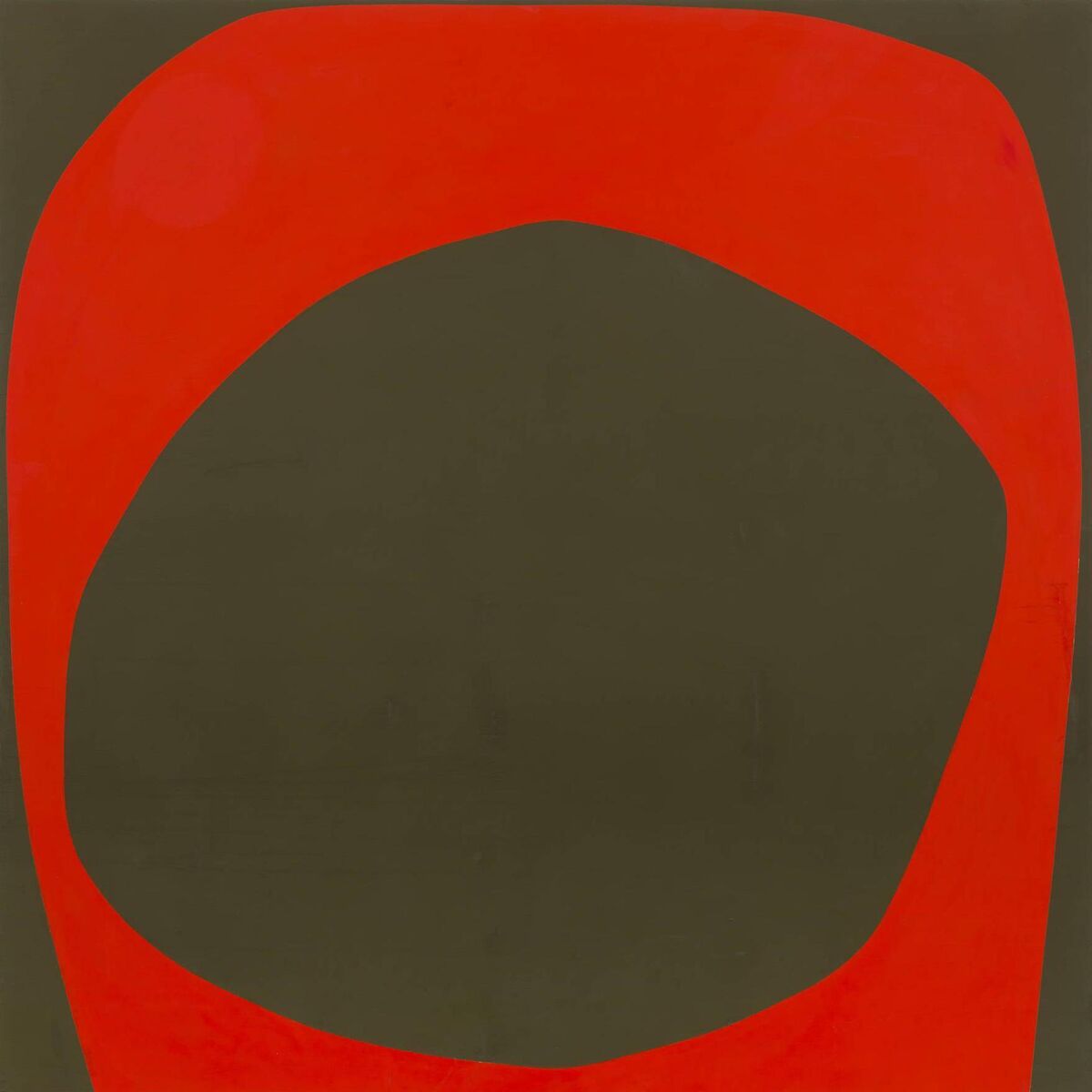
Patrick Scott’s Small Rosc Symbol was made as a design motif for the first Rosc exhibition of international art in Dublin in 1967. Infamously, neither this iteration of Rosc – nor the second, in 1971 – featured the work of any Irish artists in the actual exhibition, so Scott alone had the distinction of having his work associated with it.
His involvement came about through his first career, as an architect. Scott, born to a farming family in Kilbrittain, Co Cork, on January 4, 1921, trained in architecture at University College Dublin. He worked in the practice of Michael Scott (no relation) for many years, designing the mosaics at the Busárus terminal in Dublin, among other projects.
But art was his calling; in 1960, he represented Ireland at the Venice Biennale of contemporary art, and that same year he left his job to become a full-time artist.
Michael Scott, his former boss, was the founder of Rosc, and its chairman for many years. “Michael would have gone out to the biennale in Venice,” says Christina Kennedy, head of collections at the Irish Museum of Modern Art. “He was very familiar with contemporary international art, and was very keen that Irish audiences should get to see it too.”
Michael Scott’s commission for the Irish Pavilion at the New York World Fair in 1938 had been selected as the best building in the show, and he was endlessly ambitious.
“He believed that Ireland should have a permanent pavilion in Venice, though that never happened.”
The elder Scott brought Patrick Scott in to work on Rosc, which was to run at the Royal Dublin Society and the National Museum. The RDS was not the most handsome of buildings in which to mount an exhibition of world-class art, “and it was Patrick’s idea to use white cotton and muslin to cover the unsightly aspects of the space.”
This innovation was much admired, and facilitated the installation of work – by Pablo Picasso, Roy Lichtenstein, Jim Dine and many more - by the Irish-American curator, James Johnson Sweeney. In all, Rosc ’67 featured more than 150 works by 50 artists. At Sweeney’s suggestion, it also included a number of archaeological objects uprooted from around the Irish countryside.
Michael Scott had assembled a formidable committee to help him run the exhibition. “There was Dorothy Walker, who was married to the architect Robin Walker, and became very well known as an art critic; Anne Cruikshank, who was quite a firebrand, and had no trouble dealing with advisory committees and the like; as well as the artist Cecil King.
“It was a very high-powered team. Michael had great connections with the Arts Council, and Rosc had a reasonable budget. It also had support from Charlie Haughey, who was Minister for Finance at the time.
"For Haughey, Rosc was a very personal project; he could see how it would benefit Ireland. It was Haughey who persuaded the museums to lend monuments for the exhibition. Very often, these were removed at night, and when word got out that monuments were being taken, the gardaí were called on to protect them at a number of places.”
Rosc drew critics and audiences from around the world, who encountered Patrick Scott’s Small Rosc Symbol reproduced as a motif on the cover of the exhibition catalogue and all its associated literature and banners.
“Many of the reviewers picked up on Patrick’s design, and praised it,” says Kennedy.
Small Rosc Symbol was originally rendered in red and brown oil paints on a 152 x 152 cm square panel. Rosc means ‘the poetry of vision’, and Kennedy says Scott's painting is "beautifully poetic".
"It’s an abstract form that could be interpreted as a mouth or a cry. Patrick was often credited as being Ireland’s first abstract artist, but he always said his work was rooted in nature. Many of his works were inspired by the appearance of circles in nature, and the horizon line he grew up observing in Kilbrittain often appeared as a visual motif in his work. His paintings can be seen as the distillation of motifs into geometric forms.”
The Rosc exhibitions galvanised interest in contemporary art in Ireland. “The media got behind them, and schoolchildren got the day off to attend.
"While there was some hoo-ha over the shows, they actually coincided with other initiatives in the Irish art world; the Project Arts Centre in Dublin opened around the same time as the first Rosc exhibition, and the Hendricks Gallery did an interesting contemporary exhibition that year as well. So Ireland was not entirely a backwater as far as the visual arts were concerned.”
The sixth and last Rosc exhibition was in 1988, and by then it had run its course. "The committee was voluntary, and its members must have been happy to step away from it at that point. IMMA was founded in 1991, and has largely carried on the work that Rosc was doing,” says Kennedy.
Scott’s Small Rosc Symbol came to IMMA in 2005 as a heritage gift from the PJ Carroll collection, in lieu of taxes. “It’s one of twenty Patrick Scott pieces in the IMMA collection," says Kennedy. "We have examples of his graphic works, screens, tables and posters, as well as a number of the gold paintings for which he’s best known.”
Scott passed away, aged 93, in 2014.