Dungeon Synth: Cork aficionado David O'Mahony explains the cult genre made popular by Stranger Things
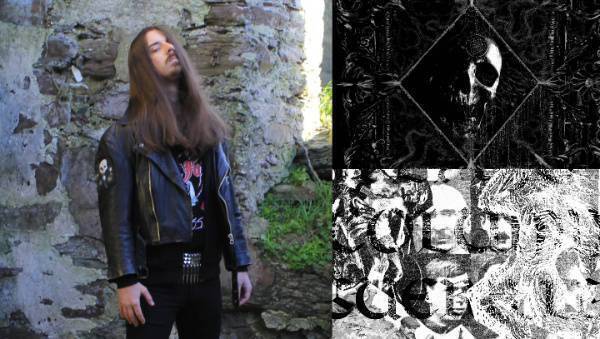
David O'Mahony founded dungeon synth label Nocturnal Augury in East Cork.
Just when you thought music had run out of genres, along comes dungeon synth. Inspired by 1980s synth music and by classic fantasy novels and movies, dungeon synth is the cult sound that, much like Tolkien’s Nazgûl taking flight, has rippled across the internet.
Its travels have brought it to Ireland, where East Cork record label Nocturnal Augury and founder, David O’Mahony, are waving a banner for this celebration of old-school fantasy and of lo-fi electronica.
O’Mahony describes dungeon synth as a portal to another dimension. “It gives you that escape. It’s not harsh and bombastic, and there’s not too much going on,” he says.
Much as a big, tattered paperback sword-and-sorcery novel, with its yellowed pages and tiny print, might help sweep you off to a fantastical world, so dungeon synth has a Narnia-like quality. Push all the way to the back of the wardrobe, and who knows what you might find there? It also celebrates the retro tabletop role-playing feel of games such as which have had an unlikely rehabilitation thanks to Netflix’s
O'Mahony, originally from Ballincollig but now living near Youghal, says:
O’Mahony is a musician with a background in heavy metal, and he set up Nocturnal Augury as a way to share his many dungeon synth projects. These include inspired by the writings of Clive Barker and his films, and which has a harsh, horror-movie quality. But he also evokes the “dungeon crawl” vibes of classic D&D with albums such as and – the line comes from Yeats’s – and released under the moniker Derranged Thrall.
The best way of describing dungeon synth is to imagine Kyle Dixon and Michael Stein’s haunting theme if it were put to service soundtracks for a 1980s adaptation of Tolkien’s It is embedded in the 1980s – a high-water mark for the fantasy genre, whether in the form of D&D or movies such as or The results are retro and otherworldly – but with a comforting quality, like rain pattering against windowpanes on a cold January night.
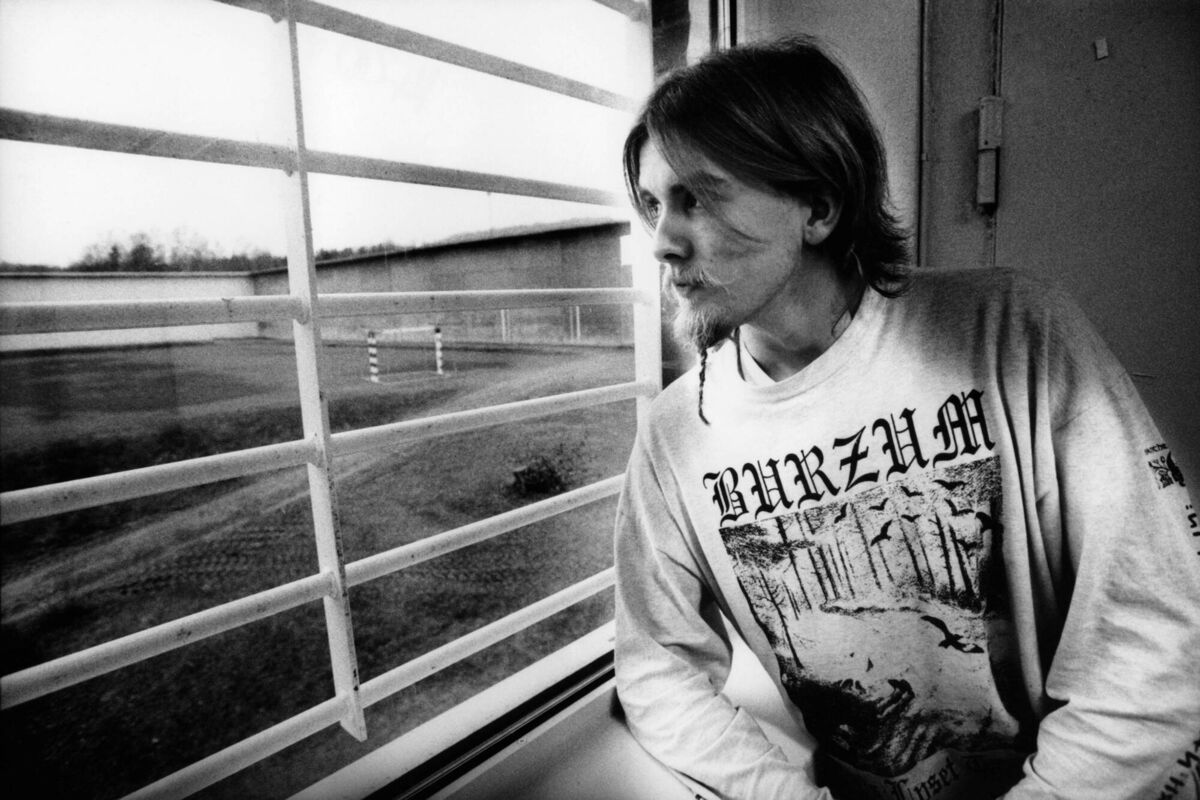
The paradox is that dungeon synth’s origins are anything but benign. Its creation is in part credited to the notorious Norwegian death metal figure Varg Vikernes, who recorded under the name Burzum. In 1994, Vikernes was convicted of the fatal stabbing of Øystein Aarseth, also known as Euronymous and guitarist with rival band Mayhem, and of the burning of several churches.
Vikernes’s music had always drawn on fantasy: “Burzum” refers to the Black Speech of Mordor used by the villains in Behind bars, he had access only to a synthesizer and tape recorder – which is how he created one of the first dungeon synth albums, 1997’s (“the death of Baldr”).
He wasn’t the only metalhead getting into synthpop. Around the time that Burzum was recording Dauði Baldrs in his cell, another Norwegian musician, Håvard Ellefsen of Mortiis, was making “metal” music without traditional metal instrumentation.
“Back in the 90s, a lot of the kind of metal bands – they would make their demos and they would always have their intro tracks have synths,” says David O’Mahony. “Those interludes or outro tracks became full albums – a lot of those guys were listening to [early synth mainstays] Tangerine Dream, Vangelis, John Carpenter. They were basically making the synth equivalent of what they were making in their metal music. This Scandinavian, almost fantastical and medieval… very dark and lo-fi. They all liked Lord of the Rings. They probably all played D&D.”
Today, dungeon synth has quietly become a huge global genre – albeit one that remains thoroughly underground. Musicians tend to run their own labels and to release their music on sites such as Bandcamp. There is a healthy and tightly-knit scene in Ireland – in addition to Nocturnal Augury it includes musicians such as Mournhearth in Dublin, Cork-based Scriptor Hiberniae, or The Boreen based in Kildare. As the community continues to grow, O’Mahony hopes to eventually put on a dungeon synth event in Cork or Dublin.
“No matter what the industry or the mainstream looks like, there’s always an underground. A dungeon synth scene in Ireland is small,” he says. “The underground of anything in Ireland is small. It’s all little pockets.
Dungeon synth has a distinctive sensibility rooted in the grainy, sepia look of early role-playing books such as the first edition of or “If you were to pick a dungeon synth movie, [John Boorman’s dreamy 1981 Arthurian epic, filmed largely in Wicklow] would be the one. Maybe Herzog’s ” says O’Mahony – referring to arthouse director Werner Herzog’s funereal 1979 take on vampire lore, which has a synth-heavy soundtrack.
It is also a tape-based medium – in contrast to the more expensive vinyl, smaller labels can easily put out a run of 100 or so cassettes of a release for fans. “Cassettes are cheap to make and sell. If we’re going back to the aesthetics and the visuals, you can have a red tape, a black tape, a green tape. You can add little things to your tape – you can throw in stickers or whatever.
"You’re combining that D&D, that fantasy aesthetic. And you’ve got your early DIY underground music. You’ve got a lot mixed together. So that the tape is like having a horror movie on a VHS. It’s like how you should probably watch [John Carpenter classic] on VHS instead of 4K.”
The real magic of dungeon synth is that it reminds us of the value of escapism. In a world where there are so many demands for our time and attention, it is a music that does not call attention to itself. It is strange and enigmatic. At a time when we are overwhelmed with information, most of it trivial and irrelevant, dungeon synth dares to be mysterious.
“There’s something [about dungeon synth] that will let people escape. When I’m going to work and it’s foggy and it’s dark, I’m going to put on something that doesn’t make me think about work for half an hour,” says O’Mahony. “That’s what people like in this stuff. I put on the radio and I get all this happy-go-lucky stuff. The thing about dungeon synth is that it’s pure escapism.”
- Music from the Nocturnal Augury label can be heard at nocturnalaugury.bandcamp.com