Peig Sayers: Five things we learned from the TG4 documentary
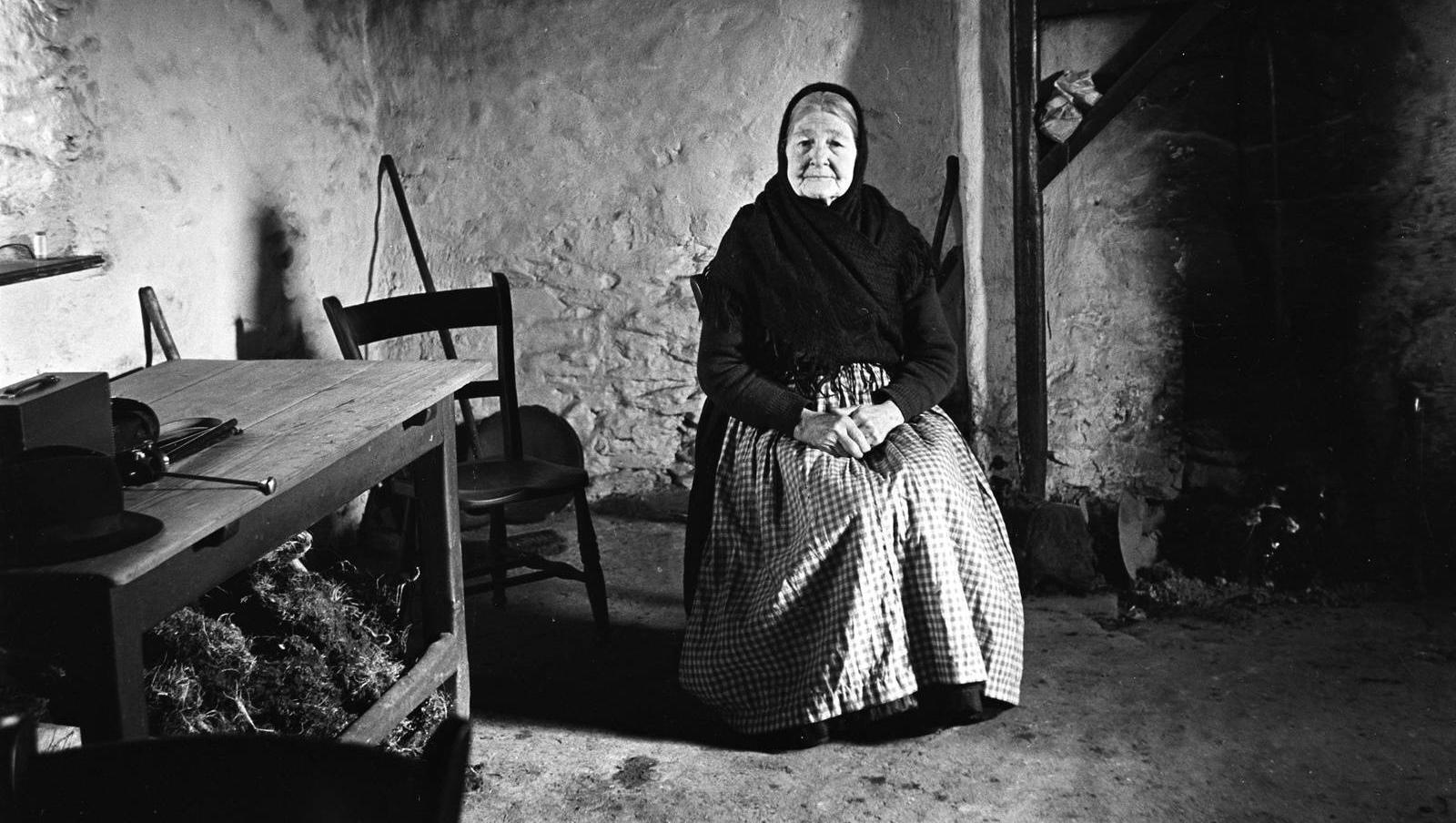
Peig Sayers: there was more to the master storyteller than your Leaving Cert had you believe
While she's been remembered by generations as something of a miserabilist, spinning tales of woe and ill-fortune that made her the object of many a Leaving Cert's resentment, TG4's mission to re-examine the legacy of Peig Sayers has come to fruition with an hour-long documentary.
After a chat with her Beo ar Éigean co-presenters, where they dig up their received wisdom on the storyteller and establish the bitter taste her bleaker stories left with learners, Sinéad Ní Uallacháin sets out to find out more.
It's been a generation or so since Peig's eponymously-titled book was on the secondary-school curriculum, having finally been removed in 1995.
Many people of a certain vintage point to her writing as a deterrent from learning Irish ("That bitch ruined my life!", exclaims one person, in a story).
It was never Sayers' intention to be placed on the curriculum in the first place, of course. A constant of the documentary, in fact, is questioning her suitability for the syllabus in the first place - a decision attributed to the early Irish governments' attempts at placing an established Irish canon in schools, as well as selective interpretation on her son Maidhc's part when writing stories down.
It's one thing to see old pictures and read tales that reinforce perceptions of Sayers as a doom-sayer, especially when set against excerpts of others' work satirising her life and legacy.
But when Ní Uallacháin steps into the archives at the National Folklore Collection at UCD, history springs to life. Pictures of a broadly-smiling old woman, taking obvious joy in speaking with others, cast her in a new light.
One of the documentary's real standout moments, though, comes when existing recordings of Peig's storytelling are played from reel-to-reel tape, revealing a raspy, colourful voice that betrays a natural orator. "She was an entertainer. She filled her brief well," remarks a clearly-awed Ní Uallacháin.
Heading home for Corca Dhuibne, a homeplace she shares with the great storyteller, Ní Uallacháin makes for the Blasket Centre, where she speaks with Máire Ní Dhálaigh, who sets about righting a long-held wrong.
"Peig was the Netflix of the time," says Ní Dhálaig, outlining a different side to Sayers' legacy, one of a full house where friends and neighbours would gather to be entertained.
Ní Dhálaigh also stripped back some of the piety and sombre nature of the Peig caricature, telling of a fondness for tobacco, and the odd mood swing in its absence!
Sinéad then proceeds via boat to the Great Blasket, where we meet various islanders, discussing life for Peig as it would have been when she arrived after an arranged marriage, and making the best of bleak circumstances.
Here we find that the piety and sainthood ascribed to Peig Sayers is no reflection on the real person - the gifted storyteller alluded to earlier emerged in over 350 stories told to various archivists - fairy stories, comedies, and slices of daily life - while friendships on the island crossed old lines between Catholicism and the Church of Ireland.
A flirtatious and bawdy nature reveals itself in these chats, as a fondness for cursing might take some by surprise ('a balm to the heart'), while a fondness for young folklorists might not be such a shock - referring to one young scholar as 'The Handsome Boy' in correspondence, and remarking of 'a mother's love' for another.
Over 25 years since Peig's work left the curriculum, we find that the Gaelgeoirs and artists of present-day Dublin have developed a real relationship with her work. Demand for her work at the city's Siopa Leabhar remains steady, while a new book on her legacy, Níl Deireadh Ráite, has done well.
Visual artist Eoin P O'Murchú discusses setting recordings of her voice to modern ambient music for the YouTube generation, we see Peig as a prop in a stage play looking at the language today, and Sharon Granahan shows the world her Peig Sayers tattoo, pointing to the storyteller's resilience as an inspiration.
And while poet Nuala Ní Dhomhnaill's newly-commissioned work, Hitler is Dead, paints imagery of a living Peig, the lasting image of the documentary has to be a little chat that Sinéad herself has at Sayers' grave to end the story - an apology for misconception, and a new-found appreciation for an unfairly-maligned icon.