Peig Sayers: The full story in a new book-and-CD set
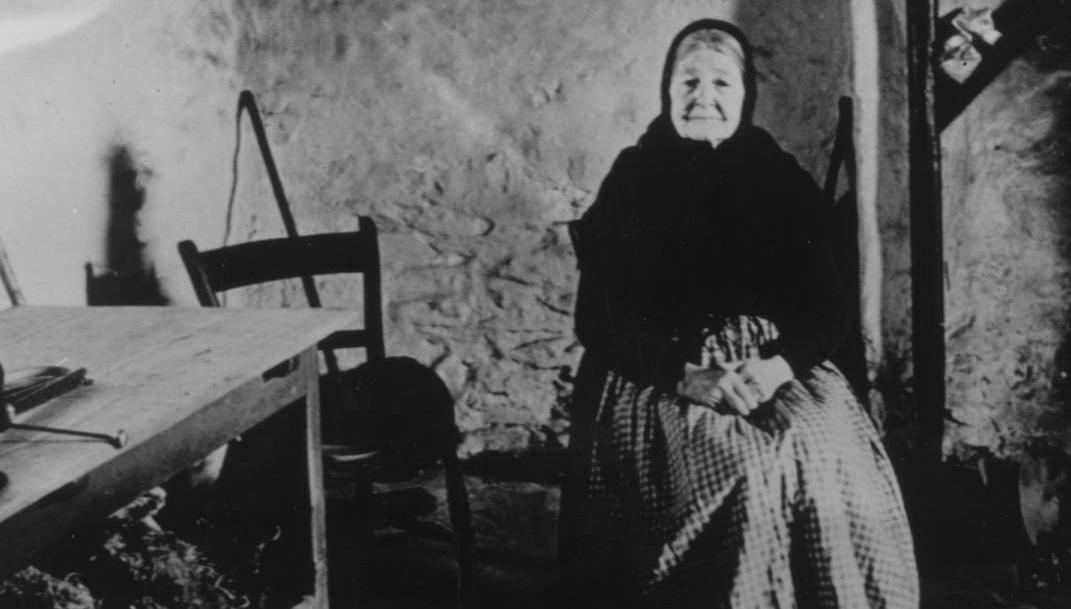
Peig Sayers: Had no singing voice, but she had ‘the gift of talk’ — ‘caint are barra na teanga’, as she puts it as Gaeilge, laughing at her ‘drake’s singing voice’.
- Peig Sayers: Níl Deireadh Ráite/Not the Final Word
- Bo Almqvist and Padraig O Healia eds.
- New Island Books with 2 audio CDs €24.95
- Review: Anne Lucey
THE rather “cráite” Peig of the school curriculum was not the full story, in the light of “ Peig Sayers: Níl Deireadh Ráite “ an innovative book showcasing Peig’s considerable skills in the oral tradition and her huge standing among scholars.
“Not the Final Word” as it is subtitled is a collection of Peig’s tales and social history, recorded by some of the leading lights of the Irish Folklore Commission, itself a remarkable movement, in the six years before Peig Sayers’ death in 1958.
Interviewed in the Kerry Irish, by people she knew well over the decades, there is a relaxed, almost fireside approach, albeit Peig was for much of the recordings in a hospital bed at St Anne’s in Dublin in 1952.
Peig had no singing voice, but she had “the gift of talk” – caint are barra na teanga as she puts it as Gaeilge, laughing at her "drake’s singing voice" with An Seabhac, Padraic O’ Siochfhradha. The west Kerry scholar and later senator, author of the highly entertaining Jimín Mháire Thaidgh is among the team of the Irish Folklore Commission to interview and record Peig in hospital in 1952.
While the focus traditionally has been on the Blasket “writers” it is arguable if proper deference has never been accorded to the ephemeral spoken or oral tradition of the island; certainly not in book form, and certainly not in the kind of multi-platform approach here where the dialogue prompted by live interviewers is included, the whole book is both in Irish and in English and accompanied by CDs of the original recordings.
The recordings themselves are remarkable. Made on a wire recorder plugged into the electricity, they have survived while other wax recordings have not. In any case, Peig’s stories were mostly written down and not recorded at all.
The new digital and social media age, with its acceptance of mixed platforms, has maybe paved the way for a new appreciation of the ancient art of oral storytelling, the format employed in this book tempts us to think.
There may also be a new appreciation of Peig as a real female and as a female teller of tales. This is not mere following of fashion, but a return to what was in fact the case: Many of us who grew up in the pre-television which lasted well into the 1970s in some parts, well remember how it was the women who were the storehouses of the past; how often it was the woman - always known by her first name - who had a liking for cards and who told the most nuanced fireside stories. They had the longest memories too able to” contact trace” every family history in the parish and beyond.
To be fair, a true appreciation of the skill involved in the oral storytelling as a highly stylized art that went back to Homer only really began around the time of Peig’s death with the ground breaking work The Singer of Tales, by Harvard scholar A B Lord.
Peig herself, Níl Deireadh Ráite reminds us, was steeped in the oral tradition. She was not only the daughter of a renowned west Kerry story teller, Tomás Sayers , but Padraig O Guithín her island husband was an accomplished teller of Fenian tales.
It seems to have been the English Scholar and writer Dr Robin Flower, An Bláithín as he was known on the Blasket where he spent the summers between 1910 and the 1930s who discovered Peig.
A medievalist and deputy keeper of Manuscripts in the British Museum, Flower was the first to take substantial collections from her, including sound recordings which do not survive.
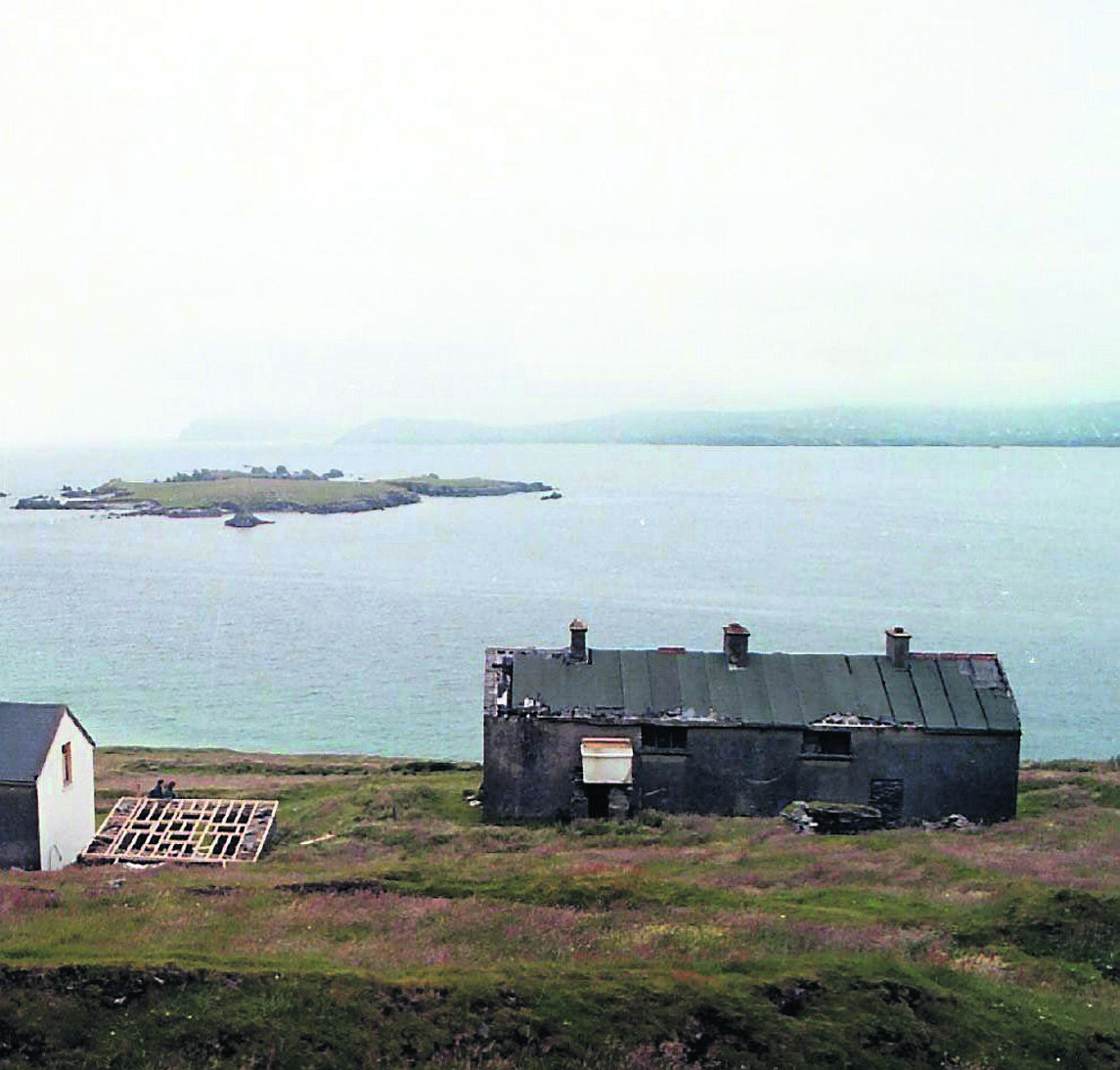
Peig Mhór, as she was known on the island because of her physical stature, is how Flower refers to her too. He captures a younger and stronger Peig as he looks back in his book The Western Isle and the portrait is included in the wide-ranging introduction:
“Big Peig – Peig Mhór- is one of the finest speakers on the Island; she has so clean and finished a style of speech that you can follow all the nicest articulations of the language on her lips without effort; she is a natural orator with so keen a turn of phrase and the lifting rhythm appropriate to Irish that her words could be written down as they leave her lips, and they would have the effect of literature with no savour of the artificiality of composition. She is wont to illustrate her talk with tales…. ” an astonished Flower writes.
Around a dozen scholars followed his lead, and some 3,200 pages of stories were taken from Peig.
Her reputation spread quickly.
Seamus O Duilearga founder of the Irish Folklore Commission had been focusing on Kerry, particularly Iveragh. It is likely he heard about Peig from Flower but in any case by 1946 he was so impressed he bought her a chair - eschewing the advice to send her a pair of slippers and a generous supply of tobacco with a new pipe!
She liked her drop of whiskey too we learn – shattering the po-faced picture of the Leaving Cert olagóner!
There is a nice slice of tales ranging from possessed curates to a strange one from the Fiannan cycle with its reference to Fionn’s and necrophilia, ;there are Irish versions of European tales. The English translations, thankfully, are faithful to Kerry Hiberno-English with its unique phraseology.
Interestingly the pedigree of the story is sometimes given – her husband told her, or her father or the local teacher . And entirely in the delightful manner of the oral tradition very often this tale has been taken down many years previously and is a slight retelling.
There is much personal information to be gleaned of Peig herself from the stories she tells: The Farmer who lost his sons and how he was dissuaded from taking his own life is a tale she heard from her old employer by way of comfort on a day in Dingle when she was in the throes of despair after losing her beloved young son Tomás from a fall off a cliff. This lends depth to the episode we all remember recounted in the shcool book.

The self-critical artist in Peig comes through at times, underlining that to Peig, now in her 70s a lifelong practice of storytelling was a skill to be honed still .“I haven’t put it together very well,” she tells Seamus O’Suilleabháin at the end of The Devil’s Son as Priest – in actuality a tale as sparse and finely woven as any Icelandic Saga.
The multi-faceted approach – learned and scholarly introduction, bilingual presentation and actual recordings - in this book prompts imitation.
The national folklore collection contains millions of pages; thousands of sound recordings and pictures even some video. The template in Peig Sayers : Níl Deireadh Ráite: of academic research, original material and the use of sound in 2 CDs is highly stimulating and might perhaps be used to mine the rich volume of material and bring it before the public.
Pádraig O’Héalaí. a retired senior lecture in Modern Irish at NUI Galway, and a former editor of the journal Béaloideas, builds on the work of his late co-editor Bo Almqvist, head of the Department of Irish Folklore at UCD . The Swedish Almqvist, had himself carried out much collecting from Blasket Islanders. The co-edited book was planned before the death in November 2013 of Bo Almqvist.