From the internet to historical stories: Meet the new female voices in Irish literature
Claire Hennessy on 15 debuts to watch out for in 2021
From the internet to historical stories: Meet the new female voices in Irish literature

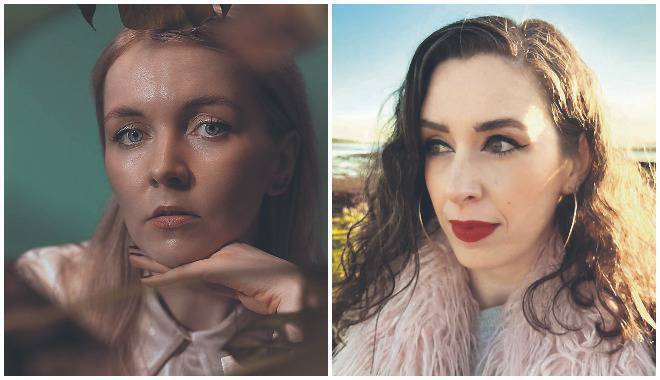
L-R: writer Roisín Kiberd and poet Victoria Kennefick

ONE of the few pleasures unchanged by these sludgy times we inhabit is the joy of reading, and in particular the thrill of finding a new writer whose voice or take on the world speaks to us. Sometimes it’s a sense of recognition, a crevice in your soul being quietly filled up; other times it’s a giddy literary crush, the sort of infatuation that sees you become evangelical about a particular title. 2021 may be many things, but it’s not short on opportunities for this literary magic.

This year sees a continued surge in Irish women’s writing and a dismantling of any preconceived notions of what that phrase actually connotes. There’s more to these 2021 debuts than the misery of Peig Sayers or the college shenanigans of Sally Rooney’s characters - though there’s plenty of those things, too, as one would expect from today’s Irish writers. 

L-R: Roisín Kiberd's The Disconnect, Kerri ní Dochartaigh's Thin Places

On the one hand, we are hyper-connected with the now-now-now of the world via our smartphones, with a slippery overlap between the madness of the internet and what we fondly refer to as ‘real life’ - a topic addressed in Roisin Kiberd’s superb essay collection, The Disconnect (Serpent’s Tail), in which the author muses “Sometimes I think I have spent so much of my life online that I was raised by the internet.” 

On the other hand, we remain haunted by the atrocities of the recent past on this insular little rock at the edge of the Atlantic, things that cannot be simply deleted from the world.

That past is confronted head-on by Kerri ní Dochartaigh, whose memoir Thin Places (Canongate) paints a bleak picture of childhood in Derry during the latter part of the Troubles, and an adulthood informed by the trauma of violence. Amidst this, she seeks out spaces within nature that feel sacred, “places that make us feel something larger than ourselves, as though we are held in a place between worlds, beyond experience.” 

The brutal honesty of this book makes the writer’s search for grace all the more powerful, a strategy also adopted by Zoe Holohan in As The Smoke Clears (Gill). Holohan lost her husband of four days to the Greek wildfires of 2018; she writes about the physical and psychological aftermath with a hard-earned sense of hope. Admitting she was often a difficult patient, Holohan vividly evokes a life made up of small “daily victories”, where pain is never minimised but equally never allowed dominate.

How this country has treated anyone ‘difficult’ or ‘different’ is often addressed in this year’s fiction titles. The narrator of Tish Delaney’s Before My Actual Heart Breaks (Hutchinson) recalls, “I learned how to take a slap and to never forget that it was no one’s fault but mine that I needed it.” Delaney captures the Irish vernacular perfectly in this moving tale of love and repression, and is not alone in her depiction of how Ireland manages mental distress and illness. 

L-R: Louise Nealon's Snowflake, Megan Nolan's Acts of Desperation

Louise Nealon’s Snowflake (Manilla) sums it up perfectly in college student Debbie’s assessment of her small town (and by extension her beloved uncle): “It is socially acceptable to be an alcoholic in our parish as long as you don’t get treatment for it. Being fond of the drink is a form of survival around here.” Nealon balances humour and devastation well in this relatable novel.

Familial mental illness is also tackled in Eimear Ryan’s Holding Her Breath (Penguin Sandycove), in which narrator Beth’s grandfather, a poet, is best known for his suicide. The mystery surrounding his final summer pulls Beth in, in part due to an ill-fated affair at college, and in part due to her grandmother’s declining health. Among the many joys of this finely-polished gem of a book is its depiction of a young woman whose body is considered in terms of its strengths rather than its perceived deficiencies; Ryan’s experience as a sports journalist is evident here.

She’s not alone as a columnist with a debut this year; Megan Nolan’s much-anticipated Acts of Desperation (Jonathan Cape) is out in the world and does that rare thing of living up to the hype. The plot - a toxic relationship - is fairly straightforward, but the strength is the laser-sharp focus of its emotional and psychological impact on the unnamed narrator. “I love myself in love,” she muses. “I find my feelings fascinating and human, for once, can sympathise with my own actions.” Her self-destructive tendencies make for uneasy, yet compelling reading.

A sense of impending doom permeates Una Mannion’s A Crooked Tree (Faber), in which fifteen-year-old Libby recalls one particular summer with her four siblings, full of pitch-perfect 1980s details and coming-of-age observations: “I knew I should grasp this moment, with all of us together, and hold it. But everything spooling around me felt unreal, nothing was what it should be.” Mannion chairs the BA in Writing and Literature at IT Sligo, and this novel is a strong advertisement for the creative work being done within academia. 

L-R: Laura McKenna's Words to Shape My Name, Fiona Scarlett's Boys Don't Cry

Laura McKenna’s historical Words To Shape My Name (New Island) also falls into this category; this tale of Lord Edward Fitzgerald’s manservant formed the creative component of a PhD and its clever engagement with the nature of texts reflects the time and care needed for this degree. The positive impact of doctoral study is also evident in Louise Kennedy’s The End Of The World Is A Cul De Sac (Bloomsbury); the sharp social observations of her PhD topic, Norah Hoult, are echoed in her own short stories, each one a self-contained masterpiece.

Fiona Scarlett rivals Roddy Doyle and Paul Howard in capturing Dublinese with Boys Don’t Cry (Faber), narrated by two brothers. Finn isn’t too worried about the bruises that keep cropping up; a year later, Joe tries to manage being the scholarship kid in a posh school, who his classmates view mostly as a potential supplier of drugs. 

That readers know a tragedy is coming makes this book all the more powerful. Dublin also turns up as a setting for two strong crime debuts, with Rachel Ryan’s Hidden Lies (Piatkus) jumping inside the head of a young mother who may or may not be worrying too much about the secrets around her, and Catherine Talbot’s A Good Father (Penguin Ireland) delving into the unsettling world of a self-justifying abusive man.

L-R: Victoria Kennefick's Eat or We Both Starve, Aoife Lyall's Mother Nature

Finally, among the many new voices to admire, there are poets. Victoria Kennefick’s Eat Or We Both Starve (Carcanet) explores food and desire, often with an eye on Catholicism - “the chalice sloshing with blood” at Communion, or the starving-girl martyrs of centuries past. 

This poised collection reads almost like a novel. Aoife Lyall’s Mother, Nature (Bloodaxe) reimagines work by Heaney and Dickinson with her new-mother eyes, in a collection that is both heart-warming and heart-breaking. After a miscarriage, she addresses her lost child: “the house you never lived in / is overwhelmed by all the people who didn’t know to come.” 

Poetry, as many have found over the past year, is the ideal form for the hard things in life; there is a precision there that can make it just that little easier to breathe, and a brevity that is welcome when our minds are so full of the world’s woes.

More in this section

Scene & Heard

Newsletter

From music and film to books and visual art, explore the best of culture in Munster and beyond. Selected by our Arts Editor and delivered weekly.

Cookie Policy Privacy Policy Brand Safety FAQ Help Contact Us Terms and Conditions

© Examiner Echo Group Limited