Movie Reviews: Time running out in The Dig; and Synchronic with Jamie Dornan
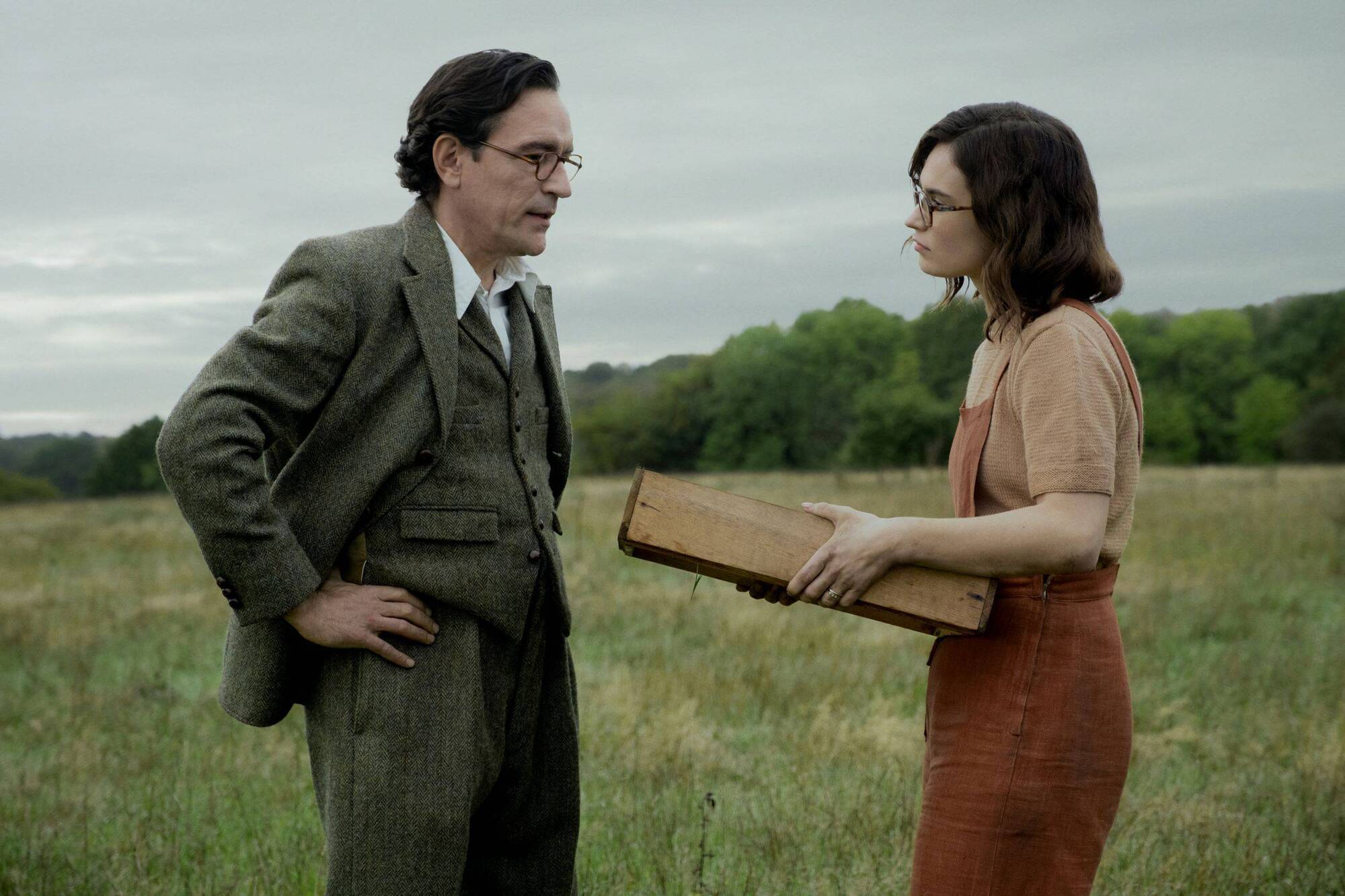
The Dig is an elegant and absorbing film that puts flesh on the bare bones of history.
The momentous events of 1939 provide the backdrop to (12A), which stars Ralph Fiennes as Basil Brown, a self-taught archaeologist who is invited to excavate a number of mounds on the land of Edith Pretty (Carey Mulligan) at Sutton Hoo in Suffolk. The working-class Basil and the upper-class Edith are an unlikely pair, but they share a passion for bringing the past to life. That the dig unearths an undreamed-of treasure is only part of the story: Edith, a widow, has been diagnosed with a terminal illness, and time is running out if she is to succeed in uniting past, present and future. Adapted by Moira Buffini from John Preston’s novel (which is based on a true story), and directed by Simon Stone, The Dig is a film that employs the method of its metaphors, painstakingly brushing away at the surface to reveal the truth of its characters. Carey Mulligan is superb as the refined, reserved Edith, whose ethereal persona masks a fierce love for her soon-to-be-orphaned young son Robert (Archie Barnes) and an obsession with ‘disinterring the dead’; Fiennes, meanwhile, is equally captivating as the socially awkward Basil, who combines an appetite for backbreaking work with an intelligence that goes beyond archaeology to embrace astronomy and physics. The story goes off at something of a tangent when the Sutton Hoo dig is hijacked by the self-important bigwigs from the British Museum, led by Charles Phillips (Ken Stott), and afterward pursues a parallel subplot exploring the troubled marriage of Peggy (Lily James) and Stuart Piggott (Ben Chaplin), but for the most part is an elegant and absorbing film that puts flesh on the bare bones of history. (Netflix)
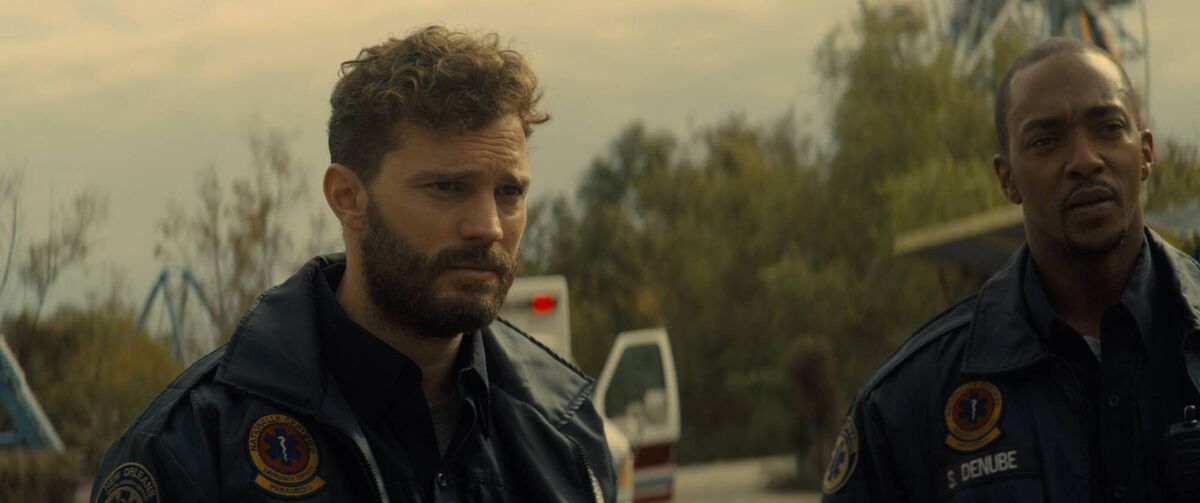
New Orleans paramedics Dennis (Jamie Dornan) and Steve (Anthony Mackie) are horrified when they start to see the impact of a new drug, (15A), which seems to cause its users to experience ultra-violent hallucinations. Matters quickly get personal when Dennis’s teenage daughter, Brianna (Ally Ioannides), goes missing after ingesting the drug, but while Dennis goes the conventional route to finding his daughter — informing the police, searching the streets, etc — Steve takes a more radical approach. Having secured a stash of synchronic, and discovered that the drug ‘messes with time’, Steve starts travelling back through time in a desperate bid to find Brianna before the brain tumour that has turned him into ‘a junkie paramedic cliché’ finally kills him. All of which sounds improbably melodramatic, but Justin Benson’s script, which is directed by Benson and Aaron Moorhead, is firmly rooted in the reality of Dennis and Steve’s relationship, which in turn allows us to accept the occasional flight of fancy. Steve, ‘an armchair physicist’, is deeply suspicious of time-travel theories (and takes a well-aimed swipe at ’s ill-considered Chuck Berry gag), but gradually comes to accept that he has a very limited capacity to perceive time as Einstein conceived it: ie that time is a perpetual now, if only we could rid ourselves of the ‘stubborn delusion’ that insists on experiencing time as a temporal flow. The result is a thought-provoking film that riffs on the nature of time and our imperfect understanding of how time and space interact, with Jamie Dornan and Anthony Mackie in compelling form as partners who are also best friends, and whose unbreakable bond transcends such trivial matters as life and death. (internet release)
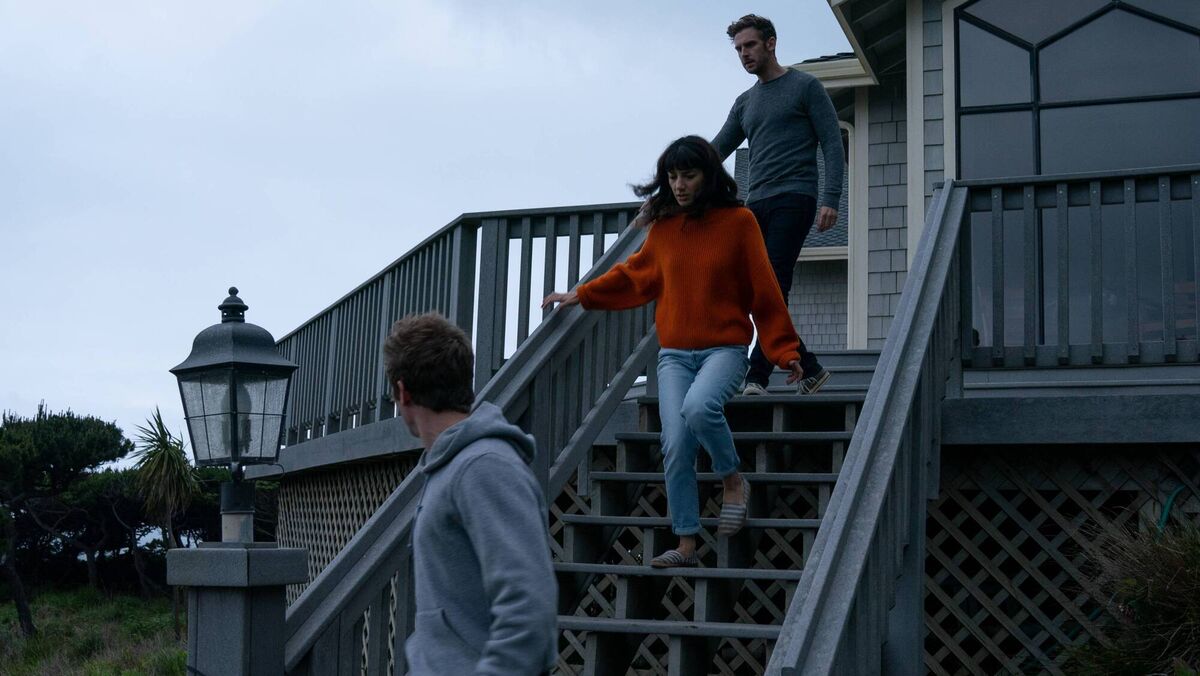
(15A) stars Dan Stevens as Charlie, a successful app developer who celebrates his latest breakthrough by taking his wife Michelle (Alison Brie) away for a weekend break at a remote Airbnb. Joining them are Charlie’s brother Josh (Jeremy Allen White) and his girlfriend Mina (Sheila Vand), with the latter suspicious that the landlord, Taylor (Toby Huss), refused her attempt to book their accommodation because he is racist. As night falls, however, and the quartet settles into their picturesque house between forest and sea cliffs, and drop a little ecstasy to get the party started, the strains and pressures begin to melt away — until we detect the unmistakable signs of an illicit affair, which is being watched and recorded by a masked figure lurking in the shadows. Written and directed by Dave Franco, is a psychological thriller that fairly hums with tension for its first half and we gradually realise that members of the shiny, happy quartet are secretly at odds. It’s a movie that we expect to deliver a traumatic tragedy, but when the moment arrives it feels more than a touch contrived. As a result, the film’s second half, while terrifically tense as the panicked characters come to terms with a life-changing event, grows increasingly plausible as it accelerates towards its bleak finale. (Amazon Prime)








