How do I treat scarlet fever?
Is it possible to prevent my daughter catching it and what is the treatment for scarlet fever?
>>Scarlet fever is primarily a childhood disease more common in children aged 3-15 years and there are frequent outbreaks in late winter or early spring. It is a highly contagious infection and is spread by coughing, sneezing or direct contact with the infected person. It results from an infection with streptococcus bacteria that produce poisons. With the development of modern antibiotics, scarlet fever is less common, is milder than in the past and complications are less likely. The symptoms of scarlet fever include:
* A sore throat.
* Fever.
* A bright red rash which blanches (goes white) when pressed which lasts two to three days, after which peeling of the skin occurs mostly on the soles of the feet and the palms of the hands.
* The tongue may start by becoming pale with red spots, after a few days the whole tongue is red.
* Headache, malaise
* Vomiting and nausea.
* Flushed red face.
As scarlet fever is a bacterial infection a course of antibiotics (usually penicillin or erythromycin if allergic to the penicillin) will be prescribed and the full course has to be taken. It is not possible to completely prevent someone getting scarlet fever as it is very contagious but here are some general suggestions:
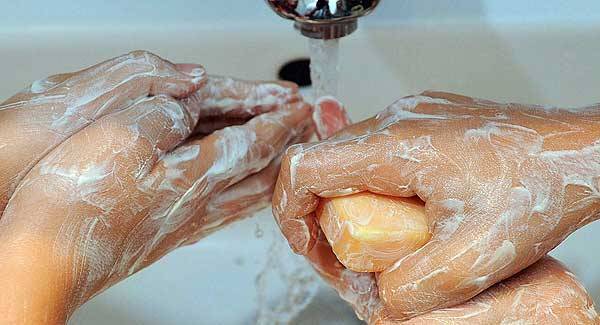
* Make sure everyone in the family washes their hands thoroughly. Depending on the age of your child, you may have to do this for her.
* Teach your daughter to cover her nose and mouth when she sneezes or coughs. Have a supply of disposable tissues.
* Avoid sharing cups, glasses or cutlery and give everyone in the family their own towel.
If your daughter becomes unwell, then you need to make an appointment for her with your GP so that a diagnosis can be made and treatment started. If you become concerned in any way before the appointment than you need to seek medical attention for her urgently.
>>Fungal skin infections are passed through direct skin contact and sharing objects such as towels and bedding and in the case of children, their toys. They can also pass from animals that have a fungal infection to adults and children. There are a number of fungal infections which can infect the skin (ringworm), scalp, foot (athlete’s food), groin and nails. Fungal infections are very common and it is estimated that 10-20% of people will have a fungal infection at some point; children are more likely than adults to get a fungal infection.
The infection is associated with hot and humid environments; sweating and soft skin and occlusive footwear such as work boots.
The symptoms of ringworm are a ring-like rash on the skin which gradually extends to a circle of red irritated skin, with healthy skin inside the ring. The itchy rash is usually on the groins or the armpit area. In some cases a number of these rings will grow and merge together, blisters may form around the rings. Treatment for fungal infections is usually with anti-fungal creams which are applied to the rash and the surrounding area. To prevent ringworm spreading good hygiene is important and here are some suggestions for you:
* Avoid sharing personal items such as towels, hairbrushes, clothes and bed linen.
* Wash all bed linen and towels on your machine’s hot cycle.
* As the fungi which cause the infection can live on bedding and towels, wash clothes separately.
* Make sure that everyone in the household washes their hands thoroughly and frequently.
* As your children and your nephew play together and probably share toys, wash down all toys with hot water and soap and wash all soft toys in a washing machine, bearing in mind the maker’s instructions. Skin should be dry and cool at all times.
If one of your children becomes unwell and has a rash then you need to make an appointment with your GP so that he / she can make a diagnosis.
If you have a question about your health email it to feelgood@examiner.ie or send a letter to: Feelgood, Irish Examiner, Linn Dubh, Assumption Road, Blackpool, Cork.

CONNECT WITH US TODAY



Be the first to know the latest news and updates









