Facing my fear of food
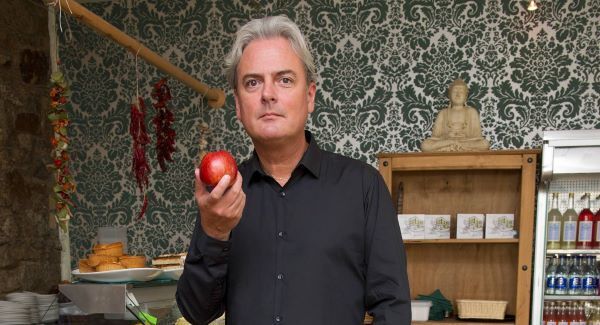
You have stringy arms and pipe cleaner legs and hollow cheeks. Imagine that it hurts to sit down because your backside has lost most of its natural padding. Imagine being this thin and thinking, “I need to lose a few more pounds off my waist,” despite all the evidence to the contrary.
Imagine exercising and dieting obsessively. Imagine feeling constantly sickly. Now imagine ... you’re a man with all of the above weight phobias.

Ten years ago, I was that man. Or, rather, half that man. Depressed about the way I looked, I started a dieting and exercise regime that became so obsessive it left me emaciated and sick.
According to the charity Bodywhys, 200,000 Irish people are affected by eating disorders (EDs). Despite this high number, there are only three dedicated public beds for treatment of all EDs in Ireland. You may think this bed-famine is unimportant given that people succumb to cancer and other life-threatening illnesses every day. Think again: eating disorders have the highest mortality rate of any mental health condition. They claim 80 lives a year in Ireland alone.
The mortality rate associated with anorexia is 200 times higher than the suicide rate of females in the general population.
There are four main types of ED: anorexia nervosa, the refusal to eat enough to maintain a normal body weight; bulimia nervosa, repeated binge-eating followed by compensatory behaviour (dieting, purging); binge eating disorder/compulsive overeating, periods of compulsive binge eating or overeating; and EDNOS (eating disorder not otherwise specified). This refers to a condition where someone meets some, but not all, of the criteria for one of the other defined eating disorders.
It’s a widely-held myth that EDs only affect women but between 10%-25% of sufferers are male. One Canadian study puts the number at 30% — and rising. Based on the statistics from Bodywhys, this could mean between 20,000 and 60,000 Irish men have an ED.
“Last year, 91% of callers to our helpline were female and 9% male,” says Bodywhys communications officer Barry Murphy. “The peak age group is 19 to 24-year-olds. Eating disorders are not just a female or teenage issue.”
My own eating problems sit most comfortably in the EDNOS category. I’ve always had a difficult relationship with food. As a child, dinnertime was a charade. I nibbled ostentatiously to keep my mum happy. School lunches almost always went into the bin.
I was Jack Spratt Junior and would pass Sunday lunchtimes peeling fat from a roast dinner which I wouldn’t eat. During the week, I would spend five minutes over the kitchen sink scooping off imaginary traces of fat from spag bol or stews.
I wouldn’t eat breakfast and hid food around the house — or flushed it down the loo. I quickly discovered that Weetabix has a tendency to float. It also hardens like cement if it gets stuck to the side of the toilet bowl. Flushing was not an option. So I began throwing it out the bathroom window.
I hated fried eggs and these were hidden behind curtains, in the coal scuttle, golf bags… One day my dad pulled out his six iron and sent a petrified fried egg frisbee-ing across the fairway at Portmarnock. He later discovered three more fossilised eggs clinging to his clubs.
As a result of my food antics, I was the skinniest child on our road. I had limbs like dental floss. You could have played my ribs like a glockenspiel. My thinness was a source of acute embarrassment, especially during the summer and at swimming lessons. Inevitably, it led to bullying at school. By the time I reached my teens I hated my puny physique, and have never felt comfortable with my body.
This unhealthy food-body relationship has always been the first thing to suffer when I feel low. I have had a handful of battles with serious depression over the past 25 years.
My eating habits went haywire on each occasion. I am six foot and, for most of my 20s, I was around 10 and a half stone. This dipped dramatically when I was 23 and suffering a dark, year-long depression. I was unable to sleep or eat, and kept throwing up. My weight plummeted to nine stone.
I recovered and by the time I was 30, I had hit 12 and a half stone. I was — for me — tubby, but happy to no longer be skinny.
One day, in my mid-30s, I was looking through some holiday snaps and spotted someone I barely recognised — me. My hair was starting to recede and I was getting “fat”. I was 13 and a half stone. People who were used to seeing Skinny Me started joking about my “porkiness”. My confidence went through the floor, and the constant comments led me to become obsessed with my weight.
On top of this, my wife and I started looking to buy a house. Mortgage, impending baldness and obesity: I was becoming middle-aged. I read about the Atkins Diet and started my own, extreme, bastardised version. I cut out fatty foods and carbohydrates and ate only twice a day.
I exercised like mad. In a few weeks I had lost a stone. The diet was boring but my confidence was returning. I wanted to lose more weight. I worked harder and cut down my food intake. Meals were snack-sized. I was becoming obsessed with dieting and exercising.
My weight plummeted but I was so wrapped up in dieting, I couldn’t see how gaunt I was becoming. In 10 weeks, my weight had dropped to nine and a half stone. And I felt like crap.
I couldn’t sleep at night as my legs kept cramping up. I was paranoid about putting weight back on. I couldn’t eat. As I had no fat left to burn, my body started eating muscle tissue. My legs and arms were like rope. Even sitting down on my bony backside was uncomfortable.
People told me how terrible I looked, just as they had when I was tubby. I had spent my childhood being teased for my skinniness, my 30s for being fat, and now I was being told off for being thin again. I couldn’t see the problem.
I came back from another holiday in Spain and saw a different person in the pictures. The fat, balding man had been replaced by a haunted Gollum-like creature. My ribs were visible again.
I started to get worried and spoke to my nutritionist sister. She finally got through to me when she said that I was probably damaging my heart through excessive dieting. I tried to eat normally. It was a battle as my stomach had shrunk. Eventually, a year and a half later, I was back to 11 stone.
Since then, my weight has generally been around 12 stone. I am now 46 years old and tend to binge-eat when I’m struggling with some emotional issue. That may be a subconscious fear of returning to the obsessive, underweight person I was 10 years ago.
I’m overeating at the moment and am up to 13 stone. I know I have to address this as my weight is rising and there is a history of diabetes in my family.
There are some who will ridicule me for writing this piece, but there are thousands of men like me, most of whom are too embarrassed to seek help. Maybe this might persuade somebody to make the leap of faith.
Behind every eating disorder lurks a lack of self-esteem. People in search of The Ideal Body Shape generally see themselves as flawed human beings. In fact, it’s the thinking, not the person that is flawed.
To see yourself as ‘flawed’, you must first believe in someone else’s notion of The Ideal Human. The Ideal Human doesn’t exist. He/she is a myth propagated by fashion editors, advertisers and quack dieticians. In other words, people who make their living from promoting idealised views of life.
If you think you have a problem, seek help. Don’t let what’s eating you on the inside, eat you on the outside too.