Thermostat wars are tearing couples apart: ‘It’s hard to feel sexy when you’re freezing cold’

Almost two-thirds of bedfellows disagree about the perfect room temperature – and the issue can affect office workers and housemates too. Do women really feel the cold more? And is there any way to reach a truce?
“What’s really annoying is how the person who feels hot always wins. My husband just tells me to put another layer on" Picture: iStock
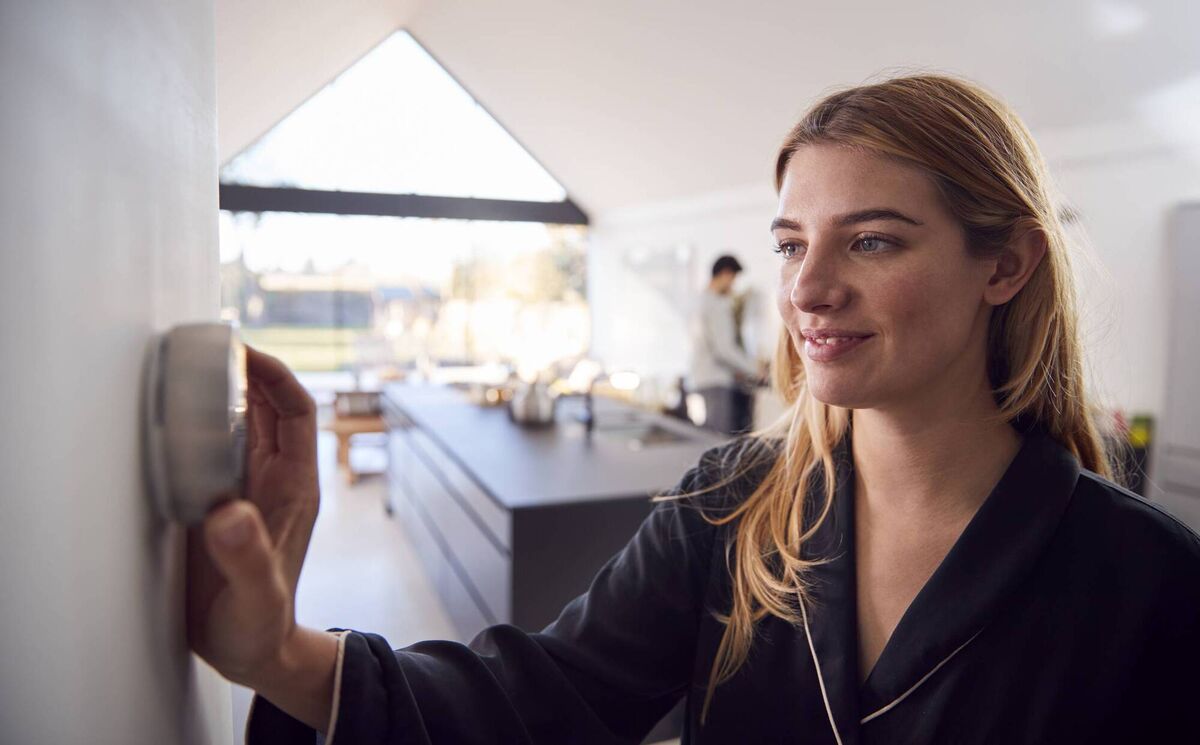
“What’s really annoying is how the person who feels hot always wins. My husband just tells me to put another layer on" Picture: iStock

I recently read an item on Threads that made me laugh out loud. ‘New dating app idea: Post your thermostat settings to find your match.’ The poster then revealed their own preferences: A balmy 24C by day and a chilly 19C at bedtime.

The suggestion elicited a rush of responses. As we face into a chilly winter, and rocketing utility bills, thermostat wars are clearly a hot topic. In September, a U.S survey revealed 44% of couples admitted to sneakily changing the temperature dial after their beloved drifted off. It also emerged that almost two-thirds of bedfellows disagreed about bedroom climate, with 6% arguing about it every night.

‘Thermospats’ are not restricted to the home. In January, 2024, council workers at Oxford Town Hall in England discovered that radiator thermostats had been padlocked to stop anyone from turning up the heat. I can sympathise. In my office-share, our thrifty manager can control the heating via an app, even when he’s not in the building.

Technology has definitely paved the way for renegade behaviour. “I got so sick of my husband turning down the heating all the time that last winter I suggested we get a boiler upgrade,” says Sheena*. “I told him I was happy to take charge of it all.

What he still doesn’t realise is that the new thermostat can be overridden by an app. It is his habit to turn down the heating late evening, regardless of how cold it is. To me, our bedroom feels sub-zero. It has been a long-running source of bitter arguments.

The boiler upgrade ushered in a new, harmonious era. “Now, when he turns the boiler down to 15C, instead of shouting, I smile good-naturedly. Once we are tucked up in bed and he’s getting drowsy, I reach for my phone and whack the dial back up to 21 right under his nose. He thinks I’m doom-scrolling.”

Surely he notices the blast of warmth? “No, he never does. I think, for him, turning the heat down has nothing to do with how warm he actually feels. It’s become a default tool of occupying the moral high ground — he’s an environmentalist, and also very careful with money.”

“Oestrogen makes women slightly more sensitive to the cold. The other factor is that men tend to have more muscle mass, so they’ve got more heat-generating potential.” Picture: iStock

Several other women I know shared stories about shivering at the hands of men who insisted on leaving windows open in winter. “What’s really annoying is how the person who feels hot always wins. My husband just tells me to put another layer on,” says Tara. She has exacted her revenge, though, by cosying up to him under the duvet clad in a fishtail parka, zipped to the neck, hood up, to survive the arctic bedroom.

The gender split isn’t merely anecdotal — scientific studies have shown women do feel the cold more than men (leaving aside those grappling with the towering inferno of menopause). One 2019 research paper by behavioural economists, Battle for the Thermostat, even found women performed better on certain cognitive tasks in warmer environments, while men were more likely to perform better in cooler ones.

“Women do tend to be more sensitive to cold. They generally have cooler skin temperatures than men,” says Clare Eglin, a thermal physiologist at the University of Portsmouth.

“Women usually have less muscle mass and more body fat than men.” She explains that this extra layer keeps the female core warm but blocks some of the warming blood flow to skin and extremities such as hands and feet.

Women’s hormonal profile also plays a part. “Oestrogen makes women slightly more sensitive to the cold,” she says. “Their blood vessels constrict faster in the cold than men’s, which lowers skin temperature. The other factor is that men tend to have more muscle mass, so that means they’ve got more heat-generating potential.”

However, a warm bedroom may interfere with a good night’s sleep. “The optimum number for sleep is about 17C,” says Eglin.

Core body temperature starts to fall in the evening, typically by about 1C. Even patients confined to bed rest with no physical exertion during the day go through this cycle. Research has also shown a lower temperature before bedtime and at night triggered higher levels of the sleep hormone melatonin in participants.

Eglin says that children are similar, temperature-wise, to women in terms of feeling the cold more.

Then, in adolescence, boys tend to sweat more. Men rely on sweat evaporation to keep cool, whereas women and children rely on heat loss through changes in blood flow to the skin.

Eglin explains that women, on average, have a higher skin surface area relative to every kilogram of body weight. This means they lose body heat more quickly to the environment. The one exception to this gender differential is women going through menopause.

Living with a partner experiencing these symptoms is a recipe for heating havoc. Jack works from home, as does wife Gemma. “These days, our house is basically an igloo,” he laments. “It was so cold I had to wear gloves to type.” Eventually, he bought a fan heater with both a hot and cold setting.

“During the day, I have it at maximum heat by my desk. In the evenings, we put the heating on. I’m beside the radiator and she sits next to the cold fan.”

Sometimes, people are driven to extreme measures. Homepros, a U.S heating and plumbing news site, ran a story about an engineer who was asked to install a “dummy” thermostat in a couple’s home so the wife could ‘adjust the temperature’ while the real control was hidden in the husband’s office.

When does all this subterfuge stop being harmless fun and become something more concerning? And how might we find domestic harmony?

“If a couple came to therapy arguing about heating, I would want to understand whether this is an isolated issue or whether similar conflicts arise in other areas of their relationship,” says relationship therapist Lina Milner, adding that feeling able to negotiate is key.

Then there is the issue of how climatic incompatibility could lead to an anti-climax between the sheets. “Many things influence a couple’s sex life, and physical comfort is certainly one of them,” says Milner. “It’s difficult to feel sexy when you’re freezing cold or uncomfortably hot. If you’re cold, you may be more focused on warming up than on sexual intimacy. Equally, feeling hot, sweaty or sticky might make someone feel uncomfortable or less attractive.

So, who should get their way — the person who feels cold or the overheated partner? “Perhaps the more important question is not who controls the thermostat, but how we maintain warmth in our relationships when our needs differ,” says Milner.

  • * Couples’ names have been changed

The Guardian

More in this section

Cookie Policy Privacy Policy Brand Safety FAQ Help Contact Us Terms and Conditions

© Examiner Echo Group Limited