Life Hack: How often should you wash your kitchen tea towel?
Are you accidentally spreading harmful bacteria all over your kitchen?
The humble kitchen tea towel could be covered in harmful bacteria.

The humble kitchen tea towel could be covered in harmful bacteria.

Kitchen hygiene is something that is drilled into us from a young age. We know to wash our hands after handling raw chicken, to wipe down surfaces, to do everything we can to avoid accidentally giving ourselves and our loved ones food poisoning.

However, despite your best efforts, there is one item in the kitchen that you might be overlooking.

I’m talking about the humble, all-purpose tea towel. You use it for everything (I know I do), from polishing dishes to drying washed hands to mopping up spills. But even the cleanest-looking tea towel could be harbouring harmful bacteria, so that wiped-down countertop might now be host to some invisible problems. The main issue is reusing a tea towel while it is damp.

“Tea towels and dishcloths are some of the hardest working items in the kitchen,” Tap Warehouse cleaning expert Nancy Emery says. "When cloths remain damp, bacteria can multiply quickly. 

If the same towel is being used throughout the day for multiple jobs, it can transfer bacteria between surfaces and increase the risk of cross-contamination around the kitchen.

Research from Britain’s Food Standards Agency identified tea towels and cloths as a significant source of cross-contamination in the home because they are often used for multiple tasks, including wiping surfaces, drying hands, cleaning spills and drying dishes.

Emery emphasised the importance of washing or replacing tea towels, cloths and sponges and ensuring they are allowed to dry properly between uses.

“Most people focus on worktops and sinks when cleaning the kitchen, but soft furnishings like cloths and tea towels are often overlooked. They’re one of the easiest things to improve if you want to create a more hygienic kitchen environment.”

How often should I change my tea towel?

The Food Safety Authority of Ireland (FSAI) warns that dirty dishcloths, floor cloths or tea towels can cause microbiological contamination. If you’ve used a cloth to wipe up after raw meat or vegetables, then replace it immediately with a clean one. In general, your tea towel should be removed for washing and replaced with a clean one every two days and make sure to avoid storing your dishcloth and tea towels near food or on clean surfaces.

What’s the best way to wash my tea towel?

You should wash dirty tea towels in the washing machine in a hot wash, or, alternatively, you could boil them in water for 15 minutes. Boiling works well for one or two towels, while if you’re using the washing machine, you may prefer to do a weekly wash of multiple cloths to make the most of the wash cycle.

Is it okay to use one tea towel for everything?

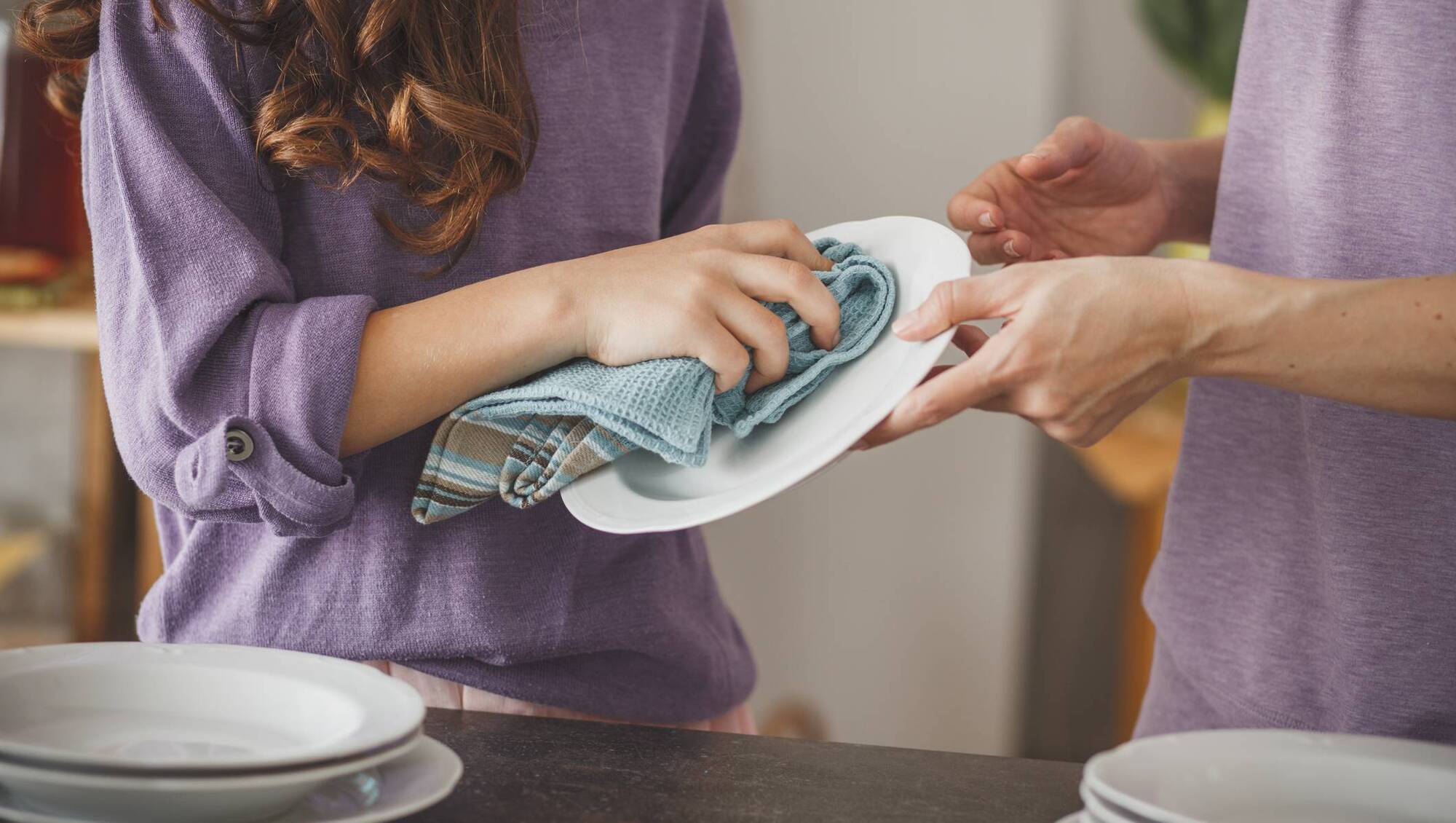
No. You should always use different cloths for specific tasks, for example, using a separate cloth for surfaces and another one for washing up. Keep in mind that you may also be unconsciously cross-contaminating your tea towels. While preparing raw meat, you could wipe your hands on a tea towel that has not been designated for use when preparing uncooked meat, spreading bacteria that could cause food poisoning further.

You should also inform anyone in your home if you are designating tea towels to particular uses, so they do not cross-contaminate them. Children in particular should be told clearly about which towels they can and cannot use when drying their hands or helping with household chores.

Am I overlooking any other sources of bacteria spread in the kitchen?

Unfortunately, it’s very likely. Tap Warehouse researched overlooked kitchen bacteria hotspots and identified taps, handles, extractor fans and fridge seals as some of the most commonly forgotten areas during routine cleaning. So while your tea towel is one major missed item, don’t forget to pay close attention to other parts of your kitchen when cleaning and when cooking. 

x

More in this section

Cookie Policy Privacy Policy Brand Safety FAQ Help Contact Us Terms and Conditions

© Examiner Echo Group Limited