Family ties: When your parent finds love again
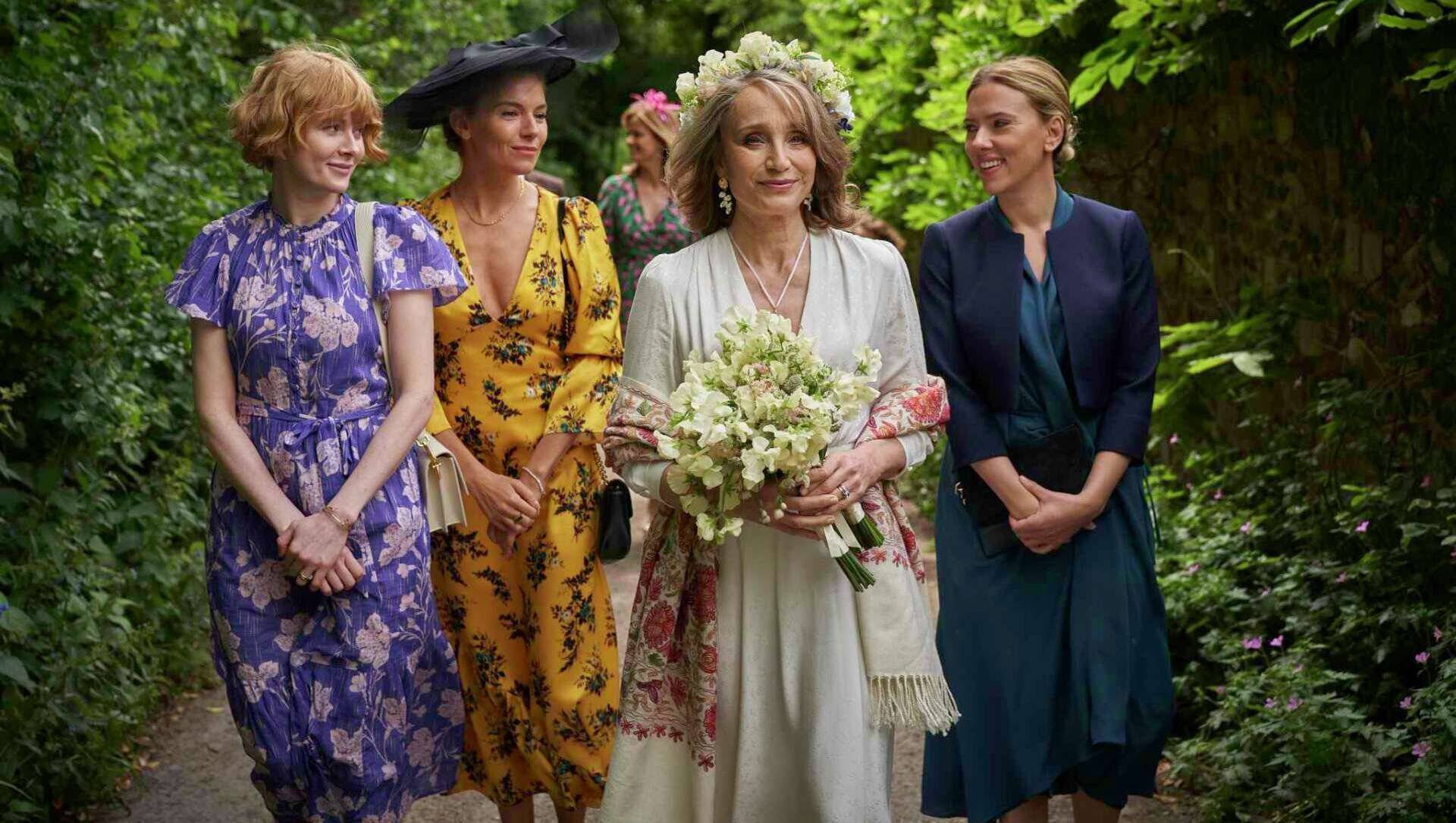
In the new film ‘My Mother’s Wedding’, three sisters (played by Scarlett Johansson, Sienna Miller, and Emily Beecham) return to their childhood home for the third wedding of their twice-widowed mother (Kristin Scott Thomas). The reality can prove tough for many families.
How would you feel if your mother remarried?
Actresses Scarlett Johansson, Sienna Miller, and Emily Beecham explore this question in — a new movie that’s out now. They play the daughters of Kirsten Scott Thomas and all have issues with their mother being so besotted with her new beau that she is about to tie the knot for the third time.
Anna* knows how they feel. She was in her 40s when her father died and her mother reconnected with an old flame.
“They were both in their early 70s and alone,” says Anna. “Things moved pretty fast. They got engaged within five or six months and married nine months later.”
In fact, things moved so fast that Anna, whose mother lived in another country, didn’t meet her new stepfather until the evening before the wedding. However, she had spoken to him on the phone and hadn’t got a good impression.
“I thought he was trying to control my mother,” she says.
“He was the one insisting on marrying quickly and he also kept my sister and I out of the wedding planning.”
It was difficult to talk to her mother about this. “She was swept up in the romance of it all,” says Anna. “Any time my sister or I tried to say anything, she would tell us she deserved to be happy.”

Systemic family psychotherapist Kathryn Wilusz ( khwilusztherapy.com) has worked with individuals, couples and families in Limerick for 40-plus years. She has seen many adult children grapple with the unexpected feelings that can arise when a parent embarks on a new relationship.
“One woman told me how she struggled when her father brought his new partner dancing or to the movies, which he had never done with her mother,” says Wilusz, who is affiliated with the Family Therapy Association of Ireland.
“It made her sad and angry. She wondered if her parents’ relationship could have been kept alive if he had.”
Another client found themselves torn by divided loyalties. Her father had moved on with a new partner and her mother was upset about it. “My client felt pulled in too many different directions,” says Wilusz.

The Dublin-based therapist Helen Browne ( helenbrowne.ie) is an accredited member of the Irish Association for Counselling and Psychotherapy. In her experience, adult children can find it difficult to adjust to changing family dynamics.
“When the family circle breaks and someone new enters it, it can feel like a huge emotional rupture,” she says.
“It forces children, no matter how old they are, to recreate their sense of family as something new and different. That’s not always easy.”
It can even make children feel sidelined. “Our need for our parent’s attention never goes away and we can be hurt if we feel mum or dad is shifting their attention away from us, particularly if we have had issues with attachment or deficits in our parenting as children,” says Browne.
Other issues she has encountered include a sense of discomfort at being confronted with the idea of parents as sexual beings and pragmatic worries about the implications a new relationship might have on children's inheritance.
What can parents do to overcome these potential problems?
“Start by prioritising the parent-child relationship,” says Browne. “It doesn’t matter if children are five, 25 or 65, your relationship with them needs to be protected.”
A shift in expectations can also help. “When you fall in love with someone new, you’re excited about it,” says Browne. “But your children will rarely share your enthusiasm. Try not to be hurt by that.”
Instead, Wilusz recommends introducing new partners gradually. “First, tell them you’re going to try dating,” she says. “This gives them time to adjust to the thought of you with sexual desires and as someone who might find a new partner in the future.”
If that does happen, Brown urges honesty. “It’s common for parents to pretend to adult children that relationships aren’t romantic by calling the new person their ‘friend’,” she says. “They do this for fear of upsetting their children, which is understandable. But it creates a lack of trust. If you do strike up a romance, be open about it from the get-go.”
Then proceed with caution. She suggests asking children if they want to see pictures of the new person. Then ask how they might feel about meeting the new person and let them decide where and when.
Don’t dismiss any reservations your children might have, says Wilusz. “Don’t force things on them as that will only create resentment. Instead, try to identify what they are struggling with and what you can do to help.”

If your heart is sinking as you read this because you went about things differently and you’re wondering if this is why there is animosity between your adult children and your new partner, Wilusz has some words of reassurance.
“A sincere apology can be incredibly healing,” she says.
“It’s not about apologising for your relationship or your decision to be with someone new. It’s about apologising for times when you might not have thought about your children’s needs. Taking time to listen to what they say in response is a real opportunity to make up for past mistakes.”
She thinks the secret is to maintain strong family bonds while slowly introducing the new person into the pre-existing web of relationships. “The aim is for everyone’s needs to be considered and for everyone to feel their relationships are secure. This requires kindness and care, particularly on the part of the parent.”
In the end, Anna’s reservations about her stepfather proved to be justified.
“He was an alcoholic and he returned to drinking and my mother had some tough years up to the point where he passed away,” she says. “That affected us all as a family. Had their relationship progressed more slowly, things could have turned out better.”
Here’s hoping that Kirsten Scott Thomas and her on-screen daughters get an ending that’s more happy ever after...