Colm O'Regan: Look out for Cló Gaelach — there are 1,400 years of history in the Gaelic script
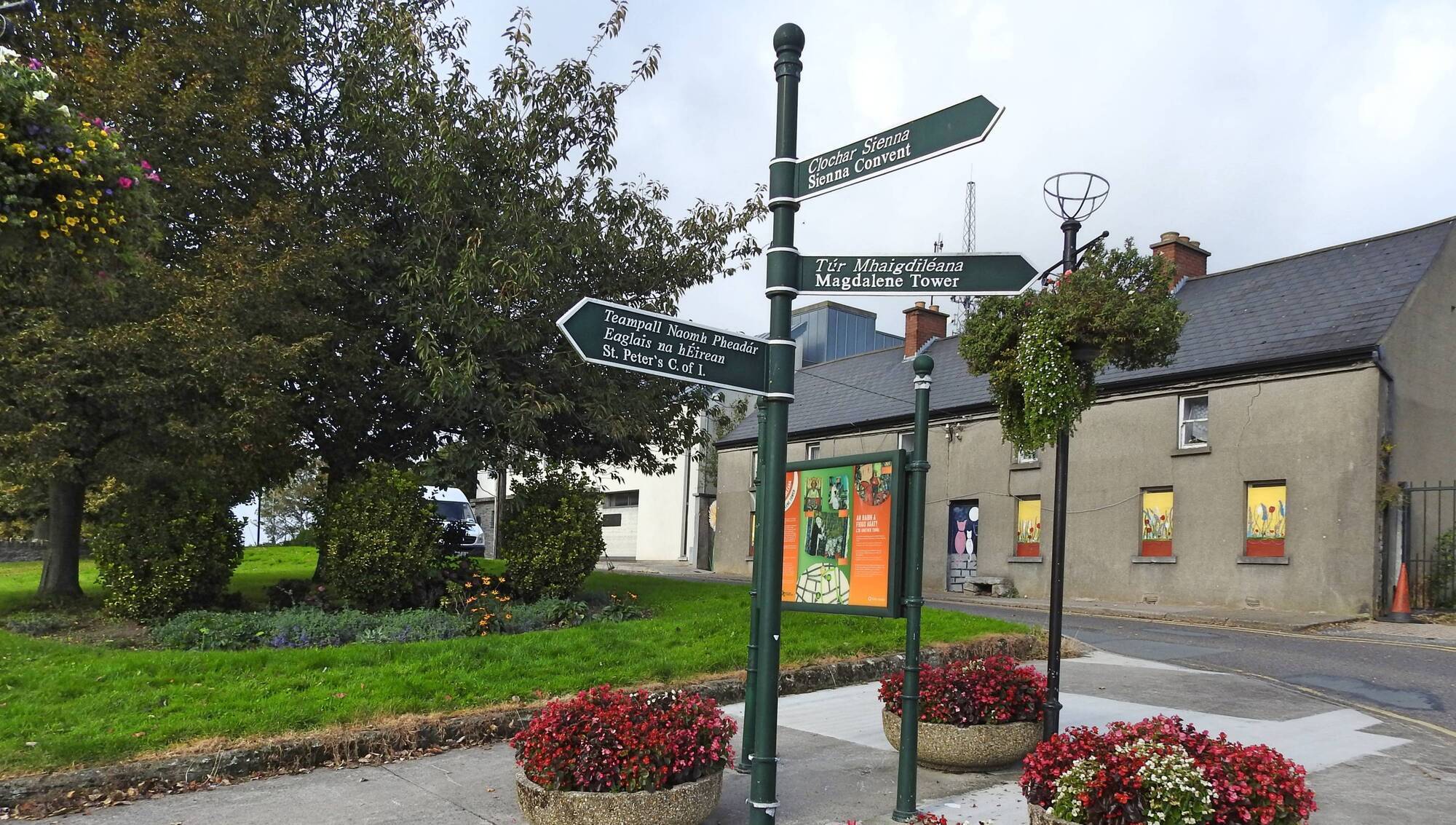
Directional signage in Drogheda town centre in the Irish language, translated directly into English.

Census 1926: For some of us nerds, we’ve been through this 15 years ago and it’s been a long wait for ‘Season 3’ of our In one small way, you can see one change that happened — the bit of Irish. My grandfather is in all three censi (a plural that’s wrong but feels right).
In 1901, he’s at home in West Cork, the return is in English. He’s Conor Horgan. By 1911, he’s out of the home in Castlecomer. He’s an Irish teacher and a lodger. His name is in Irish. It’s almost as if he’s grabbed the pen off his landlady and written in his name in Irish, Conchubhar Ó hArgáin (one of only two Ó hArgáin that year).
And by 1926, with his new family, Grandma Horgan and Auntie Síle as they would later become, the whole shebang is as Gaeilge as can be; he has full control.
Like thousands of others (still only 1% of the returns), he filled it all out in the Cló Gaelach, the seanchló — the Gaelic script. You bump into it now in old street signs, county jerseys and, for some reason, parking signs, but it’s rare. Now we’re all getting a bit of a crash course in it. And that’s good because there’s a lot going on with an Cló Gaelach.
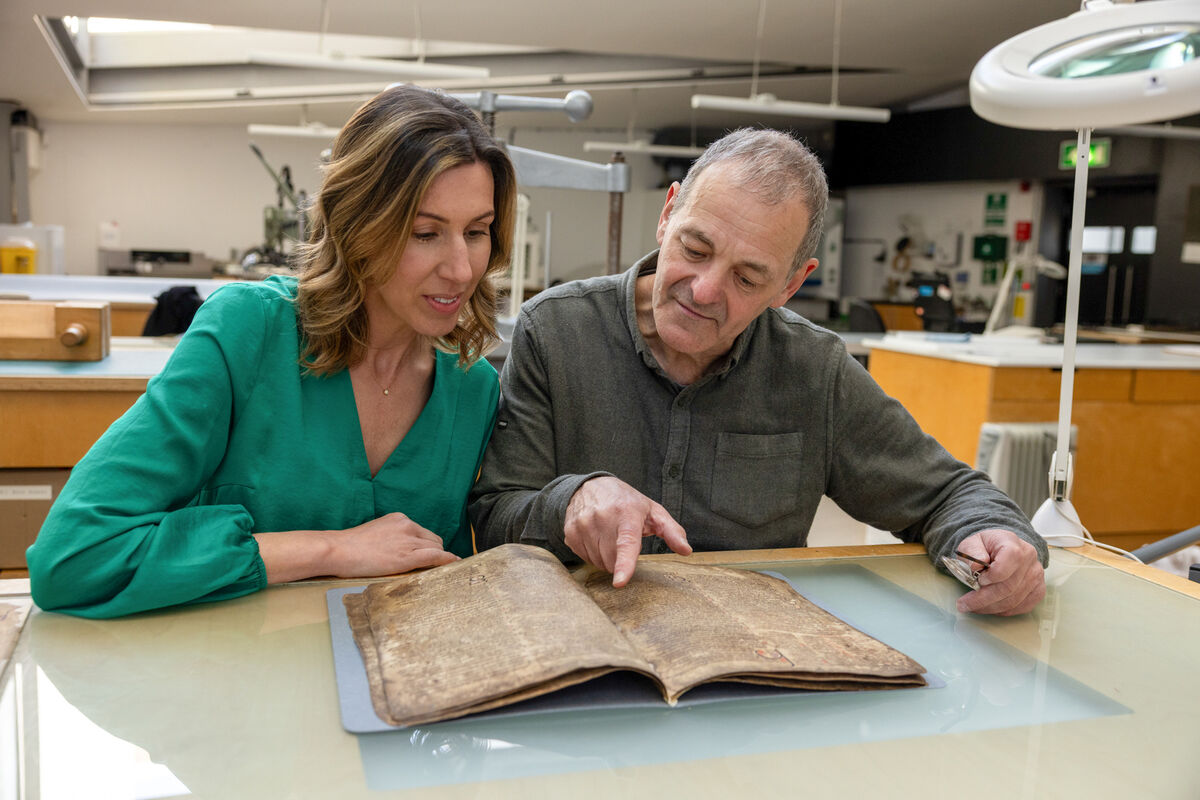
Priceless manuscripts like were written in this insular script. That’s the one that contains the Táin (Boy Meets Girl, Girl Put Geas On Boy, Everyone Dies) and the (I took a 23andMe, turns out I’m 4% Milesian, 30% Fir Bolg... here’s why). Then the printing press arrived and Ireland needed its own typeface.
This meant standardisation. Then for the most Gaelach of things, the Sasanach took over. The first book using something like a Gaelic typeface was sponsored by Elizabeth I and called
That is Christian instruction or teaching, along with certain articles of the Christian rule that are proper for everyone who would be obedient to the law of God and the Queen in this kingdom. Translated from Latin and English into Irish by John O'Kearney.
Printed in Irish in the town of the Ford of the Hurdles, at the cost of Master John Ussher, alderman, at the head of the Bridge, the 20th day of June 1571. Which definitely sounds like an, 'It’s actually called Londonderry' kind of book. Designed to bring Protestant scripture to the Irish-speaking population that largely ignored it, an important step.
The Franciscans in Louvain (an Irish college set up there after the Flight of the Earls) developed their own typeface and this is the basis for the Cló Gaelach you see in books as part of the Gaelic revival. And oddly, it was the basis for handwriting. Normally, handwriting might drive the printing press. This time it was the other way round.
Then in the 60s, the Department of Education put the kibosh on it and said we had to us Roman type for primary school instruction. Irish-speaking parents and grandparents found it hard to pass on knowledge of the language using a typeface that looked weird to them.
And in browsing the census, the Cló Gaelach may look weird to you. But take your time, work with it. There are 1,400 years buried in those letters.