Louise O'Neill: 'I was thinking about all of this at 4am, when I was curled up in a ball of agony due to period cramps'

In 2019, Caroline Criado Perez, a feminist activist and writer, published an excellent book called .
It’s a careful yet devastatingly clear presentation of the ways in which our world is inherently biased against women.
For example, the temperature of most offices is set according to studies undertaken in the 1960s based on the metabolic resting rate of a 70g man. Women, who tend to be smaller and lighter, have slower metabolisms, thus most workplaces are five degrees too cold for their comfort. The widely known symptoms of heart attacks are the symptoms men experience, so women are 50% more likely to be misdiagnosed.
Seatbelts have been designed with the male body in mind, therefore, once again, women are 47% more likely to suffer serious injuries if in an accident. Criado Perez writes drugs which are more commonly used by women — for example, antidepressants — are often exclusively trialled on men because female hormones change throughout the month according to our menstrual cycles which makes the data more ‘difficult’ to track.
Even the world of technology has inherent bias in it. The average smartphone is too big for most women’s hands and speech-recognition software has been created around recordings of male voices, therefore it often finds women’s voices trickier to understand.
(This becomes even more complicated if you’re a black woman, particularly in the maternity ward. Studies have shown that half of white medical trainees believes myths that black people have thicker skin or less sensitive nerve endings than white patients. Black women are five times more likely than their white peers to die in childbirth, which could be due to white doctors failing to take their pain seriously enough.)
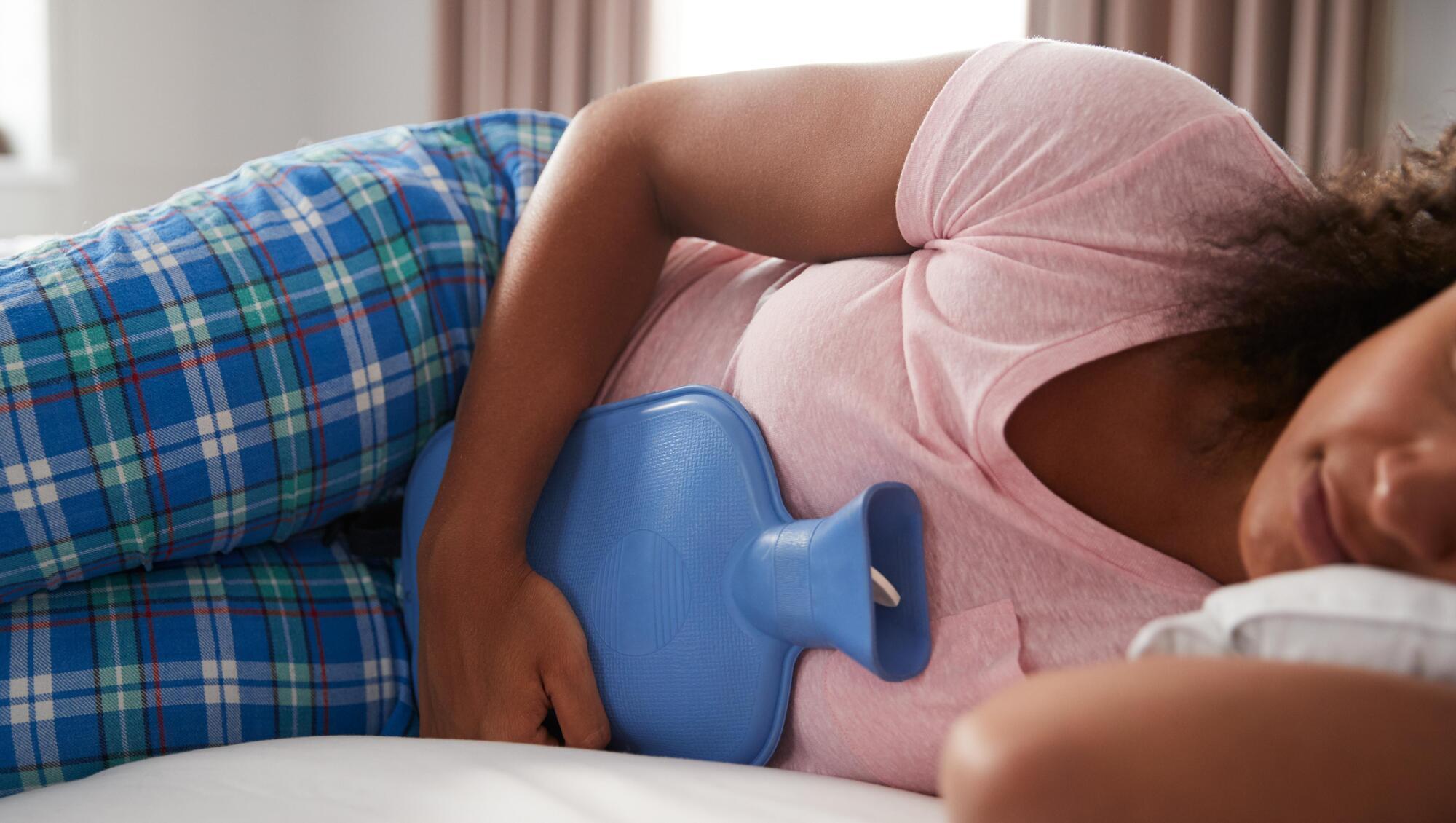
I was thinking about all of this at 4am, when I was curled up in a ball of agony due to period cramps. I texted a friend, a woman who dealt with debilitating endometriosis for years while being told by male doctors that she was ‘over-reacting’, and said,
Somehow, I reckon it would be the latter. The contraceptive pill, which can be of great benefit to many women in alleviating these symptoms, can also cause mood swings, weight gain, depression, and a decreased libido. Again, if you said to a man — here, this is going to ease the pain but you won’t want sex anymore —how many would accept that as a viable solution? Considering billions were spent on the development of Viagra and researchers conduct five times as many studies into erectile dysfunction than premenstrual syndrome (when only 19% of men suffer from ED and 90% of women experience PMS), I think we have our answer.
What makes all of this even more frustrating is that women are not supposed to complain, we’re taught very early on that our periods are not only embarrassing, they’re disgusting. As movies such as show, where a girl left a tiny speck of period blood on the leg of a guy she was dancing with, periods are something we can be easily ridiculed for. We can be called ‘hysterical’, the implication being it’s because of our hormones, as when Donald Trump said about the journalist Megyn Kelly that she had “blood coming out of her wherever”.
In many parts of the world, women are still isolated when menstruating, banished to separate areas of their house or community, because they’re seen as ‘unclean’. The impact this has on girls in developing countries is incalculable, particularly when they miss days of school every month due to stigma. A lack of access to sanitary products is not just an issue in the developing world; many women in Ireland are also impacted, particularly those who are homeless or in Direct Provision. That’s why it was so disturbing when a Tampax ad was recently banned by the Advertising Standards Authority for Ireland. Complaints about the ad said they found the phrase “you gotta get ‘em up there, girls”, demeaning and containing “sexual innuendo”. (If you think inserting a tampon is similar to sex, we need to have a whole other conversation.)
We think we have made so much progress in this country, and then a tampon commercial gets taken off the air in the year of our Lord 2020. It’s a reminder to us that this is a man’s world and we’re supposed to adapt our bodies to their reality, prioritise their comfort over our own. It’s just not good enough anymore and I, for one, am tired of pretending it is.
Scenes of a Graphic Nature. Caroline O’ Donoghue’s acerbic wit is matched by her sharp-eyed observations, resulting in a piece of fiction which is dark, gripping, and beautifully written.
‘Nice White Parents’ is a new podcast from Serial Productions. It looks at the impact an influx of white students – and their parents – are having on what were traditionally black or Hispanic public schools in New York. Utterly compelling.