Mary Berry's comforting and easy one-pot recipes and her top tips for home cooks
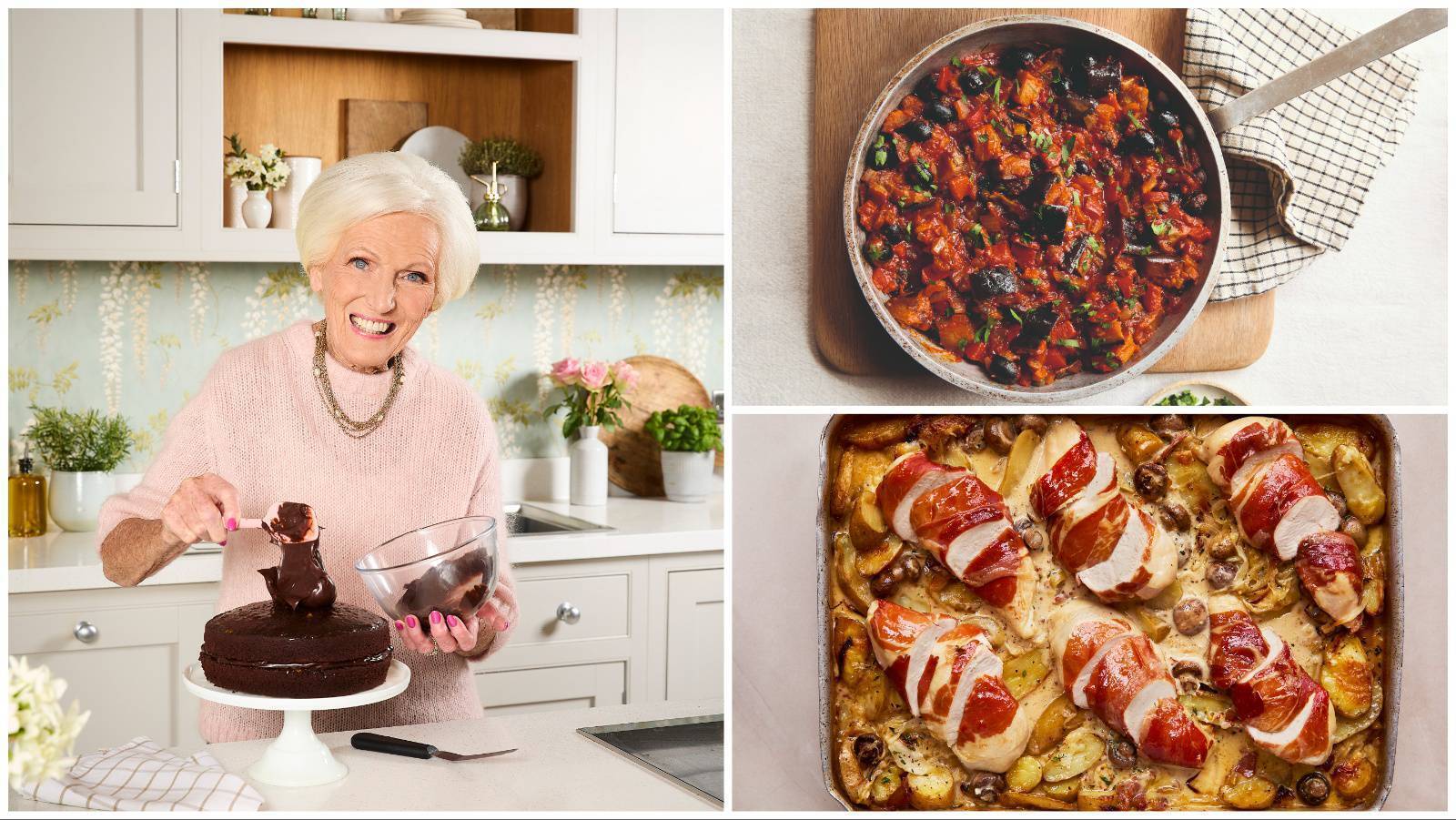
Mary Berry is releasing a one-pot cookbook (Nicky Johnston/PA)
Mary Berry has been a fixture on our screens since her first TV appearance in the early seventies and she’s seen the face of home cooking change a lot in that time.
The TV cook married antiques dealer Paul Hunnings – famously after he proposed three times – 60 years ago this year.
“Things have changed,” says 91-year-old Berry. “When I got married in 1966, the chaps – or partners – didn’t cook very much. Now everybody’s enjoying cooking.”
Her first TV series was with Judith Chalmers in the early seventies, and by 2010 Berry was a judge on with many of her own BBC cooking shows between and since, along with publishing over 80 cookery books.
“I absolutely love what I do, I’ve got a lovely team and that makes all the difference. We have a good laugh and we take it quite seriously,” says the food writer and presenter.
At home the couple try to focus on lighter, plant-packed meals.
“We eat less meat – we certainly eat meat and we enjoy it,” she says. “Slightly smaller portions, because we’re older. Lots of salad, [I enjoy] an avocado caesar salad, or a roasted fennel, onion and potato [bake] with parmesan on top.
“We have vegetarian often – humble pie is one of our favourites, that’s with cauliflower and a cheese sauce, pastry on top, leeks and peas to give it colour – a midweek supper, it’s delicious.
“In my time of cooking things have changed – the vegetables have changed. Butternut squash was not something that was available.

For her latest cookbook, Berry is trying to save busy home cooks washing-up time, focusing on 120 of her favourite recipes through the years that can all be made in one pot.
You can cook more than you think using only one dish, she records.
“Fish pies, meat pies, so easy when it’s in one pot. I’ve got a tartiflette, which is really really rich and just delicious. Lots of fish – salmon and fennel in one pot all in together. And stir-fries – you don’t necessarily need a wok, you do need a nice big, ideally non-stick, frying pan if it’s got a lid.”
Recipes include easy mid-week meals like chicken noodle laksa, prawn and salmon herb crumble, chicken and bacon pie, or leek and stilton tart. And it wouldn’t be a Mary Berry book without some puddings – think warm chocolate brownie or rhubarb eve’s puddings – all in one pan.
One-pot cooking “takes any stress out”, she adds, but to make things easy, “do all the preparation ahead – even if it’s something like a wonderful roast chicken.
“You add things to the roast at different times (you don’t want courgettes in for an hour and a quarter), but it all ends up in one dish – easy to serve and very little washing up.”
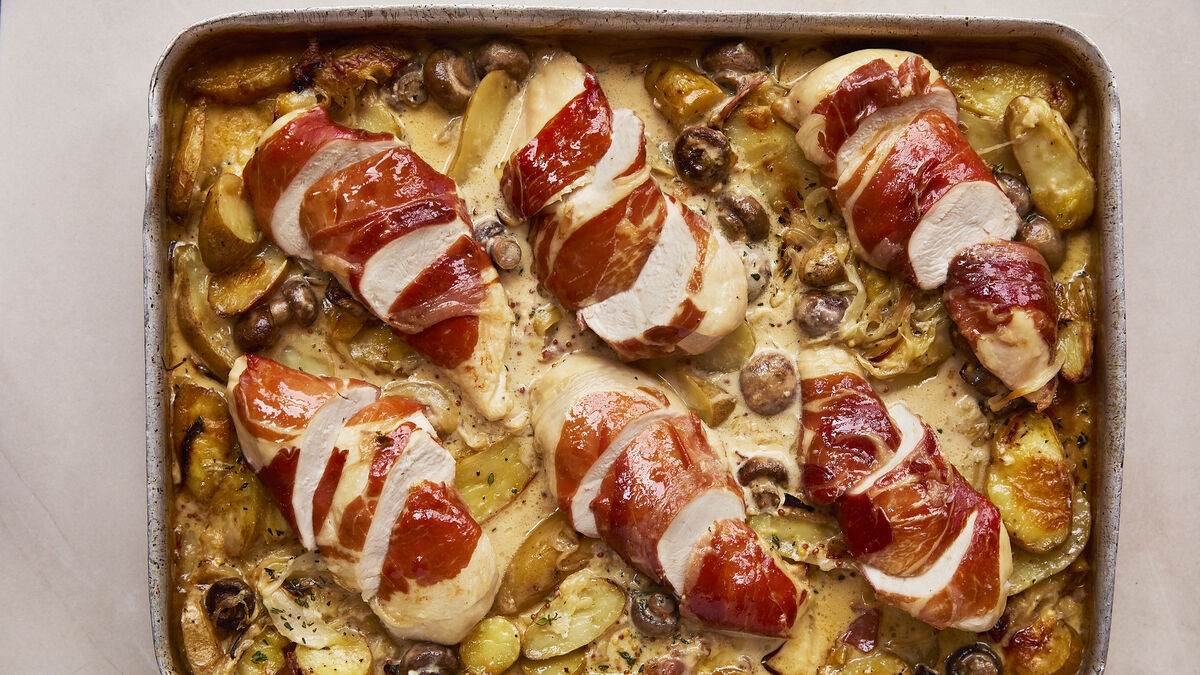
Mary Berry’s chicken tartiflette
A rich and comforting twist on an Alpine classic
Servings
6Course
MainIngredients
8 slices Parma or Black Forest ham
2 onions, thinly sliced
750g waxy potatoes, thickly sliced
2tbsp olive oil
2 garlic cloves, finely grated
6 small skinless boneless chicken breasts
200g button mushrooms
150ml white wine
150ml pouring double cream
250g Reblochon cheese, rind removed and diced
1tbsp grainy mustard
Juice of ½ lemon
1tbsp freshly chopped thyme
Method
Preheat the oven to 180°C fan/200°C/gas mark 6.
Snip two slices of the Parma ham in to small pieces.
Put the snipped Parma ham, onions, potatoes, oil and garlic into a large, shallow roasting tin. Season with salt and freshly ground black pepper, and toss everything together. Roast in the preheated oven for about 25 minutes, until the potato slices are nearly tender.
Meanwhile, put the remaining slices of Parma ham on a board. Place the chicken breasts on top of the ham and wrap one around each breast. Season.
Remove the roasting tin from the oven. Stir in the mushrooms, wine and cream, and add the cheese. Sit the wrapped chicken breasts on top of the vegetables and return to the oven for about 20-22 minutes, or until the chicken is cooked and the vegetables are tender.
Remove the chicken from the tin and place on a warm plate to rest. Stir the mustard, lemon juice and thyme into the tin until combined.
Carve each chicken breast into three and place over the vegetables and sauce. Serve piping hot.
Tips: The first stage of cooking the vegetables, before adding the chicken, can be made up to two hours ahead. Not suitable for freezing.
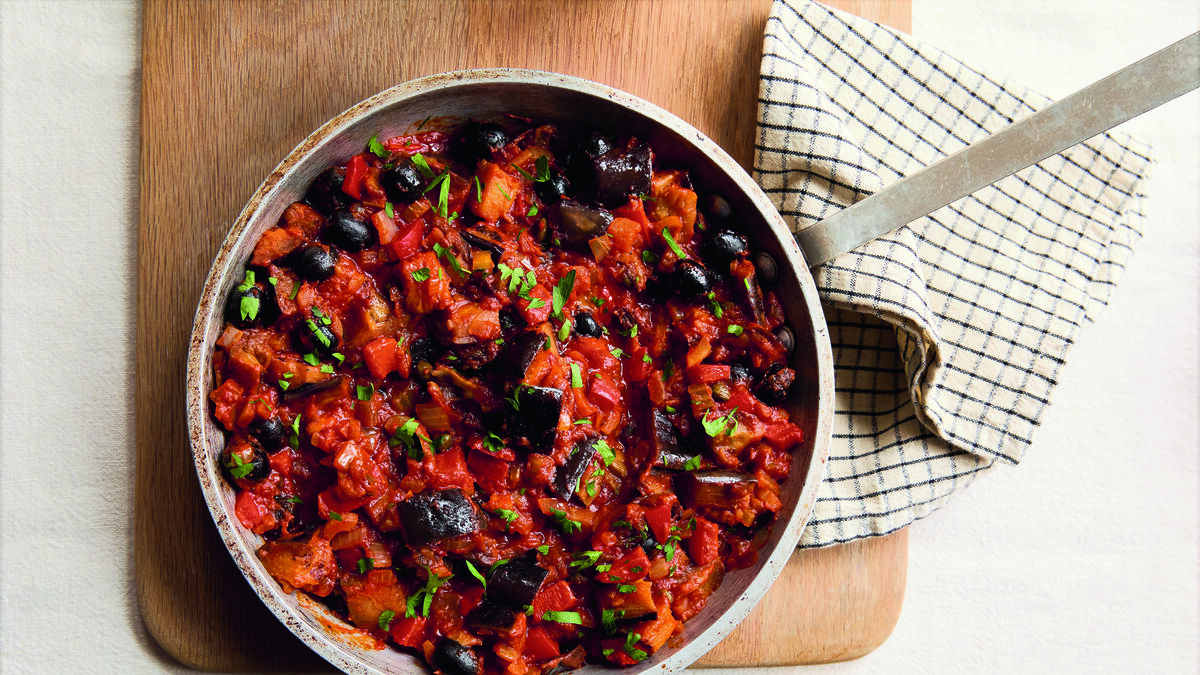
Mary Berry’s aubergine caponata
A vibrant Mediterranean-style dish packed with aubergine, olives and capers
Servings
4Course
MainIngredients
8tbsp olive oil
2 aubergines, cut into 2cm cubes
2 onions, finely chopped
2 celery sticks, finely chopped
1 red pepper, deseeded and cut into 1cm cubes
3 large garlic cloves, finely grated
500g passata
115g soft pitted black olives
2tbsp white wine vinegar
3tbsp capers from a jar, drained
1½tbsp caster sugar
3tbsp freshly chopped parsley
Method
Heat three tablespoons of the oil in a large frying pan that has a lid over a high heat. Add half of the aubergine and fry until browned. Remove the aubergine from the pan and set aside. Heat another three tablespoons of the oil in the pan and fry the remaining aubergine. Set aside with the rest.
Heat the remaining oil in the pan. Add the onions, celery and pepper and fry over a high heat for three-to-four minutes. Add the garlic and fry for a few seconds. Return the aubergine to the pan, add the passata, olives, vinegar, capers and sugar. Season with salt and freshly ground black pepper, cover with a lid and bring up to the boil. Reduce the heat and simmer gently for 20-25 minutes.
Remove the lid from the pan and simmer for another five minutes, until the sauce has reduced and the vegetables are soft but not mushy.
Sprinkle with parsley and serve with crusty bread, couscous or as a vegetable side dish.
Tips: Can be made up to a day ahead and reheated to serve. Freezes for up to a month.
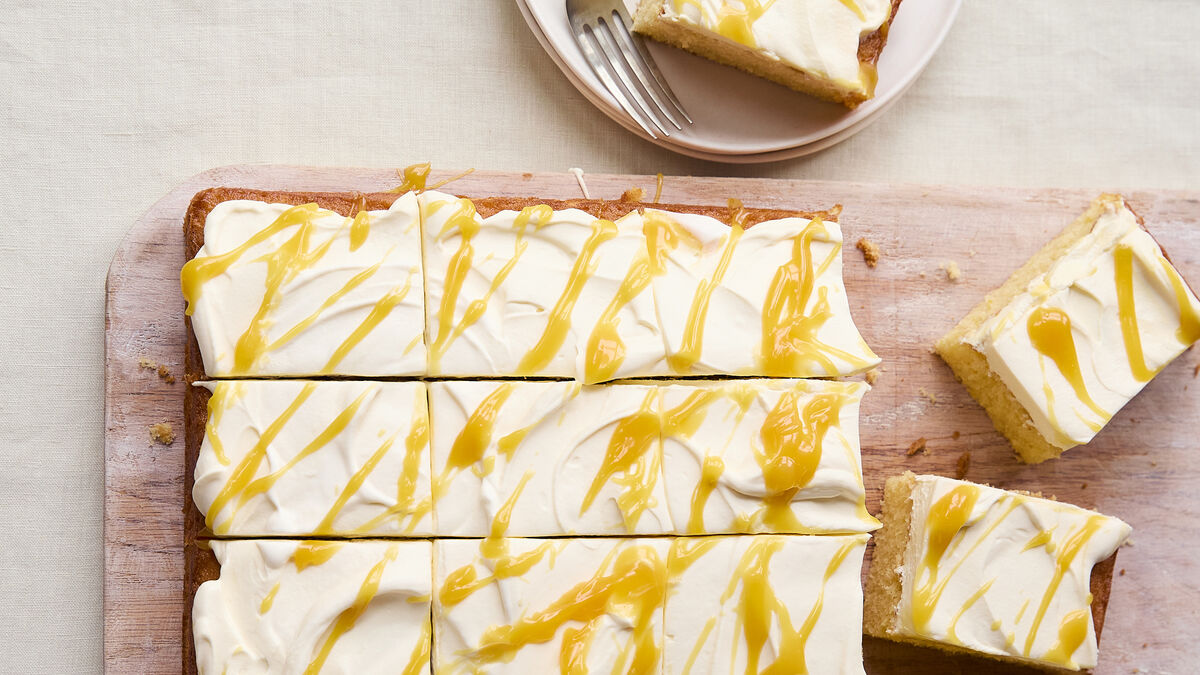
Mary Berry’s lemon and passion fruit traybake
A zesty, crowd-pleasing traybake that’s ideal for sharing or gifting
Servings
16Course
BakingIngredients
225g baking spread, straight from the fridge, plus extra for greasing
225g caster sugar
275g self-raising flour
1tsp baking powder
4 eggs
2tbsp milk
2tbsp passion fruit curd
Finely grated zest of 2 lemons
For the icing:
300ml pouring double cream
4tbsp passion fruit curd
Method
Preheat the oven to 160°C fan/180°C/gas mark 4. Grease and line a 30 × 23-centimetre traybake tin with non-stick baking paper.
Measure all the traybake ingredients into a large bowl and beat with an electric hand whisk until combined and smooth.
Spoon the cake mixture into the prepared tin and level the top. Bake in the preheated oven for about 35 minutes, or until the cake has shrunk from the sides of the tin and springs back when pressed in the centre. Leave to cool in the tin.
To make the icing, combine the cream and half the curd in a large bowl and whip until soft peaks. (Be careful not to overwhip, as the curd will make it thick.) Spread the icing over the surface of the cooled cake.
Drizzle the top of the traybake with the remaining curd (see tip) in a zig-zag pattern. Cut into 16 pieces to serve.
Tips: If your curd is very thick, you could loosen it with a little water, or warm it gently, in order to drizzle it to decorate it at the end. Can be made up to a day ahead. Freezes well un-iced. If you overwhip the cream and it starts to curdle, save it by adding a little more liquid cream, a spoonful at a time, until it becomes smooth again.
Here, Berry shares some cooking tips to get even the most reluctant home cooks started.
“People often say, ‘Oh I don’t cook’, and it’s usually because they’ve got so many other interests, but if you choose something with not many ingredients, something you enjoy, that’s simple, follow the recipes – you will get success,” Berry says. “And give yourself time.”
“When you’ve decided what you’re going to do, read the recipe thoroughly,” says Berry. Many people read the recipes as they go, giving little leeway for time if something takes longer to wrap your head around.
Next, “get the ingredients to hand and just be organised – it’s all in the preparation”.
“My recipes are not complicated,” adds Berry. “I don’t use juniper berries because, what are you going to do with the rest of them in the jar?” She focuses on buying what she’ll use all of in one recipe, or things that end up in many dishes.
“If I’m using something like roasted peppers from a jar, I use the whole lot because if you have a little bit left, you say you’ll use it tomorrow, but you don’t.”
You need a decent store cupboard, Berry says, but many people end up with a lot in it they don’t use – “especially herbs and spices”.
“I grow my own herbs but I limit the spices,” she adds. “They should be kept in the dark – if you think of paprika, if you store paprika in the light, it will no longer be bright red after a year, so you’ve got to keep it in the dark, and it’ll keep its colour and flavour.
“When I first started [cooking] you did use dried herbs because unless you grew them, you couldn’t buy them in a supermarket – they just weren’t available.”
“I like fennel,” says Berry, “but I do notice that sometimes people are given advice to roast them, but if you roast fennel, it’s very tough. It’s far better to cook it for five minutes in soaking water, having quartered it, and then roast it. It’s absolutely delicious, but first of all, it needs blanching for about five minutes in order to cook through.”
“Roast beetroot,” she suggests, “is absolutely delicious, easy to grow, and not too expensive.
“Some of the unusual things like fennel and celeriac are often cheaper in farm shops than supermarkets.”
- Mary’s All in One – My Favourite One Pan, One Pot, One Dish Recipes by Mary Berry is published in hardback by BBC Books. Food photography by Tara Fisher. Available October 8