Sophie Morris: 'Adding nuts and seeds to your breakfast is a really good hack'

Author Sophie Morris has all the tips to help us skip the UPF products - or switch them for something better - along with ideas for good things to make that are both delicious and nourishing
Sophie Morris: 'Adding nuts and seeds to your breakfast is a really good hack'

A leisurely weekend breakfast at home on a cold January morning is pure luxury — a slower, warmer start to the day as we look out at the cold, frozen world, no rushing for work or school, time to spend lingering at the table. But what will we eat? A glance at the list of ingredients on the back of a box of breakfast cereal can sometimes be enough to make you stop in your tracks.

With sugar appearing high up on the ingredients list of many family-favoured breakfasts, alongside other sugar sources such as invert sugar syrup, molasses, and caramelised sugar syrup, it’s no wonder that the Food Safety Authority of Ireland highlighted breakfast cereals in their latest report, Monitoring Sugar in Processed Foods. It found that ready-to-eat breakfast cereal had an average of 6.37g of sugar per suggested serving size, the equivalent of 1.6 teaspoons of sugar. To put that in context, confectionery came in at 7.61g, or 1.9 teaspoons of sugar per serving size.

Many of these cereals are also classified as ultra-processed foods.

Sophie Morris, food entrepreneur, popular Instagrammer, and author of Sophie’s Swaps, has some simple ways to skip ultra-processed foods — or swap them for better choices — so we can still indulge and enjoy a nourishing, comforting breakfast without feeling that we have to restrict our options.

“If you’re looking at a typical cooked breakfast like bacon and eggs that people do like to enjoy at the weekend, then eggs are brilliant,” says Morris as we talk through different options.

Sophie Morris: “Adding nuts and seeds to your breakfast in any way you can is a good thing to do because you’re getting fibre, healthy fats, and other micronutrients into your meal. That’s a really good hack.”

Bacon can be a whole other story. Last year, a coalition of international scientists called on governments to ban the use of nitrites in processed meats. The World Health Organization has classified processed meats, including bacon and sausages, as a Group 1 carcinogen.

“Bacon is never going to be a health food, but there are better options coming onto the shelves now without nitrites. Finnebrogue, a Northern Irish brand, does bacon [Naked Bacon], which is available in Tesco,” says Morris.

“It’s not a health food, but if you’re going to have bacon, that’s a really good swap to have. Finnebrogue does sausages as well, without [nitrites] and with a high percentage of pork. An avocado would be brilliant to have alongside that, and sprinkle some seeds over your eggs as well.

“Adding nuts and seeds to your breakfast in any way you can is a good thing to do because you’re getting fibre, healthy fats, and other micronutrients into your meal. That’s a really good hack.”

Bacon, eggs, with a scattering of seeds — “I love hemp seeds, you can barely taste them,” she says — and avocado: This is definitely not a breakfast of denial.

“It’s not about giving up the things that you really love,” says Morris. “So many of us were brought up on breakfasts that were very carbohydrate or sugar heavy, with cereal, jam on toast, or pastries. 

"I think that’s where we can go wrong because it just doesn’t set you up for a day of feeling full and feeling energised. You need to have protein, healthy fats, and fibre alongside your carbohydrates so that you’re getting more balance.”

If you’re looking to add something indulgent to the breakfast table, Morris has a tip: Frozen, ready-to-bake, all-butter croissants available in supermarkets. “Food is there to bring us joy as well as nutrition,” she says.

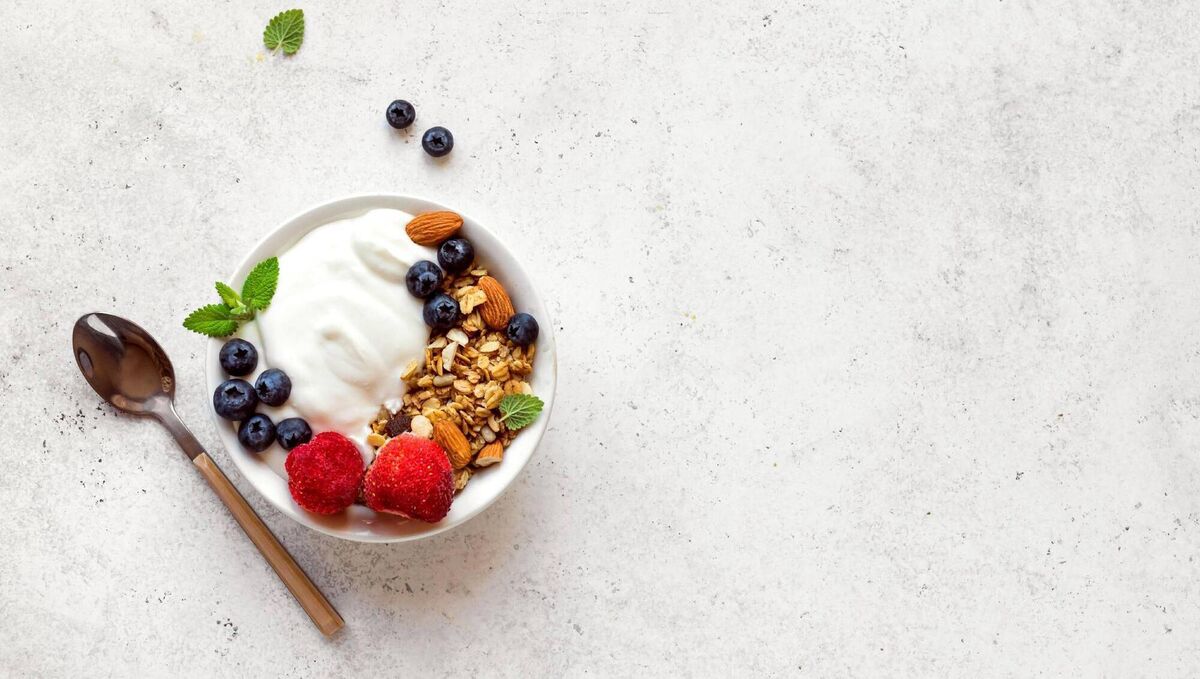
Sophie Morris: "Let’s say you want to enjoy croissants at a weekend breakfast, think about what else we can have alongside it for balance. I would serve them on a nice big plate and also serve Greek yogurt with berries and, again, more nuts and seeds."

“If you have family over for weekend breakfast, there’s that whole experience of having something smelling delicious in the house. A freshly baked croissant is a lovely thing to offer. The ones in the supermarket, the frozen ones, are really good quality.”

She acknowledges that croissants are far from being a health food. “But, let’s say you want to enjoy croissants at a weekend breakfast, think about what else we can have alongside it for balance. I would serve them on a nice big plate and also serve Greek yogurt with berries and, again, more nuts and seeds. So you’re getting protein, fibre, and healthy fats. Looking at it that way, breakfast is more balanced, and you’re still enjoying the things that you love.”

While Morris recognises that people often buy Nutella as a weekend treat for kids, she prefers to steer clear. “There are amazing alternatives now, including the Dunnes one [Simply Better Italian hazelnut and cocoa spread], which is widely accessible, much lower in sugar [37g per 100g versus 56.3g for Nutella] and is made with 52% hazelnuts. You are getting some nutrition in there, but it also feels indulgent. I think it’s a lovely thing to have on sourdough or rye bread, perhaps alongside some Greek yogurt or something like that for a more balanced meal.”

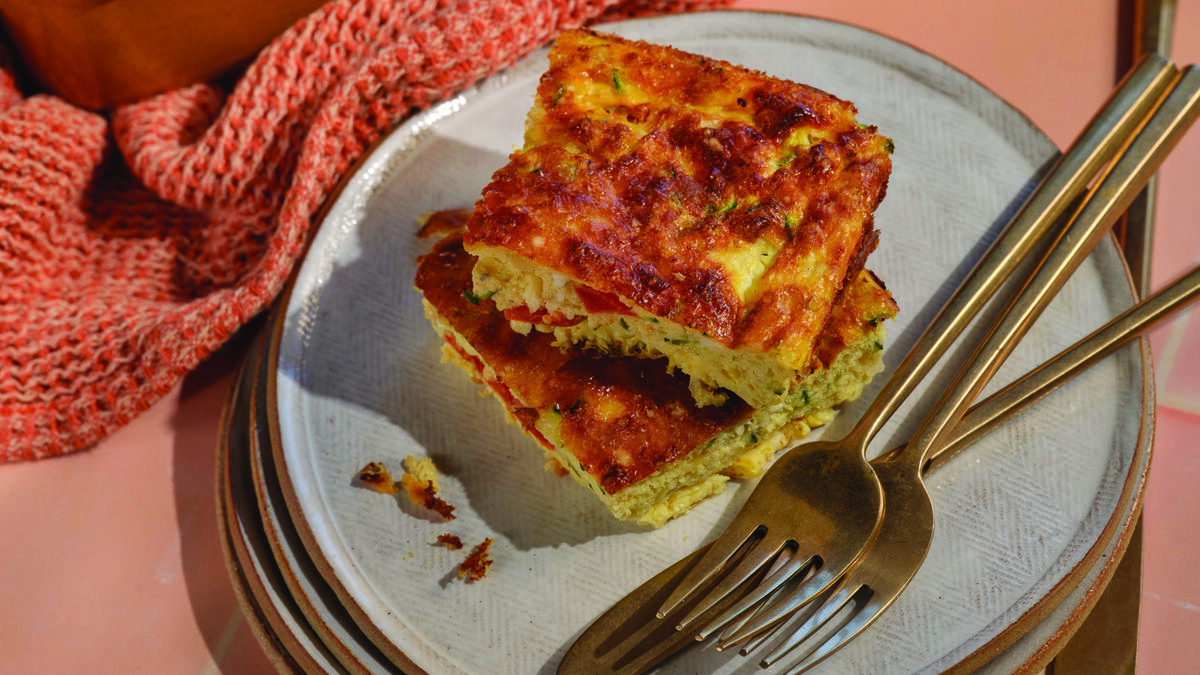
For those who prefer to DIY a nutritious, but still delicious, weekend breakfast, she has a recipe for homemade hazelnut spread in Sophie’s Swaps, alongside recipes for pancakes — “having a good pancake recipe up your sleeve is brilliant” — and also recommends a simple egg traybake recipe as a way to cut down on food waste: “It’s such a good way to use up veggies that you have in the fridge — cherry tomatoes, courgette, onion, whatever you’ve got — whisk them into your eggs and bake.”

Cut into squares, they keep well in the fridge and reheat nicely, she adds.

“The good stuff is going to keep you feeling satisfied and filled and energised,” says Morris. “Have your [kitchen] stocked with the basics — seeds, nuts, oats, yogurt, eggs and frozen berries — that you can use to make something really delicious. I think having a well-stocked cupboard and freezer is critical to making nutritious breakfasts without turning to ultra-processed foods.”

Veggie baked eggs with cottage cheese

Cottage cheese is perfect for baked eggs because it adds a fluffy texture and a creamy, cheesy flavour. You won’t even notice it’s there once it’s cooked, and it gives a great boost of protein. The idea behind this recipe is to have some healthy breakfast
Veggie baked eggs with cottage cheese

Course

Main

Ingredients

  • 12 eggs

  • 225g cottage cheese (Graham’s Cottage Cheese)

  • ½ onion, finely chopped (or use frozen chopped onion)

  • large handful cherry tomatoes, halved

  • ½ courgette, grated

  • 60g Parmesan

  • sea salt and freshly ground black pepper

  • butter, for greasing

Method

  1. Preheat the oven to 180°C and grease a 23 x 30cm baking dish with butter.

  2. In a large bowl, whisk together the eggs and cottage cheese, and season with salt and pepper.

  3. Add the chopped onion, cherry tomatoes, courgette and half the Parmesan. Stir to combine.

  4. Pour the egg mixture into the prepared baking dish and sprinkle over the remaining Parmesan.

  5. Bake for 35–45 minutes, or until the edges are set and the middle is golden brown and has only a slight jiggle. (The baking time will vary depending on your oven.)

  6. Leave to cool in the dish, then cut into the portion sizes you want. Store leftover portions in an airtight container in the fridge for up to 3–4 days to have ready to grab on busy mornings.

  7. Reheat for a few minutes in the oven or air-fryer.

Sophie’s Swaps: 

Simple supermarket swaps and UPF-free recipes to transform your shopping and unprocess your plate by Sophie Morris is published by Gill Books.

More in this section

ieFood

Newsletter

Feast on delicious recipes and eat your way across the island with the best reviews from our award-winning food writers.

Cookie Policy Privacy Policy Brand Safety FAQ Help Contact Us Terms and Conditions

© Examiner Echo Group Limited