'The online events are here to stay': Cookery schools go online
Fifty years from now, all you’ll have to do is mention the words, ‘sourdough/banana bread’ and ‘Zoom’, to bring those who lived through it right back to the era of Covid-19.
Those words and phrases encapsulate the two major tropes of our lockdown lives: the great migration of lives online, for reasons of both business and pleasure; and the especial comfort we have taken from food during these fraught times.
The other great driver of online activity was education. Young students, in primary and secondary schools and, to a lesser extent, in third-level education, have now all returned to real classrooms but for a time, all around the world, classrooms shrunk to nothing more than a small screen. Neither was it just youthful faces bathed in blue light — adults with a whole load of newfound downtime signed up for all manner of courses.
Enrolment at Coursera, an online platform offering MOOCs (Massive Open Online Courses, often with up to 200,000 registered students), was 640% higher from mid-March to mid-April 2020 than the same period the previous year. And online course creation globally surged by 221%, with most growth of all coming in the leisure/entertainment and health and fitness sectors, both incorporating the world of food and cooking.
It may seem counterintuitive to attempt to learn online about a subject that is so sensory-driven — smell, taste, texture, touch and visual appearance are all crucial to sourcing, preparing, cooking and eating food — but cooking and baking are crafts and, when it comes to crafts, online videos have proven especially useful in imparting skills and knowledge.
Firehouse Bakery supremo Patrick Ryan’s sourdough video, made last year in conjunction with ILoveCooking.ie, is now approaching 11m views on YouTube from all around the world — a figure that began accelerating exponentially upwards once the first lockdown began.
Online courses, however, are a step up again. Instead of simply watching an instructional video and attempting to replicate the content, a live interactive course usually involves you cooking along with the opportunity to ask questions or seek feedback on your efforts.
Though it will never remotely match the efficacy of a ‘live classroom’ approach where a mentor can smell, touch and taste your efforts, it offers benefits to both teacher and pupil. Classes are comparatively cheap to deliver, less of a drain on resources and energy, and it is possible to tap into a larger audience from all around the world.
The price of virtual classes is also usually much lower, allowing for a wider audience and bringing the teacher’s ‘product’ or ‘brand’ to previously unimaginable new markets.
Our economic model is based on the number of students, we would normally take — 60 plus. Now we have just over half that number — we are still open, thank god, because we are a school and they are all staying here and observing very strict coronavirus protocols — but we still have close to the same kind of expenses so we had to think outside the box to generate new income streams.
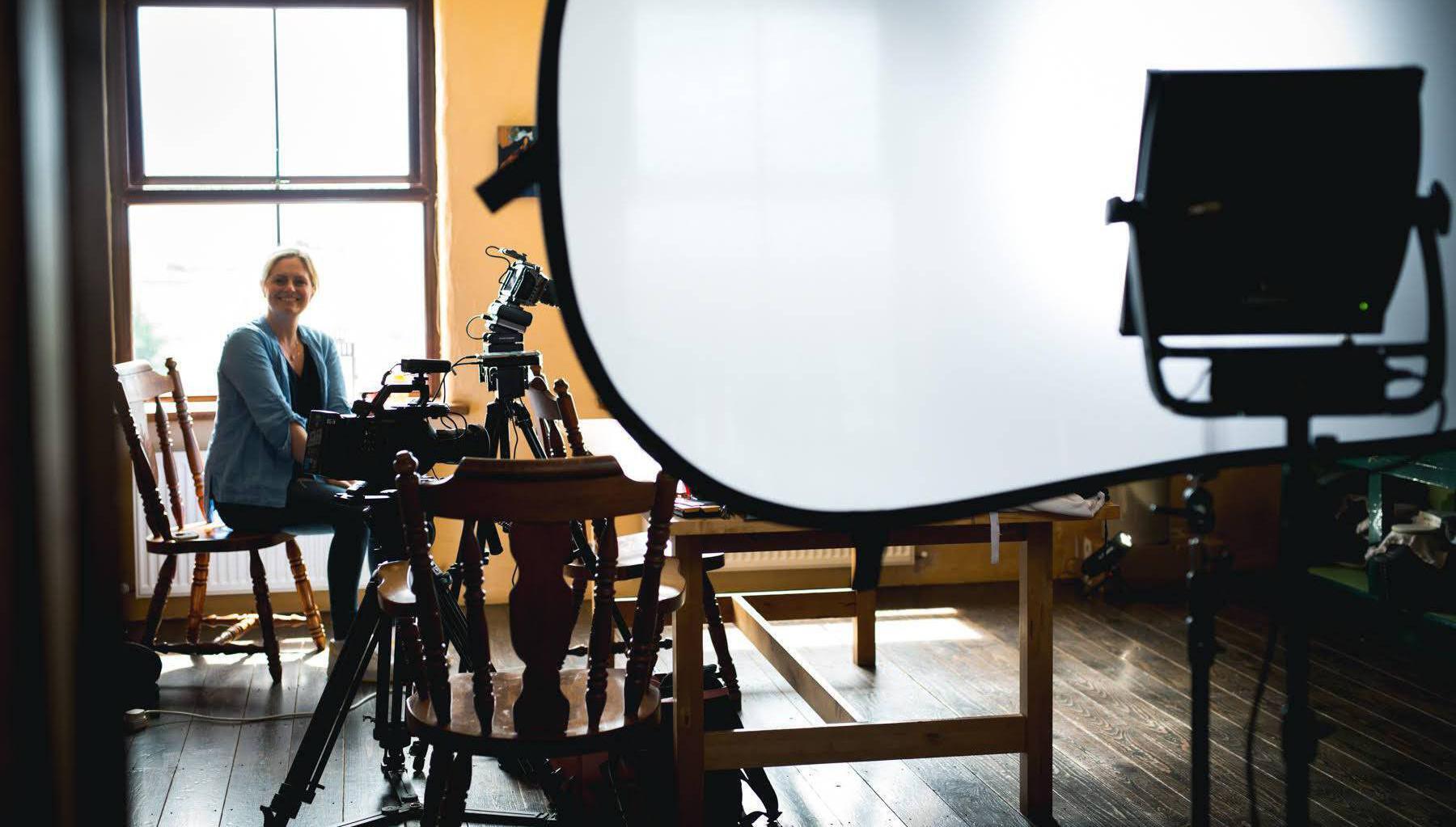
My son Toby is a techie, so we were fortunate to have all the skills in-house. We started quite tentatively, doing cookalongs, streaming some courses. We now have about three cameras and have put a bit of investment into lighting. There was one person starting the residential course who couldn’t do the two weeks’ quarantine beforehand, only arriving when the course began, so we streamed the first two weeks online to them where they were isolating in their B&B.
Quite quickly after lockdown, we had lots of phone calls from big corporate companies, in Ireland and abroad, wanting us to do online cookalongs with their staff, to replace the jollies and the trips. I did a Halloween one recently and there were over 600 people.
It’s building all the time and we’re learning as we go, we’re getting better at it. We put so much into it that people are really getting value for money, we are really teaching people, passing on the skills and we’re offering vouchers for courses that people can give as Christmas presents, including membership of Ballymaloe cookery school online, anything from a month’s membership to an entire year. Rachel [Allen] and Rory [O’Connell] are doing them as well and this will be part of the future even when things go back to normal. The interest is phenomenal: every day we get requests, and from all over the world.
cookingisfun.ie/cookery-courses/course-list

We had stopped doing the Aniar Cookery School and it was actually a request from a customer for an online class that started it off. We did six recipes in three hours: they get the ingredients themselves and we meet up over Zoom and record the class. I have up to six people in the class.
I just bought a little stand for the phone, it has a backlight and I got the Zoom business package and I have the phone in front of me and I’m wearing a headset and the people doing the classes are usually wearing a headset as well.
I send them a list of 10 dishes beforehand and they pick five. We might have a few emails back and forth about ingredients. We usually start with a bread, we might do one dessert and then savoury dishes.
A lady in Gort, from South Africa, did it with her sister who is in South Africa. Their husbands watched, had a bit of wine and when it was over, they all had guests over — it was at the tail end of summer when you could still have people over — and had a bit of a party.
Sometimes it’s just about giving confidence, or even very simple tips. My biggest thing is always telling them to buy a thermometer. Chicken is usually cooked at 70°C and you’d have people saying, ‘oh, I usually just cooked it until it was hard’!
It’s very nice to interact with people and doesn’t cost us too much to do and there is a personal dimension. I did three classes with two guys from Minnesota and by the end of the week, it felt like we all knew each other. Around 75% of the classes are in the US.
aniarrestaurant.ie/online-cooking-classes

I had done the video with I Love Cooking last year but it really took off after lockdown and then we did two interactive classes with all the money earned going to Pieta House and they were very successful.
It is interactive, we will email out the ingredient list, I will do a zoom call with them on Friday — anything they need to prep in advance, feeding a starter or maybe making a leaven. Obviously, we are trying to do a recipe that might take 12 to 16 hours overall but to deliver it in two. I’m baking it live with you. Sarah [Woods, founder of I Love Cooking] will do tech admin behind, fielding questions and letting me know when to answer. If you are struggling with your dough, if you think it’s too wet, I can click on your screen and tell you if it’s ok or not. As the dough is proving, we introduce a nice quick recipe to fill the time in between, maybe a nice apple and cider soda bread, perfect for this time of year.
I’ll have a dough already proving, I’ll take you to the point of shaping your final bread depending on what it calls for and you might prove it overnight. All you have to do next morning is to bake it — that’s the benefit of recording the class — and we send it to you and the following morning you can watch it back to finish the loaf.
We keep ingredients as ‘mainstream’ as possible, especially during initial lockdown when it was hard to get flours. I’m trying to simplify baking — the most technical bit of equipment you need is your hand. It’s about improvising: you might not have proving baskets and Dutch ovens but you probably have a very close equivalent. Use a bowl, line it with a tea towel. There’s always alternatives.
We keep the costs quite reasonable, about €20 a head so that people can afford it and do repeat classes, and cap numbers at about 100.
The great thing about bread is it appeals to everyone worldwide, an Irish cookery class mightn’t relate to someone in Kuwait or Russia or Mexico, but everyone loves bread — although I’m sure half of them can’t understand a word I’m saying especially with my accent!
We had been growing year on year in terms of traffic but when coronavirus came our stats went through the roof. Everyone was cooking or baking at home, people were really interested in bread and we had already done a really nice masterclass series with Patrick [Ryan].
We currently have around 150k unique users a month people but during lockdown we had around 180-190k unique users and the site was starting to slow down. I had to increase bandwidth to deal with extra traffic. At Christmas, that will shoot up again as people who may not cook so regularly tackle Christmas dinner. We have a worldwide audience, America Canada, Asia, people from all over the world, on YouTube and on the website as well.
We’ve been working with Patrick [Ryan] on masterclasses and live interactive classes where people can answer questions. Before we were putting up free classes on YouTube but these interactive classes are paid for. People love doing them because it gives them a chance to talk to Patrick and ask technical questions.

I’d host a lot of events, such as educational events for Jameson in Ireland and abroad, speaking to trade and media, and it would have involved a lot of travel and inward visits to Dublin and Midleton and once that all stopped, I found that hosting online tutorials and online discussions gave me at least little bit of work back.
I upgraded my broadband at home and converted my office at the end of the garden into a bar, which provides a great backdrop for demos and events, and has given me a chance to stay active with the global bar community. I’ve also worked with agencies going into Covid-compliant studios with green screens and multiple cameras.
Last week I did an 80s cocktail demo for Google Germany with 50 staff all over Germany dressed in 80s fashion. We send out cocktail kits that will have absolutely everything they need, including a DIY cocktail shaker, which could even be a jar with two lids, one with holes for pouring and another for shaking.
The private demo events are great craic. I provide the liquid entertainment and inspiration, and after I finish my demo which usually takes about an hour, they usually hang around online afterwards chatting to each other and having a laugh.
Now that the event industry has been able to show that we can still create entertaining and educational get-togethers online, I don’t see them going away post-Covid. We will always have the most human need to connect face to face and the events that require that will take place again, but we won’t have as many.
The online events are here to stay.