Darina Allen looks at some delicious dishes using Jerusalem Artichokes
THIS is becoming a habit — a few weeks ago I wrote a column on the swede turnip, a humble inexpensive and ridiculously versatile winter root. It got a tremendous response, so this week I’m going to continue in the same vein and showcase Jerusalem artichokes. I know this is a vegetable that some may not have heard of but it’s really worth seeking out, better still plant some in your own garden. It’s a kind of a miracle veg; you plant one this year there will be at least 10 or 12 next year. They look like knobbly potatoes; they remain in the ground all winter and vary in colour from white to golden to purple.


Members of the sunflower family, Helianthus Tuberosus, their US name is “sunchoke”. The foliage grows to about two metres and is often used as a hedge, windbreak or even a maze. It has pretty yellow flowers in August, brilliant for flower arrangements or scattered in a salad bowl.
We can’t seem to find the name of the heirloom variety we have grown at Ballymaloe for over half a century, it has an excellent flavour. Children love their uneven shapes; they look like strange creatures. They love them roasted, crisp and golden at the edges or in their skins. Like the humble swedes I wrote about a few weeks ago they are super versatile. They make a silky puree alone or mixed with mashed potato or a sweet apple puree that pairs deliciously with all sorts of things, particularly pheasant or venison. Use as a base of a vegetarian dish and top with rainbow chard stalks and leaves, and some chunks of sautéed mushrooms, crisp slivered garlic and a sprinkling of nutty Coolea farmhouse cheese. Despite their name, Jerusalem artichokes are not artichokes at all, neither do they come from Jerusalem, their curious nutty flavour is reminiscent of an artichoke heart which has a wonderful affinity with fish particularly mussels and scallops.
They also mix deliciously with other winter roots in a medley of roast vegetables. Peeled and cut into chunks, mix them with carrots, parsnip, celeriac, turnips… Toss in extra virgin olive oil or even more delicious some duck or goose fat left over from Christmas. They also absorb the gutsy flavour of herbs like rosemary and thyme, bay, sage and spices like cumin, coriander and garam masala. I’ve also included a recipe for Jerusalem artichoke soup — easy peasy to make and everyone will love it, if you have pernickety eaters in your family who are put off by the sound of something odd or unfamiliar — just call it winter vegetable soup and maybe up the quantity of the potato.
For a dinner party you can embellish it with chorizo crumbs or a few slices of scallop or a few fat mussels as a garnish.
I’m crazy about Hugh Maguire’s smoked black pudding and found it pairs deliciously with slices of roast artichoke and some buttered leeks and a dice of sweet apple.
Just in case it comes as a surprise I should mention that they are hugely flatulent so very good for your gut biome. Peeling the older varieties can try your patience but the newer varieties are much smoother, I don’t bother to peel them at all when freshly dug or when I decide to roast them, just cut lengthways or into thick rounds.
One other thing to know, like artichokes and celeriac they oxidise quickly when peeled so pop them into a bowl of acidulated water (add a squeeze of lemon juice) until ready to cook.
Serves 6 to 8
This smooth and creamy purée is excellent with pan-fried or grilled scallops. It can also be used with game such as venison, pheasants and wild duck. The trick to get a light and refined purée is to blend the vegetables while still hot. Keep some of the strained cooking water which may be added to the vegetables when blending.
450g (1lb) Jerusalem artichokes (weighed after peeling)
450g (1lb) potatoes, scrubbed clean
25g (1oz) butter
salt and freshly ground black pepper
12-24 rainbow chard stalks, depending on size
8 garlic cloves or better still smoked garlic
extra virgin olive oil
flaky sea salt
3 to 4 dessert apples, Cox’s Orange Pippin, Egremont, Russet or Romano
50 to 75gr (2-3ozs) Coolea or Pecorino cheese
flat parsley sprigs or fresh watercress
Cook the artichokes and potatoes separately in boiling salted water until tender and completely cooked through. Peel the potatoes immediately and place them with the hot artichokes in a food processer. Add the cream and butter and season with salt and freshly ground black pepper. Blend until a silky consistency is achieved. Taste and correct seasoning.
Peel and slice the garlic into thin slivers, cook until crisp and golden in hot oil in a frying pan, drain on kitchen paper.
Prepare the chard, rinse under cold water and chop into stalks of 7 to 10 cm (3 to 4 inch) lengths. Cook in well salted boiling water for just a few minutes until tender when the stalk is pierced with a knife. Drain, toss in extra virgin olive oil and keep hot.
Peel core and dice the apples into 1cm (1/3 inch) pieces, cook in a little melted butter over a medium heat, tossing until golden and tender.
Choose deep bowls, put 3 to 4 tablespoons of hot velvety artichoke purée on the base. Top with a few pieces of chard plus leaves (3/4).
Sprinkle with apple dice, crisp garlic slivers and some coarsely grated Coolea.
Scatter a few flat parsley leaves or watercress sprigs over each dish and serve as soon as possible.
Jerusalem artichokes were a sadly neglected winter vegetable, but many people have discovered them in recent years. We love the flavour and of course they are brilliantly nutritious — packed with inulin. They look like knobbly potatoes and are a nuisance to peel, but if they are very fresh you can sometimes get away with just giving them a good scrub. Not only are they a smashing vegetable but they are also delicious in soups and gratins. They are a real gem from the gardener’s point of view because the foliage grows into a hedge and provides shelter and cover for both compost heaps and pheasants.

50g (2oz) butter
560g (1¼ lb) onions, peeled and chopped
1.15kg (2½ lbs) Jerusalem artichokes, scrubbed, peeled and chopped
salt and freshly ground pepper
1.1L (2 pints) light chicken stock
600ml (1 pint) creamy milk approx.
1 ripe avocado, halved, stone removed, peeled and diced into neat scant 1 cm dice
3 tablespoons of hazelnuts, roasted, skinned and coarsely chopped
3 tablespoons of hazelnut or olive oil
1 tablespoon of chopped flat parsley
Flaky sea salt and freshly ground black pepper
Melt the butter in a heavy bottomed saucepan, add the onions and artichokes. Season with salt and freshly ground pepper, cover and sweat gently for 10 minutes approx.
Add the stock and cook until the vegetables are soft. Liquidise and return to the heat. Thin to the required flavour and consistency with creamy milk, and adjust the seasoning.
Serve in soup bowls or in a soup tureen. Garnish with avocado and roast hazelnut salsa.
:
Mix the ingredients for the avocado and hazelnut garnish. Taste and correct seasoning. This mixture will sit quite happily in your fridge for an hour as the oil coating the avocado will prevent it from discolouring.
Chorizo crumbs; artichoke crisps; a few mussels or slices of scallop and a sprig of chervil, dice of smoked salmon and sprigs or flat parsley or chervil.
One can also use roast slices here instead of a raw artichoke.
4 good handfuls of perky bitter lettuce leaves
2 small Jerusalem artichokes, scrubbed clean
a little freshly squeezed lemon juice
110g (4oz) of smoked almonds, rough chopped
sea salt and freshly ground black pepper
3 tablespoons extra virgin olive oil
1 tablespoon white wine vinegar
2 teaspoons honey or agave syrup
a good pinch of sea salt
½ preserved lemon, seeds removed and finely chopped
Whisk all the ingredients for the dressing together, add the preserved lemon.
Wash and dry the salad leaves.
Next, use a mandolin to slice the artichokes paper thin — otherwise slice with a very sharp knife. Squeeze a little lemon juice over the artichokes to prevent them from discolouring whilst also adding some flavour.
Put the salad leaves into a bowl, add the artichoke slices and roughly chopped almonds. Pour over enough of the dressing and toss to coat the leaves. Taste and correct seasoning with salt and pepper if necessary. Serve immediately.
We hot smoke a lot of different ingredients in a biscuit tin over a gas jet. Just scatter 2 heaped tablespoons of apple wood chips on the bottom of the tin. Put a rack on top. Place the almond on top of the wire rack. Pop on top of the gas on a high heat until the wood chips start to smoke and cover the box. Lower the heat and smoke for 4 minutes. Turn off the heat and continue to smoke for a further 1 minute.

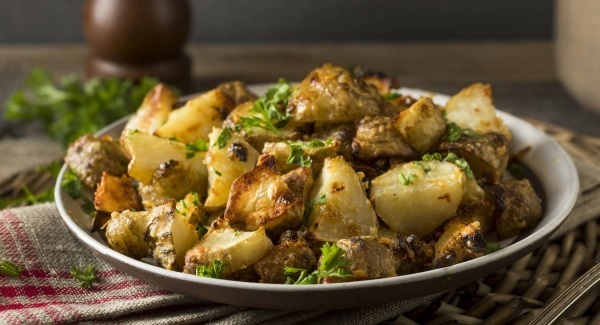
The winter vegetable is particularly good with goose, duck or pheasant. Here we half the tubers but they also work brilliantly cut into thick slices.
450g (1 lb) Jerusalem artichokes, well scrubbed.
2 tablespoons extra virgin olive oil
salt and freshly ground pepper
a few rosemary or thyme sprigs, optional
Preheat the oven to 220C/425F/Gas Mark 7.
Cut the well-scrubbed artichokes in half lengthways. Toss them with the extra virgin olive oil and season well with salt. Transfer to a roasting tin and cook cut side down for 20–30 minutes, when golden, flip over and continue to cook for a further 5-10 minutes. Test with the tip of a knife – they should be mostly tender but offer some resistance. Sprinkle with thyme or rosemary sprigs, season with pepper and serve.
Hot Tips
This year we are on a mission to reduce plastic in as many areas as possible, it’s quite a shock to realise just how dependent we have become on plastic wrapping. One can start by eliminating single-use plastic and covering containers in the fridge with plates or saucepan lids where possible.
A whiff of smoked garlic adds magic to many dishes — check out Frank Hederman’s stall in the English Market or at Mahon Point. The Farmers Markets at Douglas, Midleton and the Coal Quay in Cork are all back in full swing after their well-earned Christmas break.