Louis Marcus: Oscar nominee recalls artistic life in Cork in the 1950s
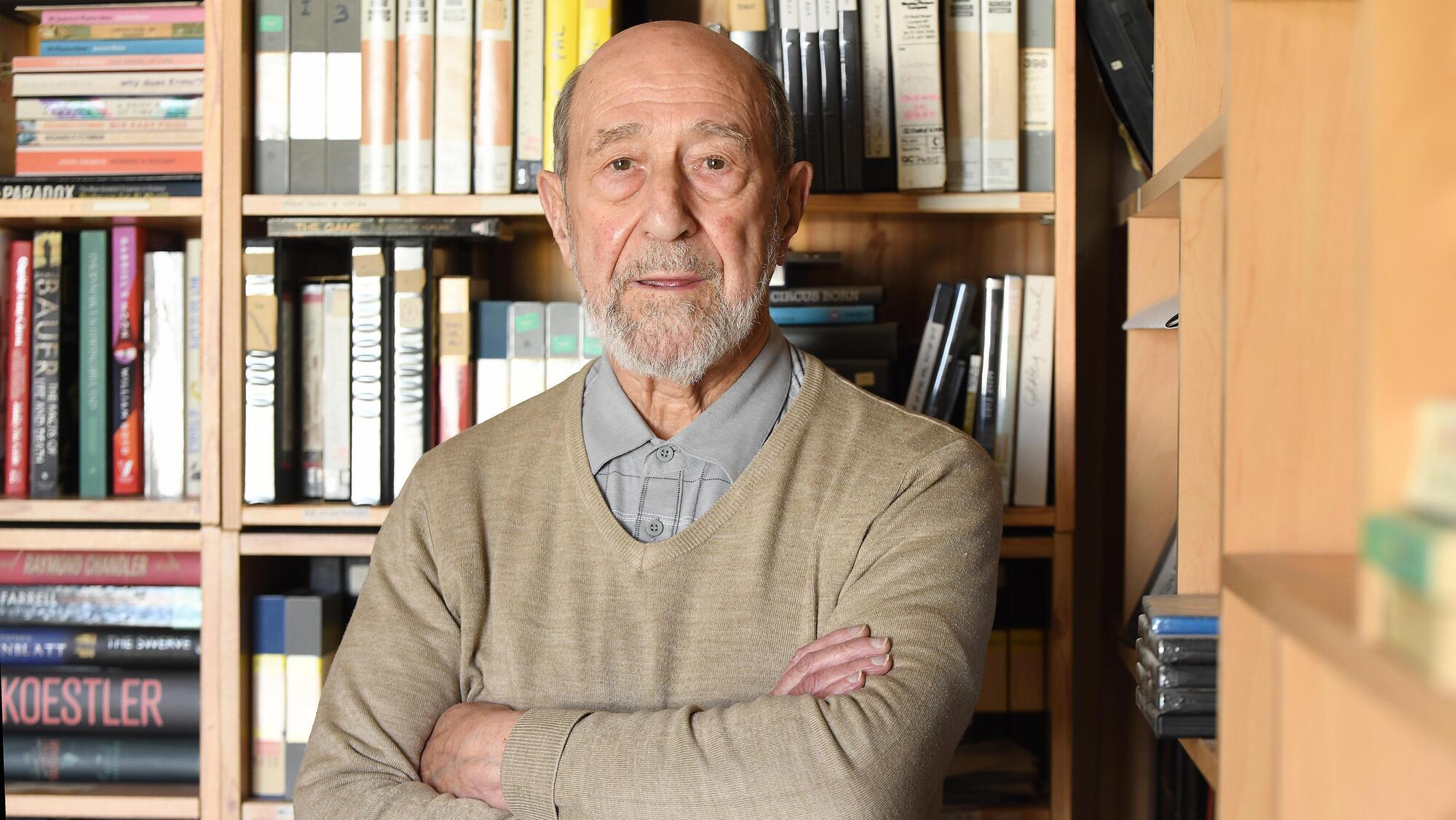
Louis Marcus at his home in Dublin. Picture: Moya Nolan
“The hope which had fuelled the struggle for independence, not only political but cultural too, had been dashed by a fearful conservatism.”
Amid economic stagnation and mass emigration, the Catholic Church’s moral stranglehold on 1950s Irish society pervaded everything from education and women’s rights to film and literary censorship.
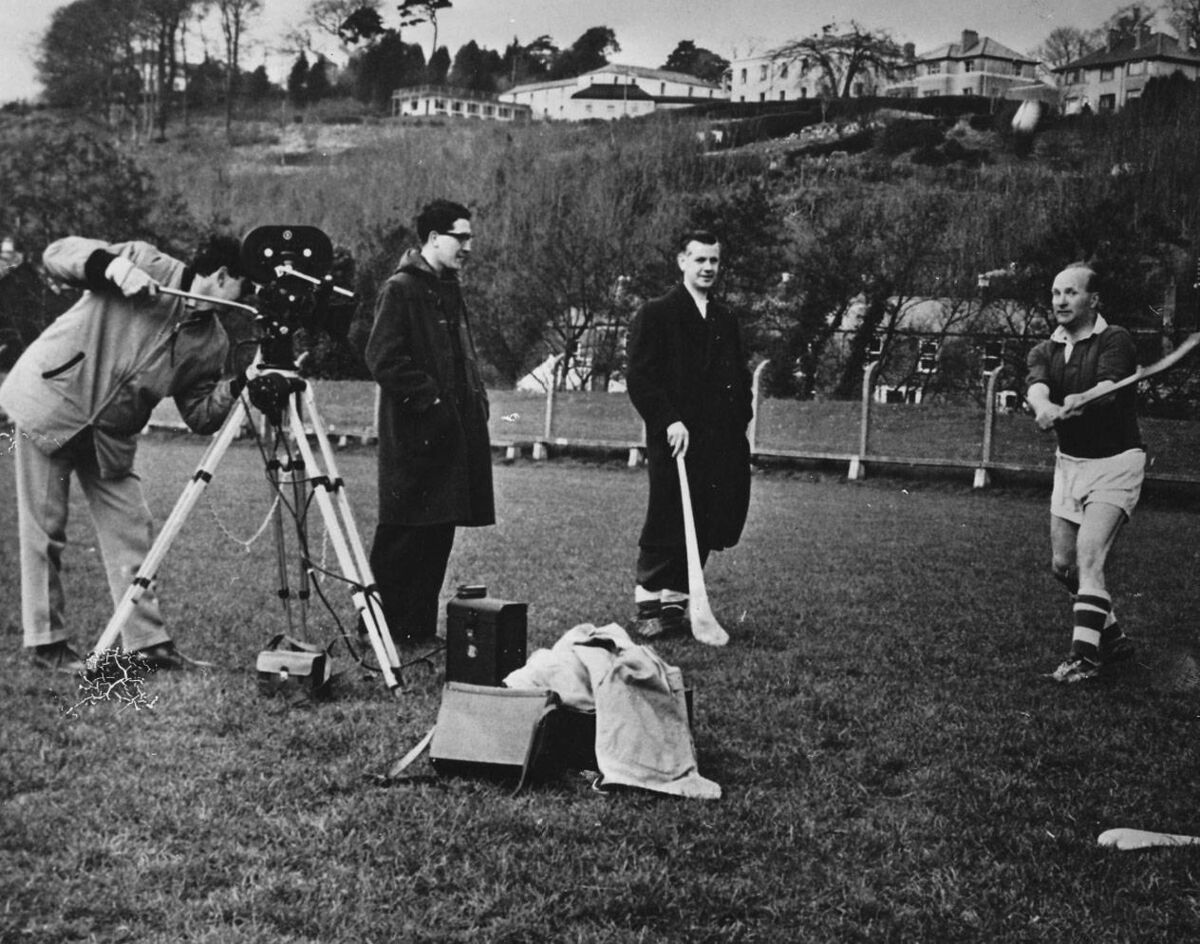
Arts student Louis Marcus, who before the decade’s end would begin his film-making career on George Morrison’s experienced this stifling rigidity during his education at University College Cork. It was, however, thrown into sharp relief by his induction into a free-thinking intelligentsia group which opened “a window on the outside world”.
Marcus went on to make more than 80 documentaries, many in Irish, earning two Academy Award nominations and becoming a member of Aosdána. Turning 90 at the end of May and living in Dublin for many years, he recently wrote a memoir piece for the journal.
In the piece, he recalls the Cork group which amid ‘savage’ film censorship in the “oppressive atmosphere” of 1950s Ireland, “stood up for intellectual, artistic values” and “were people of great courage at a period when to put your head over the parapet was a very dangerous thing”.
“With draconian censorship of printed matter, there was hardly an author of quality, Irish or international, whose work was not banned. And the iron grip of the Catholic Church on life and legislation made for puritanical sexual mores and an atmosphere that strangled debate,” he writes.
Among leading members of the group which met at the New Look pub on MacCurtain St were Seán Hendrick, accountant at Simcox bakeries and Cork Milling Company, who had established a Cork branch of the Irish Film Society; its treasurer, sculptor Séamus Murphy; and his wife Maigread, feminist and film society secretary.
A legislative loophole allowing film to be shown free of censorship to members-only audiences meant the society’s several hundred members could view the “deep humanity of Italian neorealism, the disturbing spirit of Ingmar Bergman, and the radical freshness of the French New Wave,” says Marcus.
“These, and more, were an alluring whiff of cultures and attitudes very different from the Ireland of the time.”
Born and raised in the Mardyke in a liberal Jewish family, Marcus joined the film society aged 17.
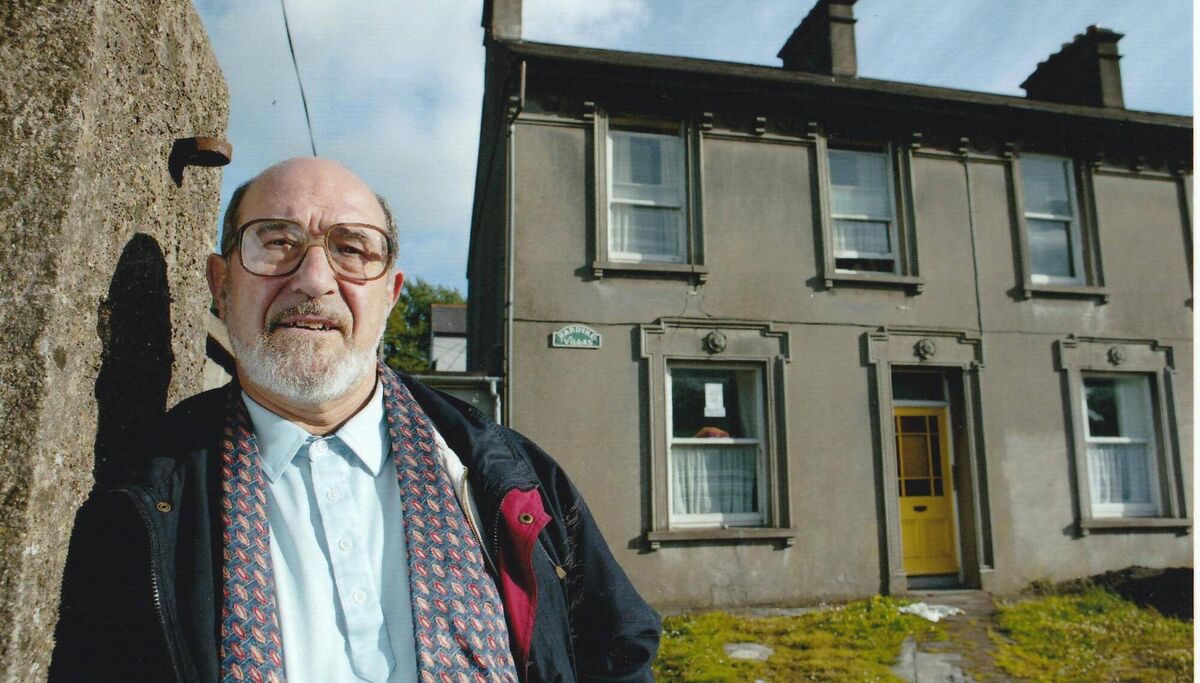
“I quickly became entranced by the range and quality of the films I was seeing, quite unlike anything available in the everyday cinema, where the permitted fare was very limited — only British and Hollywood films were shown, and these were either partly cut by the censor for sexual reasons or banned entirely,” says Marcus, a resident of Dublin for many years.
The teenage Marcus was soon invited to the New Look, where Hendrick chaired the after-hours discussions following film screenings. “But in the New Look it wasn’t just the possibility of a police raid that gave the dimly-lit lounge a faintly subversive air. It was the conversation. For here was a group that chafed against the stifling atmosphere of 1950s Ireland,” recalls Marcus.
“As I spent more and more time in this group, I came to understand that it was intimately linked to the national-cultural revolution that had led to Irish independence. The crucial connection was Daniel Corkery, former professor of English at University College Cork, by then long retired.
“He had been inspired in the 1900s by the Gaelic League’s heady vision of cultural and political independence and was an intimate of those driving the movement in Cork.
“Such was the ambience in which Corkery, then a schoolteacher, discovered and mentored a remarkable quartet of young men. Himself a novelist and short story writer, he pointed Frank O’Connor and Seán Ó Faoláin toward Russian realists Ivan Turgenev and Anton Chekhov, from whose example they rose to international literary fame.
"An accomplished watercolourist, he recognised Séamus Murphy’s artistic gift and got him a scholarship to Paris. He inspired in Seán Hendrick a steely commitment to promoting the arts and intellectual independence.
“As young men, Hendrick, O’Connor, and Ó Faoláin became politically involved, working on publicity for the Republican side in the civil war against the Treaty with Britain. With defeat came capture and internment. And with release came grave disenchantment with the narrow conservatism of the new Ireland.”
Though O’Connor and Ó Faoláin had themselves acted as anti-Treaty censors in the offices during the Civil War, their books were among thousands to fall foul of the Censorship of Publications Board, both writers expressing disillusionment at the narrow Catholic morality that took hold in the wake of Ireland’s independence struggle.
Ó Faoláin - who lost out to author Corkery for the position of UCC English professor – like O’Connor, left Cork, living mainly abroad. Hendrick and Murphy remained, becoming pillars of the New Look group, says Marcus, whose first film was a 1959 portrait of Murphy,
“The New Look was really my university,” says Marcus, while at UCC, “the experience was mostly very limited”.
“On the English course there was a small bit of Anglo-Saxon, a small bit of Middle English, but principally it was Shakespeare and the Romantic poets. They were all wonderful and I enjoyed them. But there was never a lecture on Yeats; there was no reference to Irish literature in English, when you had world figures like O’Connor and Ó Faoláin, to mention only two. Of course Joyce was regarded as sinful.
“When I entered in 1955, the long-serving officer and later president Dr Alfred O’Rahilly had just resigned to become a priest of the Holy Ghost Fathers. A controversial and formidable figure, he left the college with an avowedly Catholic ethos that governed the lives of the students, and which was then implemented by Catholic dean of residence Canon James Bastible.
“Anything unconventional or suspect was banned, including a play that I wrote for the Dramatic Society.
“The insularity of UCC as against the open-mindedness of the film society circle” is contrasted throughout Marcus’s memoir. “Discussions in the New Look ranged over news and current affairs, politics and history, literature and the arts. Regularly, however, the talk would concentrate on the mystery of how an independence struggle that had been initiated and led by writers and intellectuals could shrink to such an arid conservatism.
“These discussions could go on into the small hours in the search for an understanding of what had happened. I remember once, when one of these marathons ended and we filed down the steep staircase onto the pavement outside, I found myself standing beside a pensive Seán Hendrick.
“Do you know what’s really wrong with this country?” he said, as though finally discovering some fundamental truth. “We never found out that we won.”
Hendrick’s words “summed up the failure of the hopes” of those involved in the independence movement, Marcus told the
“Things have changed so much in Ireland since then, that I felt the atmosphere of the old days should be recorded. So I wrote a memoir which was published in the New Hibernia Review, an American academic journal of Irish studies.”
Years on, a radically altered, liberalised Ireland “finally found out that it had won”, or at any rate “won the relaxation to think freely”, says Marcus. “And one can now happily look at all that - at a very strange past.”
- by Louis Marcus, appears in Vol 29, No 3. See: facebook.com/newhiberniareview
- The Seán Hendrick Papers can be viewed in the Special Collections Department of the National Library of Ireland.
“The kind of atmosphere I encountered in UCC was no surprise to my friends in the New Look [pub on MacCurtain St in Cork]. In fact, discussing the matter with Seán Hendrick was the only time I heard him use foul language.
He quoted a statement made by ex-president O’Rahilly at a college conferring ceremony that “what we have to guard against is the infiltration of ideas into the university”. “The one fucking place,” said Seán, “that should be seething with them”.
I later mentioned this to Séamus Murphy in his house. He chuckled in his impish way, and from a mound of loose papers in his bookshelf he drew out the cutting from the that contained O’Rahilly’s words.
Indeed, no event could take place in the college without the express permission of the president’s office. And posters advertising events could not be placed by a college porter in the locked glass cases of the long stone corridor without the stamped approval of the president.
Under this regime, the student English Literature Society had been prohibited from inviting Frank O’Connor to give a talk because he was living in sin with another man’s wife.
And I recall the day when a UCC branch of the Labour Party was formed, with leaflets handed to fellow students going into lunch by Michael O’Leary, later head of the party and a government minister, and Barry Desmond, later a minister and member of the European Parliament. The branch was banned by the college that afternoon.”
“Given the prudish air of UCC, it was probably inevitable that the subject of James Joyce would arise. His novel was available in the college library only to graduate students of English, and only with the written permission of the professor. She was a middle-aged woman who, to our amazement, when reciting passages of William Shakespeare’s and would skip lines with sexual content. Students were not encouraged to interrupt lectures, so there was a flurry of excitement one day when a maverick friend of mine spoke up with a question.
“Professor,” he asked, “what do you think of Joyce’s ?” She was taken aback for a moment by the interruption, then recovered and said slowly and deliberately, “I have never understood how anyone raised as an Irish Catholic could think thoughts so foul.”
impinged also on the group in the New Look. The head of the Cork City Library was Dermot Foley; earlier in his career he had worked with Frank O’Connor in Dublin’s Pembroke Library. He was now secretary of the Cork Film Society and an occasional visitor to the New Look.
While was not on the library shelves, Foley made it available to anyone he knew to have a genuine interest in literature. Séamus Murphy was a member of the library board, though he rarely attended meetings. But one day Foley rang asking him to make sure to attend the next one. Canon Bastible, also a member of the board, wanted Joyce’s novel banned entirely from the library.
The night of the meeting we were gathered in the New Look, awaiting Séamus with his news of the outcome. The canon had of course blasted the book for its moral dangers. Séamus had opposed the motion, but other voices were undecided. Finally, it was time to hear the chairman, Anthony Barry.
He was head of the famous Barry’s Tea company, a prominent figure in the Fine Gael party, and a sometime lord mayor of Cork. And he was a cultured man. He explained that sat openly on his bookshelf at home, and he only wished his children had the good taste to read it. With that, the canon’s case collapsed.”