Let nutrition be your life mission
Even at the time she felt extremely lucky and thankful to be alive, though she faced a lifetime of immunosuppressants and, as she puts it, “full-on biological warfare on [her] dishevelled body”.
She recalls, now, looking at her recommended low-residue diet of cornflakes, white toast and tea with milk and having a ‘light-bulb’ moment.
“I wondered how I was ever going to heal my body with what looked back at me.
"It was that day I made the most important decision of my life: to take control of my health and not become another statistic,” she says.
She read every journal article on Crohn’s she could find and stumbled across a book called Breaking the Vicious Cycle by bio-chemist and cell-biologist Elaine Gloria Gottschall that would help her change her life.
The book talked, in a scientific way, about healing the intestine through diet.
At the time, Karen was an industrial engineer and the scientific approach appealed to her.
She was convinced by the book’s diet advice: avoid foods that are hard on the digestive system and eat those that support it.
It was the start of her “nutritional rebirth” and with help from her naturopath sister-in-law, she planned a complete dietary overhaul based on the Specific Carbohydrate Diet (SCD), which allows simple-sugar carbohydrates but not those of two or more units of sugar.
All grains — even gluten-free ones — were off the menu, along with certain starchy vegetables, such as potatoes and sweet potatoes, dairy and processed foods.
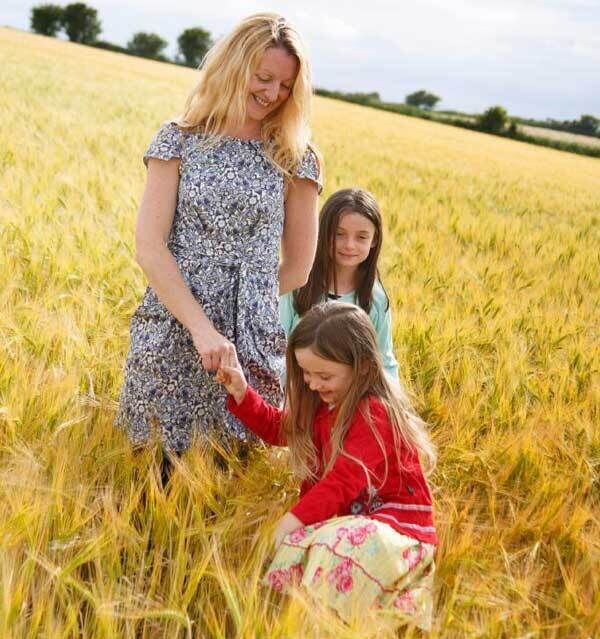
“I literally felt like I was cooking my way out of this awful disease. I felt strong and on a mission and nutrition was at the centre of it,” the mother-of-two tells Feelgood.
She took her last steroid just five weeks after surgery and hasn’t looked back since. Her superfood metamorphosis was well underway, she says.
“As my digestion was going to take time to heal, I needed as much bang for my buck in the nutrition stakes as possible and superfoods were my nutritional silver bullet,” she says explaining how she added chlorella, chia and raw cacao to smoothies, nut-and-seed bars, yoghurts, soups and salads.
She went from strength to strength and three months after her life-saving operation, she fell pregnant.
Her first daughter Abby had arrived in 2007 and, coincidentally, a year to the day after her surgery, her second daughter Aoife was born.
It was around then that she realised there weren’t many stories of recovery out there.
“Therapy remains all about the drugs and this deeply depressed me,” she says. “I had undergone a remarkable recovery and I didn’t want my pain to be in vain. I wanted to learn as much as I could about the healing power of food.”
So when she read about a nutritional therapy course at the College of Naturopathic Medicine in Cork, it was an ideal fit.
She qualified in 2013 and now specialises in helping people who suffer from chronic autoimmune conditions — such as MS, Crohn’s and ulcerative colitis –— as well as digestive-related disorders ranging from bloating and IBS to gluten-related disorders.
She estimates that about 80% of the people she sees in her clinics in Oysterhaven and Clonakilty, Cork, have some sort of digestive disorders.
Learning to eat in a way that nourishes the microbiome (bacteria in your gut) is key, she says.
But most importantly, Karen believes passionately in empowering people so that they can take control of her own health.
And while she is careful not to say that she has ‘cured’ her disease, she has recovered and is totally symptom free.
“My motto is to put good health in your own hands. Hope can be taken away when you are given a diagnosis.
"I just wish I could have met myself, as I am now, coming down the corridor [of the hospital] after my operation.”
Karen Ward is at this weekend’s Mind, Body, Spirit and Yoga Festival at the RDS in Dublin from today until Sunday.
See www.mindbodyspirit.ie
How do you get over the four o’clock slump without running out for a latte and a sneaky pastry? We’ve found a pretty good alternative.
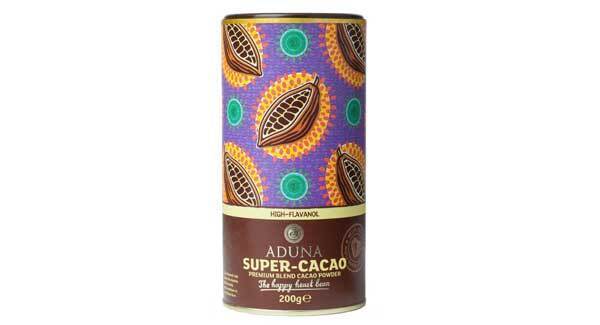
Stir two teaspoons of Aduna Super-Cacao powder into a splash of milk to make a paste, then top up with hot water for a really satisfying and sweet-as-pie drink.
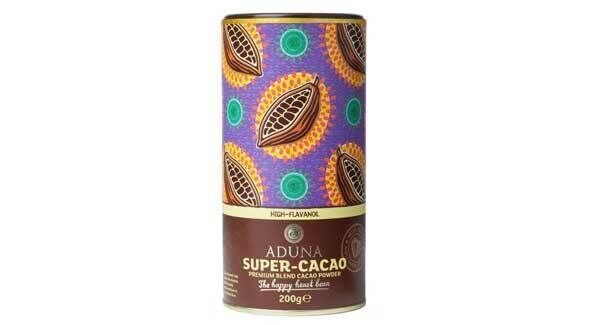
It’s also really good for you.
Aduna Super-Cacao is made from high-flavanol beans that have been approved as ‘heart-healthy’ by the European Food Safety Authority.
Flavanols are a plant-based antioxidant that help maintain the elasticity of blood vessels and contribute to normal blood flow.
Aduna Super-Cacao is also great for the skin.
It’s available in Holland and Barrett, 275g costs €21.
Head west for five days of food trails, great food and lots of family fun at the Galway Food Festival from March 24 to 28.
There’s a packed programme of talks, tastings, demonstrations and workshops involving more than 100 restaurants and food producers in the city and county.
This year, the festival chimes with 1916 commemorations and will look at ‘100 years of Irish Food’.
It will examine attitudes to food in the past and look at ways we can build an Irish cuisine in the future.
Fast-food restaurants often get a hard time but they are not the only ones serving up highly calorific helpings.
Researchers at Boston University found favourite meals often contain three or four times the number of calories we should be eating at a single sitting.
For instance, a typical meal from Italian cuisine had an average of 1,556 calories (or 78% of your daily 2,000-calorie intake).
A Chinese meal came in at under 1,500 calories (or 74% of the total), while a Thai meal had 1,163 calories (58% of the daily total) and a Japanese meal had 945 calories (or 47% of the daily total).
You know porridge is good for you but need some help spicing it up?
Check out the latest video from the Happy Pear twins David and Stephen Flynn, who promise to transform breakfast from boarding-school gruel to rockin’ porridge.
The video, Perfect Porridge 3 Ways, will rock your porridge world with caramelised banana and almonds; stewed prunes and aromatic spices, and a fruit compote.
To see how, log on to https://thehappypear.ie/perfect-porridge-3-ways