ARTISAN FOODS DAY 1 - It's getting a little easier to taste success
MORE than 300 jobs are being created in food business start-ups as a result of the Food Academy Start programme, a collaborative initiative between the Local Enterprise Offices, Bord Bia and SuperValu.
More than 200 food business start-ups and producers who participated in Food Academy Start will supply SuperValu retailers for the first time, generating sales worth €5m and significant employment this year. As the stores are independently owned and operated, retailers are able to source directly from local suppliers on a one-to-one basis, enabling these start-up food businesses to gain their first retail listings in shops in their local communities.
SuperValu is also working with the companies involved to get their products listed in a cluster of nearby stores in order to set them on a long-term path to supplying their network of 223 stores.
“This initiative is a natural fit for SuperValu as our stores are independently owned by retailers who have developed a tailored offer for their community,” says Martin Kelleher, SuperValu managing director.
“As a result, they can offer products that are not available in supermarket chains as our retail partners have the freedom to purchase directly from local suppliers.” By matching the company’s stores with start-up food businesses in their area, they have been able to assist with the creation of hundreds of jobs across Ireland. “This underlines the local multiplier effect of the community retail model, as every time someone shops in our stores, their money goes back into the local economy.”
Established in 2013 to help develop Ireland’s artisan industry, Food Academy Start is a tailored programme which provides a platform for new and early-stage food business owners to develop commercially viable enterprises. For the first time, food start-ups regardless of their location have access to a standardised programme of supports throughout the country. Food Academy Start, delivered through workshop style training, is designed to guide companies from start-up to their first retail listing. The aim of the programme is to provide small food businesses with a solid foundation to progress confidently onto the shelves of retailers.
“Selection and participation in the Food Academy Start programme provides artisan food producers with direct access to expertise in branding, market research, purchasing, packaging and retail distribution,” says Aidan Cotter, chief executive of Bord Bia. “This invaluable insight helps support small companies through the challenging initial phases of growth and greatly enhances their chances of market success. It is encouraging to see the positive and tangible benefits of the programme resulting in job creation at a local and national level and delivering sales of €5m.”
All participants are given the opportunity to pitch their product or idea to a panel of SuperValu representatives including the local SuperValu owner. This panel mentor the businesses to allow the participants to make any changes they deem necessary to improve their offer.
Crucially, SuperValu also provide successful participants the opportunity to trial their product in their local stores for a period of 12 weeks. This provides a significant advantage to small businesses in terms of real retail knowledge, including feedback on their product from the store staff and consumers, developing a marketing approach, packaging and distribution logistics.
“The local enterprise offices have been working closely with food startups and producers on the ground, to directly support these micro-enterprises and help them to grow”, explains Joe Burke, LEO, South Cork.
“Today’s Food Forum brings together food producers, Bord Bia, our retail partners SuperValu and the general public, to join together in a celebration of our thriving artisan industry.”
SuperValu serves over 2.6m customers through 223 stores nationwide. Three-quarters of products on its shelves are sourced or produced in Ireland, sustaining 30,000 jobs in the Irish economy.

“The main challenges in getting a small business up and running are finding enough hours in the day or days in the week.
“You need to have a viable idea, research it well, ensure you can abide by and/or overcome all the regulations, negotiate the bureaucracy of applying for grants, permits, planning consents etc., never get disheartened, continue forward with the original plan when you encounter setbacks and importantly have a belief in what you are doing and why you are doing it. More than anything else the Food Academy gave me a good understanding of the systems and processes within the food retail sector, especially the multiples, and what is expected of small, artisan food producers.
“Armed with this knowledge I could amend my processes on delivery and invoicing to fit in with them, and thus ensure I get paid in a timely fashion.
“It also was invaluable in giving me exposure to SuperValu store owners and Musgrave centrally.
“It was helpful, as have been the local enterprise office. However, in my opinion, more support should be given by central Government in the form of tax breaks and PRSI holidays for entrepreneurs starting a new business, and PRSI holidays for new job positions created. In order for the new business to grow it needs staff and the Government effectively puts a levy on that in the form of employers PRSI. In the early days, every penny counts and if the Government want to create jobs they need to support the small, viable, start up businesses as much as the big well established agri-businesses.
“Since the start of this year I have already taken on four employees and have a need for two more, and can see that need continuing over the coming months. In five years time, I would like us to be an established and well respected brand with a strong reputation for premium quality food products. I am optimistic about the economy. It is improving. There’s still a lot of problems hanging over the economy and individuals as a result of what’s happened over the past few years but I do see that people are beginning to spend a bit more and generally feel a bit more upbeat.
“I also see a strong demand for good quality locally produced food and that people are prepared to pay a little extra for something that’s wholesome, satisfying, based upon good quality natural ingredients and free from anything artificial.”

“One thing is for sure with my business, I would not be at this advanced stage and as well-equipped if it wasn’t for the Food Academy Start Up programme.
“It has helped me in many regards, but most notably with studies on consumer insight, much needed technical advice from looking at our raw material to our packaging and branding, and in particular with my product being ‘on message’.
“Very important was getting the insight into what has worked for existing successful food businesses, commercial advice from proven profitable business owners beyond our previous grasp including sessions with Bord Bia, Musgrave’s, SuperValu owners and professional mentors in the business.
“Access to an array of important contacts within the industry has been an important part for me and without doubt I have limited the amount of mistakes I may have made had I not been on this programme.
“In this ever-changing economy we have high percentage of budding entrepreneurs with great ideas changing from familiar industries to very unfamiliar territory in need of industry experts to guide them.
“I am a great example of this, I have gone from working for years in the financial services to the food industry. It’s like having great players and a bad coach, or a clever student and a bad teacher. The supports are vital for the success of these businesses and in fact in the long run employment and our economy.
“Cash flow is an ever challenging element for any new small business. It may be six months to a year and sometimes more before we start making money. In the meantime, it’s about survival and sometimes the challenge of convincing the banks or potential investors in lending to bridge this gap.
“As to future expansion, I have a plan drawn up with some very exciting and innovative products to bring to the foodservice market
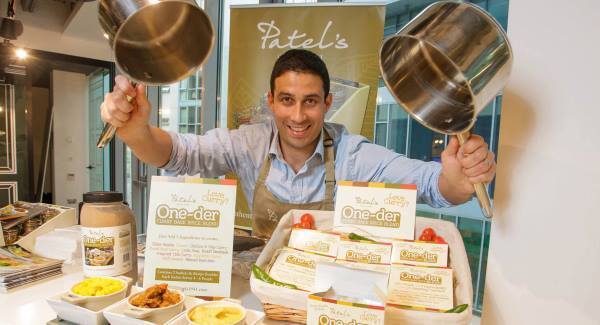
“I really want and believe that our Patel’s One-der blend will be in every press that people go to for curry, where authenticity meets convenience. And that it will be widely used throughout the foodservice industry feeding the lunchtime and evening masses — an easy to make authentic Patel’s Curry with 10 choices from the One versatile blend.
“I am optimistic, I believe I have a great product which is different, convenient and tastes great at a cost affordable to almost anyone.
“Patience and hard work are my virtues needed for 2014/15. If it was a marathon, and it is, we are half way through the race, with plenty left in the tank to complete it in good shape.”

The Happy Pear, Greystones, Co Wicklown
Product: Microgreens, wheatgrass & peston
Owner: Darragh Flynn
“There is a slight pick up in the economy over the last 12 months.
“But what I am thrilled to see is that Irish people recognise quality, natural food and they are willing to pay a fair price for it. This keeps me optimistic — knowing that Irish food companies passionate about quality, natural, and healthy food, have a strong presence and place into the future.
“The Food Academy programme has been a great support for our business. We have learnt some valuable tools, made some good contacts and it has given a clear step and platform into the largest supermarket chain in Ireland.
“I have found SuperValu clear to deal with in the process. Supports such as Food Academy really help small business, they are beneficial on many levels and having more of them would be a great help to small business. The main challenges in getting a small business up and running are many, but determination and hard work will overcome them. Finance, appropriate facilities for production, focusing your resources on the right products to produce, developing the right systems, managing cash flow and expenses, employing the right people.
“Over time we intend to extend our range of sprouted super-foods, our dips and our baked goods. We are very excited about them and look forward to some new products before the end of the year. As our supply increases and stretches further a field, we will need more staff to deal with these increases in production. In five years time I see the business as a major national brand recognised and stocked all over the country, and exporting considerable products to the UK.”