Darina Allen: The importance of blood to Irish food staples
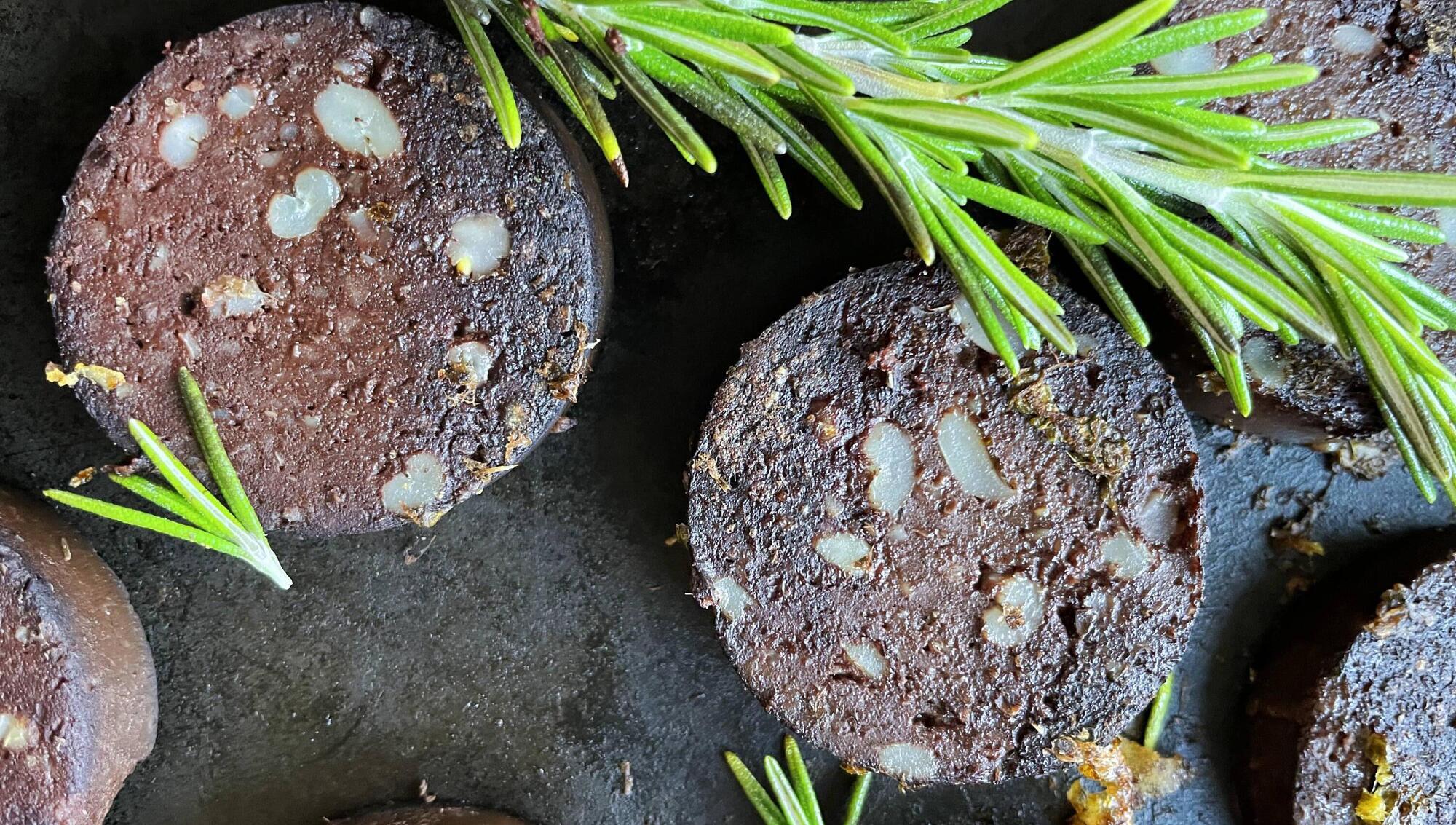
This column was prompted by the recent arrival of Kate Ryan’s Blood, Guts and Black Pudding on my desk.
 Kate Ryan's book on blackpudding inspired me to share this recipe I learned from my Great-Aunt Lil in Co Tipperary. 

Kate Ryan's book on blackpudding inspired me to share this recipe I learned from my Great-Aunt Lil in Co Tipperary. 

One cannot but be in awe of the phenomenal amount of research that has gone into Kate Ryan’s Blood, Guts and Black Pudding. It makes for riveting reading, not just for academics but for all of us who care deeply about our traditional food and the loss of a vital part of our food culture. It reminds us of traditions that are in imminent danger of disappearing.

Every culture around the world knew and understood the nutritional value of blood and used it to make many products including a variety of blood sausages.

Here in Ireland, it has been an important part of life for centuries, it sustained warriors in epic battles, staved off hunger, offered protection from bad luck and provided sustenance during winter. It was drawn from living animals and collected from dead ones, stuffed into guts and boiled until cooked or stirred into bloody porridges over turf fires. It was even in the mortar of walls.

During Ireland’s colonisation, the British were shocked by the Irish practice of consuming blood, often from live animals and eating and using it in a variety of ways. They used this observation to denigrate the rural Irish population depicting them as ‘base and savage’, in need of civilising. In fact, this was a sophisticated practice rooted in a deep knowledge of the health requirements of both animals and humans, resourceful and delicious.

During the Irish famine, tenant farmers who had to surrender all their animals to their landlords would sometimes bleed them in secret on a Sunday, hence the old saying, ‘The Kerry cow knows it’s Sunday’.

Many artisan versions, particularly in East European countries, Asia and the Americas, are still made with fresh blood, resulting in a delicious soft- textured pudding unlike the commercial pudding now made with rehydrated dried blood powder to comply with modern processing regulations.

Talking about blood and guts brings memories tumbling back of making black pudding with my great aunt in Tipperary when I was a child in the 1960’s. At that time, virtually everyone in both urban and rural areas kept a pig to fatten, even the post mistress in our little village of Cullohill in Co Laois kept a couple of pigs. They were fed on barley, food scraps from her kitchen and lots of boiled potatoes and bran.

Skim milk, called ‘slop milk’ was known to be good for fattening the pigs. Note the irony of that…. Remember when low-fat milk came on stream in the 1980s, costing more, supposedly slimming and better for us; a brilliant bit of marketing!

For the last few weeks before slaughter, the pigs were kept indoors to fatten them up, often fed slop beer from a local pub so they would doze and put on more condition before slaughtering. The pork was unforgettably sweet and juicy.

Throughout the country, heritage pigs were slaughtered during colder weather, in the late autumn and winter when flies posed less threat. Many homes in rural areas didn’t have electricity at that time, so, no fridges or freezers. Blood was salted to prevent coagulation.

In virtually every parish there was a local slaughter man, who was known to be skilled in his profession. He’d be contacted when the pig or pigs were considered to be in prime condition. Some cuts were eaten fresh as pork. The remainder was turned into well-salted bacon, stored in layers in timber barrels or tanks and left for around 3 weeks to cure.

Afterwards, the hams were hung up inside the chimney to gradually smoke. The salty bacon was hung from rafters in the pantry or kitchen – this prolonged food for the year.

Back fat was cut into small dice to be added to the fresh blood for black pudding, as well as oatmeal, pepper, salt, nutmeg and mixed spices. Recipes varied and were rarely, if ever, written down: skill was passed from grandmother to mother to daughter, in the time-honoured way.

The chosen pig would be fasted for a couple of days before the slaughter. On the appointed day, the hungry pig (from my memory, always a female) was easily enticed into a shed by the smell of some cooked potatoes and milk in a trough. A mighty blow to the head with a heavy sledgehammer rendered the animal unconscious, then it was strung up and bled. Every precious drop of blood was collected in spotlessly clean enamel buckets or basins. The intestines were washed in a stone trough under running spring water from the pump in the yard, turned inside out and then scraped of extra fat. Aunt Lil and I did this, as the making of the puddings was always considered to be women’s work.

Meanwhile, the men gutted the pig. The skin was shaved with the help of a sharp knife and boiling water. The men butchered the carcass into joints; the heart was stewed, the kidneys and liver were used fresh, and the fillet was greatly prized. It was a huge amount of work but wonderfully convivial.

Both puddings and meat were shared with neighbours who flocked to help in the Irish tradition of the Meitheal. They returned the compliment when their turn came to kill a pig. Everyone had their job and the neighbours who helped got a little of the fresh pork and maybe a bit of the black and white pudding. The latter was made from the minced scraps of meat, liver, lights (lungs) and oatmeal – also delicious.

The making of the black and white puddings was Aunt Lil’s speciality. She tasted the raw mixture, poured it into the washed intestines, tied them into coils, then carefully poached, pricked here and there with a sterilised darning needle so they didn’t burst. I’ve never tasted anything so delicious before or since – what a tragedy that it is now so difficult to source fresh blood in great part due to the onerous regulations.

A chapter in Kate Ryan’s book also discusses the four types of Irish fresh blood pudding that are either endangered or have already become extinct in the Irish diet. Drisheen now made from beef blood, is still alive and well in O’ Reilly’s stall in the English Market in Cork, but for how long more? Packet, Achill Belly and Gooseneck puddings and dumplings, are a whole other fascinating but sadly depressing story.

Blood, Guts and Black Pudding, charts the complete history of Ireland’s great pudding tradition from pre-Christian times to the modern era, celebrating the many ways various bloods have been cooked, eaten and enjoyed.

It also asks the salutary question… What else is lost when the blood is gone?

Aunt Lil’s Black Pudding

recipe by:Darina Allen

I learned how to make blood (black) pudding when I was only eight or nine years old, from my Great-Aunt Lil in Co Tipperary. If you are going to make your own black pudding, I encourage you to gather children around to keep the tradition.
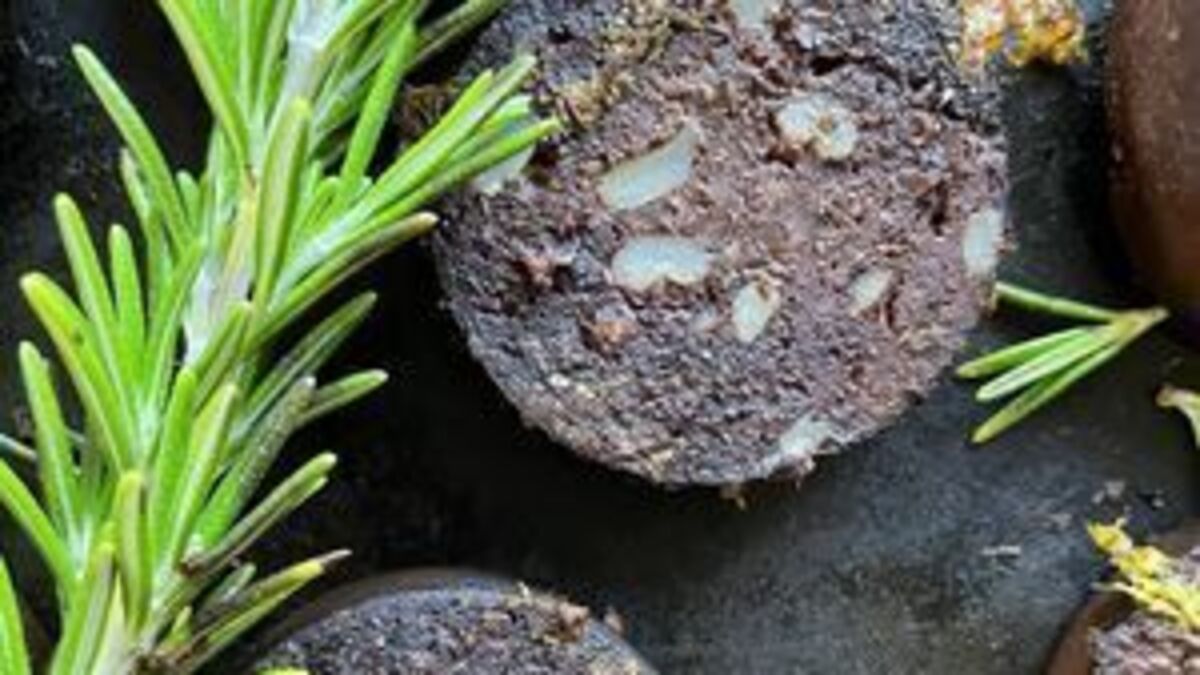
Aunt Lil’s Black Pudding

Course

Main

Ingredients

  • About 2kgs fat scraped from the intestines of one freshly slaughtered pig

  • 2.6 litres blood from a fresh, free-range pig (as soon as the blood is drawn, stir and add 1 tbsp or more salt)

  • 50g ground allspice

  • 25g ground white pepper

  • Salt to taste

  • 1 nutmeg, freshly grated

  • 2 tsp thyme leaves

  • Dash of cayenne

  • 110g white breadcrumbs

  • 75g wholemeal flour

  • Natural casings – ox runners

Method

  1. Boil the fat from the intestines in 2.5 litres of water or pork broth until it is cooked.

  2. Strain the fat and mince.

  3. Beat the blood and put it through a sieve. Put the cooking liquid into a basin of hot water. Add all the other ingredients.

  4. Increase the amount of breadcrumbs and flour slightly if the mixture is not enough – it should be the consistency of sloppyporridge.

  5. Fill the casings with a funnel (do not fill too much as you need to allow for swelling) and prick with a sterilized darning needle so they don’t burst.

  6. Put the filled casings into a saucepan of cold water, bring to the boil and simmer very gently for about 1 hour.

Ballymaloe Homemade Sausages

recipe by:Darina Allen

Sausages made from 100 percent lean meat may sound good, but for sweetness and succulence one needs some fat. The addition of breadcrumbs is not just to add bulk, it greatly improves the texture also. Recipe from Forgotten Skills by Darina Allen published

Ballymaloe Homemade Sausages

Servings

8

Course

Main

Ingredients

  • 450g good, fat streaky pork (rindless), minced

  • 2 tbsp mixed fresh herbs (e.g. parsley, thyme, chives, marjoram, rosemary and sage)

  • 60g soft white breadcrumbs

  • 1 large garlic clove

  • 1 tsp salt and freshly ground pepper

  • 1 organic egg (optional – helps to bind – reduce breadcrumbs to 50g if omitting egg)

  • Dash of oil for frying

  • 50g natural sheep or hog casings (optional)

Method

  1. Chop the herbs finely and mix through the breadcrumbs. Crush the garlic to a paste with a little salt.

  2. Whisk the egg (if using) and then mix into the other ingredients thoroughly. Season with salt and freshly ground pepper.

  3. Fry off a little knob of themixture to check the seasoning. Correct if necessary.

  4. Fill the mixture intonatural sausage casings and tie.

  5. Twist into sausages at regularintervals. Alternatively, divide into 16 pieces and roll into lengths to makeskinless sausages. Cover and chill.

  6. Homemade sausages are best eaten fresh but will keep refrigerated for 2-3 days.

  7. When ready to eat, fry gently on a barely oiled pan on a medium heat until golden on all sides.

  8. These sausages are particularly delicious served withBramley apple sauce.

  9. Note: For breakfast sausages, omit the herbs and garlic.

Sausages made from 100 percent lean meat may sound good, but for sweetness and succulence one needs some fat. The addition of breadcrumbs is not just to add bulk, it greatly improves the texture also.

Dry-Cured Bacon

recipe by:Darina Allen

A dry-cure can just be salt, or a combination of salt, sugar and flavourings such as spices and herbs. In a dry-cure, the salt or salt and sugar dehydrate the meat or fish. Recipe from Forgotten Skills by Darina Allen published by Kyle Books
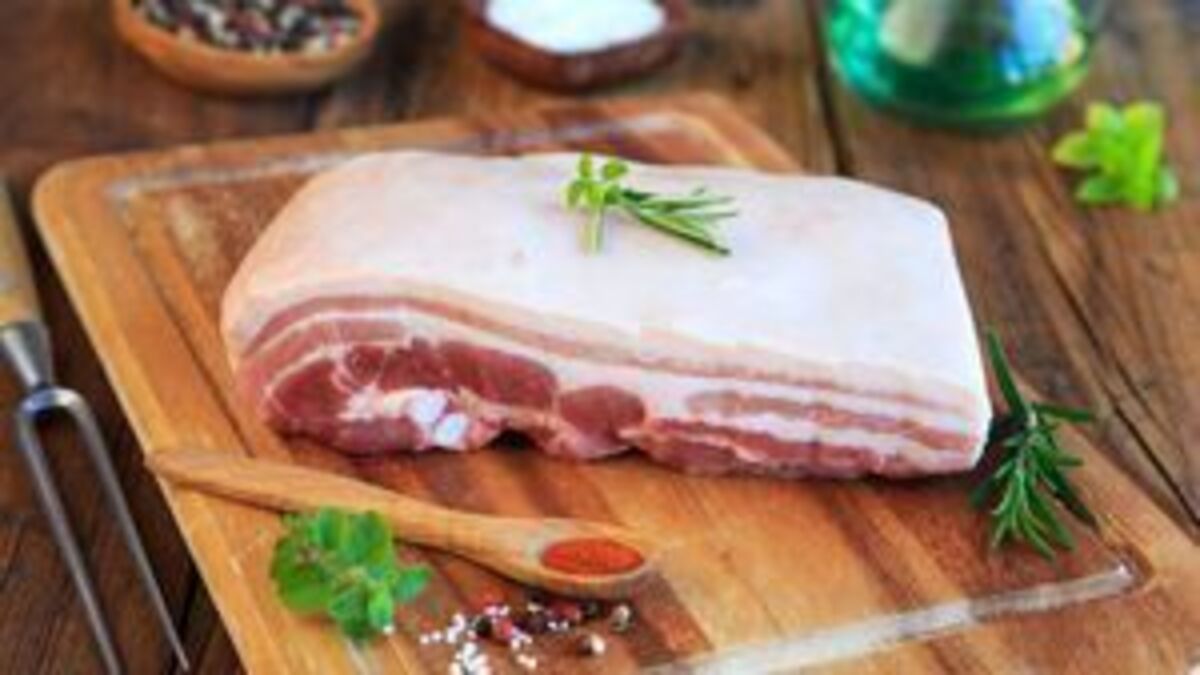
Dry-Cured Bacon

Servings

6

Course

Main

Ingredients

  • Pork (streaky, loin or shoulder) - for every 1kg, use:

  • 1 tbsp dairy salt

  • 1 tsp Demerara sugar

  • 1 tsp ground coriander

  • 1 tsp ground nutmeg

  • 1 tsp bay leaf, finely chopped

  • 1 tsp rosemary, chopped

  • 1 tsp thyme, finely chopped

Method

  1. Mix all the cure ingredients together.

  2. Remove the rind from the pork. (If you prefer, you can leave the rind on; it takes just a few hours longer to cure).

  3. Then rub the cure mixture thoroughly into thesurface of the meat with your fingers.

  4. Put the meat in a plastic box or a stainless-steel orenamel roasting tin. If you are doing more than one piece, you can layer up the meat, making sure to rub both sides with the curing mixture.

  5. Transfer to a fridge or cold-room to cure. Place something under the container (like a towel or book) on one side so it is on an angle, and the juices can run off.

  6. Take the meat out after curing and rinse it under cold tap water. Hang the piece of bacon in a cold, airy spot to dry. If you are doing more than one piece, make sure they are not touching while drying.

  7. After that, streaky or normal bacon is ready to be fried or boiled. It keeps for weeks and sometimes months, depending on the quality and size.

Seasonal Journal

Dingle Food Festival

Dingle Food Festival takes place on October 3 and 4. The festival features the popular Taste Trail, market stalls, workshops, children’s events, street entertainment, and more with a big
emphasis on zero waste.

When you are in Dingle, seek out Nana Lizzie’s Black and White Pudding at the Dingle Butcher on Orchard Lane. Also available in Limerick at Garrett’s Butcher Shop in Dooradoyle. Nana
Lizzie was Garrett’s grandmother, so the recipe was passed down through the generations.

Instagram @thedinglebutcher

Midleton Farmers’ Market

Fancy having your own Farmers’ Market Stall? Multi-award winning Midleton Farmers’ Market has some vacancies. An opportunity to sell your own homegrown and homemade produce and products directly to the local community.

For more information, email Barrie Tyner: barrie@artisancaterer.com

Irish Hazelnuts

Just received my order of new season Irish hazelnuts and cobnuts in the husks. Most hazelnuts come from Turkey, Italy, Spain and the US, so it is wonderful to be able to source Irish organic hazelnuts, sustainably grown, high in oleic acid. There are wild hazelnuts on the hillsides ripe for foraging. Glenidan Organic Farm is a small family-run farm based in Collinstown, Co Westmeath and is run by Katharina and Desmond O’Carroll.

Instagram: @irishhazelnuts

  • Blood, Guts & Black Pudding: Ireland’s Dying Art of Blood as Food published by Nine Bean Rows.

More in this section

Cookie Policy Privacy Policy Brand Safety FAQ Help Contact Us Terms and Conditions

© Examiner Echo Group Limited