Michelle Darmody: How to follow a magical process and bake your own bread rolls
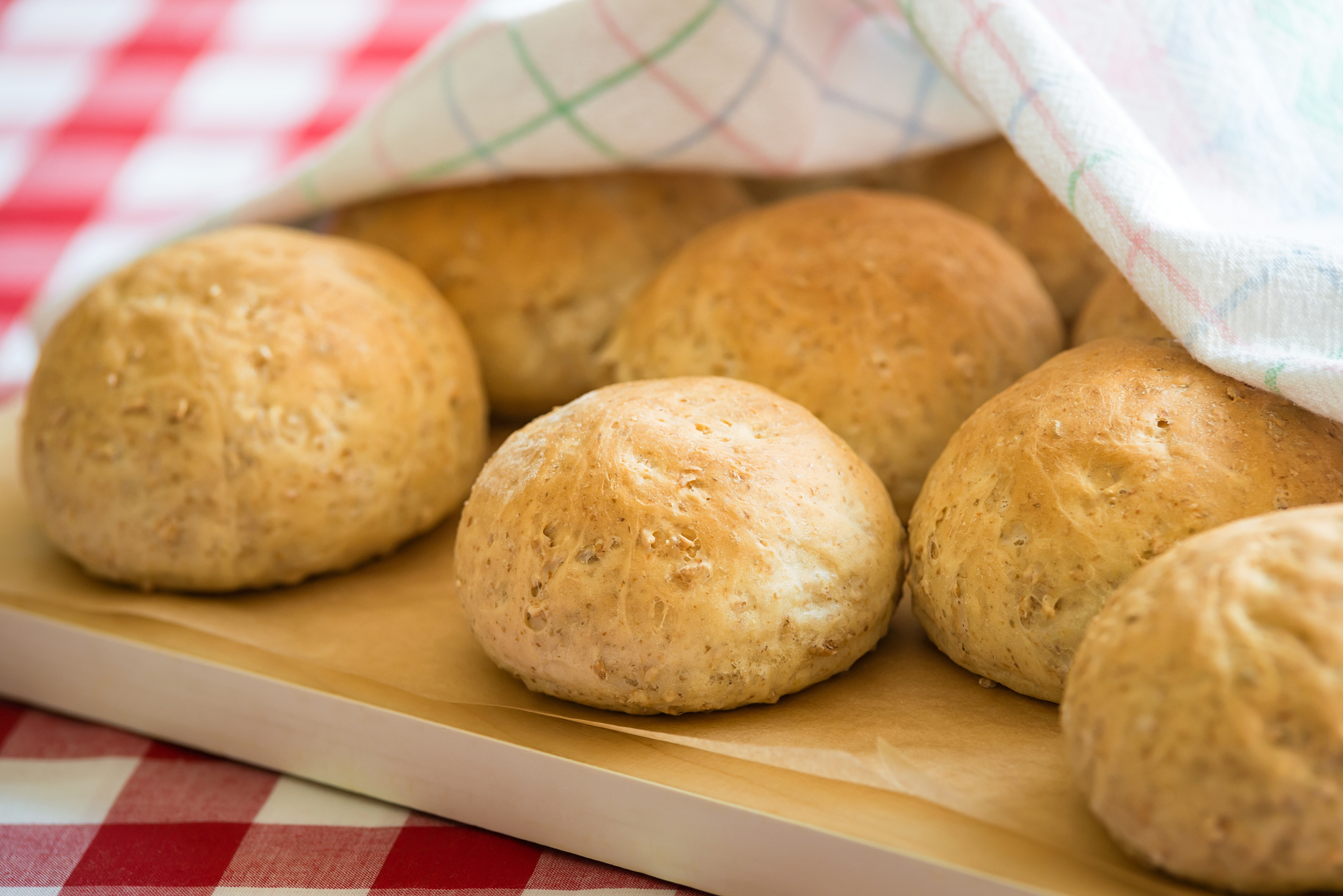
Freshly baked whole wheat rye bread rolls in the kitchen

Sandwhich Rolls
I use a big old ceramic bowl to make yeast breads and when I am making a relatively small amount of dough like this, it allows me to knead the dough within the bowl rather than tip it onto a counter.
Servings
8Preparation Time
19 minsCooking Time
15 minsTotal Time
34 minsCourse
MainIngredients
50g brown whole wheat flour
450g strong flour
1 tsp fine sea salt
7g sachet dried, fast acting yeast
350mls warm water
2 tbs olive oil – and 1 tbs before baking
Method
To make the dough, mix both flours in a large bowl.
Add the sea salt to one side of the flour in the bowl and the yeast powder on the other side.
Properly combine the dry ingredients, the flours, salt and yeast as you are adding the olive oil and warm water.
Mix everything together in the bowl.
With clean hands knead the dough in the bowl until it is smooth and forms a neat ball with no trace of the ingredients on the sides or base of the bowl.
Cover the bowl with a damp tea towel and leave in a warm place to rise.
Line a large flat baking tray with parchment.
After the hour break the dough into eight even size pieces and shape each one into a ball.
Place each ball on the baking tray with room between each one.
Cover again with a damp tea towel and leave in a warm place. Do not let the towel touch the dough balls – I use upside down glasses on the edges of the tray on which to balance the tea towel.
Leave to rise for another half an hour or so.
Preheat your oven to 220ºC/gas mark 7.
Mix one tablespoon of olive oil with one tablespoon of warm water and gently brush this on the top of each roll.
Place the tray into the center of your oven.
Bake for 10 minutes until beginning to golden.
Turn your oven to 180ºC/gas mark 4, without opening the oven door, and bake for a further 10 minutes until baked through.
Allow to sit until cool enough to handle, then place onto a wire rack to cool completely.
Sprinkle the sea salt on one side of the flour and the yeast powder on the other because the salt will start to affect the yeast as soon as the two meet. It’s safer to keep them apart until the oil and water are being added. It is important to add the salt otherwise the bread can feel quite tasteless.
The water you add to the recipe needs to be warm, at blood temperature. When dipping a finger into the water it should be the same temperature as your body.
When you leave the dough for the hour it should double in size. Keeping it warm, but not hot, is important at this stage. It is also good to keep it away from any drafts.
When you are breaking the dough into eight pieces and rolling it into balls it will lose some of the air it gained in the rise. Do not worry. Allowing it to sit again will help the balls to form a nice stretch before baking.
Turning the temperature up high at the beginning helps to turn the moisture in the dough to steam and gets a quick rise and good crust.
If your rolls do not rise there is probably one of three reasons why, the yeast was old and did not activate, the temperature in your oven was wrong or the structure of the gluten was weak which means it was kneaded until soft. I would generally knead the dough for about seven minutes.