Michelle Darmody: How to make elderflower panna cotta
Gelatin is used to solidify the panna cotta and it creates the distinctive jelly-like texture.
If you want to replace the gelatine with agar-agar, use one and a half teaspoons.

If you want to replace the gelatine with agar-agar, use one and a half teaspoons.

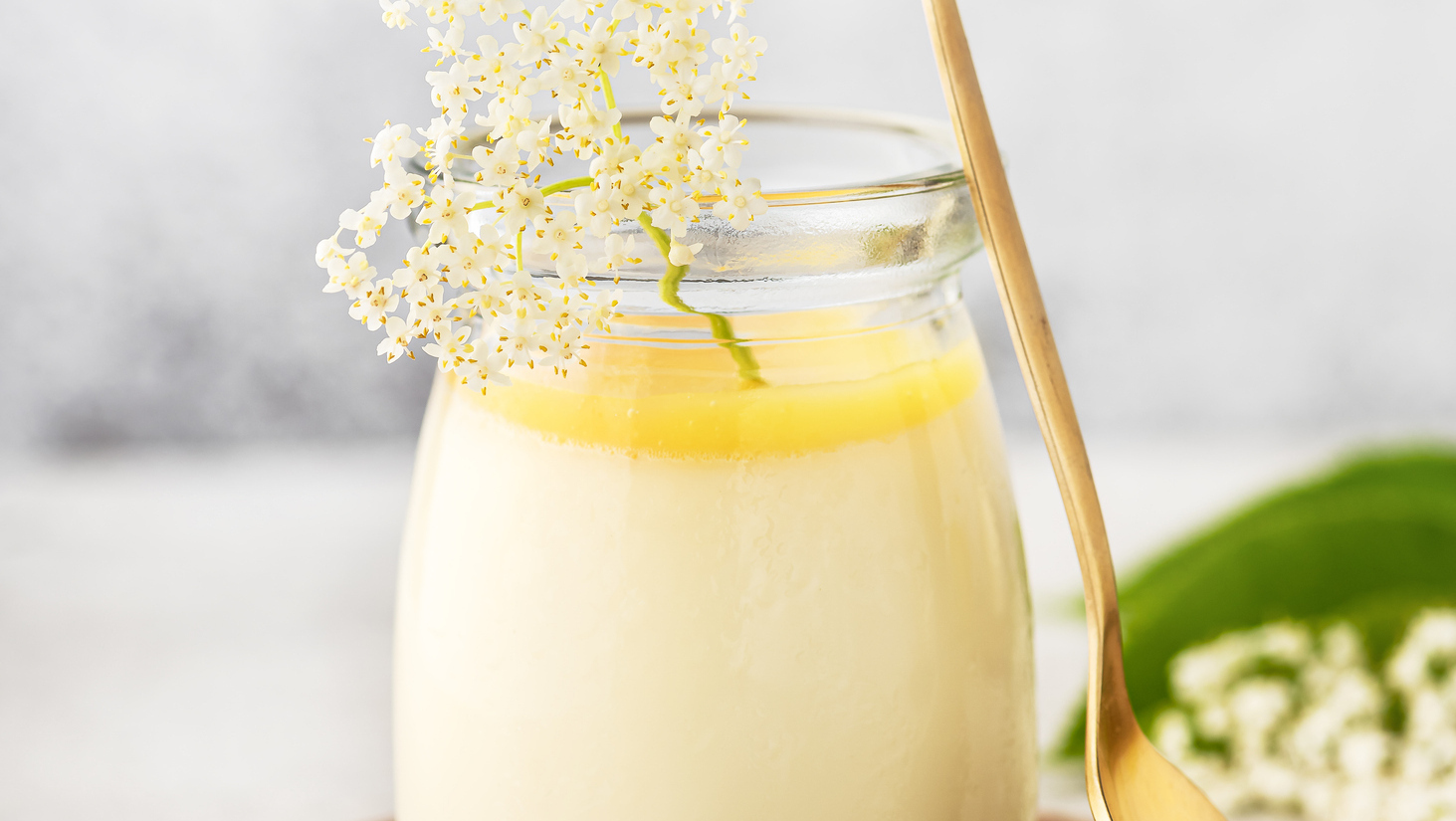
These panna cottas are full of wobbly, creamy goodness.

The name means cooked cream in Italian and it is exactly that, cream warmed, sweetened and then set.


You can make them in moulds and turn them out onto plates if you wish. I like to serve them in the dishes as you do not need quite as much gelatine. They need to be a little firmer when you turn them out.

Gelatin is used to solidify the panna cotta and it creates the distinctive jelly-like texture. The thin transparent sheets of gelatin are made from collagen which is generally of animal extraction. In ancient Italy, desserts like this were made using natural collagen derived from boiled fish bones.

There is a vegetarian alternative to either of these methods, which is derived from an algae called agar-agar.

It produces a firmer, slightly more crumbly or brittle finish than gelatine, so your panna cotta might not have quite the same bounce.

Elderflower Panna Cotta

recipe by:Michelle Darmody

The flavour of these Panna Cotta is subtle and it can be tweaked slightly to create variations. I love the texture; I have a soft spot for any custard-style dessert.

Elderflower Panna Cotta

Servings

6

Preparation Time

20 mins

Total Time

20 mins

Course

Main

Ingredients

  • 50mls elderflower cordial

  • 240g rhubarb, roughly chopped

  • ½ tbsp honey

  • 3 sheets of gelatine, about 7 x 11 cm in size

  • 190mls milk

  • 540mls cream

  • 80g caster sugar

  •  

Method

  1. 1. Add 40ml of the elderflower cordial, the chopped rhubarb and honey into a heavy-based saucepan, heat until bubbling then turn down the heat and allow to simmer for ten minutes.

  2. 2. Allow to cool and blend until smooth. Set aside.

  3. 3. Place the two sheets of gelatine into cool water and set aside.

  4. 4. Place the milk, cream and sugar into a saucepan, stir and heat to a simmer.

  5. 5. Squeeze the water from the gelatine leaves.

  6. 6. Take the cream mixture off the heat, then gently stir the remaining 10mls of elderflower cordial and gelatine into the warm mixture.

  7. 7. Stir until the gelatine is fully melted.

  8. 8. Pour into six glass pots or small ramekins and place into the fridge to firm up.

  9. 9. After two hours, spoon a layer of the compote over each panna cotta and allow to cool and firm up some more.

Baker's Tips

You need full-fat cream and milk for the best results.

I use platinum grade gelatine. It is the strongest of three grades available — silver, gold, and platinum. I find it gives the most reliable set each time.

Ensure the gelatine is fully dissolved, to avoid rubbery clumps and the dessert not setting well.

Gelatine melts at about 35C, so it only needs to be warmed slightly. Do not let the milk boil or stir the gelatine into a boiling mixture, as this will damage the gelatine’s setting power, and can also cause the dairy to curdle or separate.

If you want to replace the gelatine with agar-agar, use one and a half teaspoons. You can dissolve it in the warm cream, milk, and sugar and simmer for three minutes to fully activate the gelling properties. It sets firmer than gelatine, and at a higher temperature.

If you decide to use ramekins and then turn the panna cotta out onto a plate, you can carefully dip each ramekin in a bowl of warm water to loosen it first. Place a plate on top and quickly and gently flip it over. You can also add an extra half a sheet of gelatine to the recipe.

You can make these a day ahead if needs be. They do not freeze well as the texture changes when they defrost. They will last three or four days in the fridge.

You will have some rhubarb compote left over that can be served on the side or kept to eat with yogurt, granola, or porridge.

Three variations

Larger strawberry panna cotta

You can pour the entire mixture into a large serving bowl and allow it to set. It will take a bit longer than in the small individual dishes. Top it with macerated strawberries made by tossing chopped strawberries in caster sugar and a small drop of balsamic vinegar. You can top this with some chocolate shavings or cocoa nibs as well.

Roasted peach and vanilla panna cotta

Slice four peaches and toss them in soft demerara sugar. Place them into an ovenproof dish and roast until soft. Allow to cool while preparing the panna cotta. In place of the elderflower cordial, add 2tsp of vanilla or a vanilla pod for a full vanilla flavour. You can scrape the inside of a pod and add the sticky seeds as the milk and cream are heating. You will need to do an extra step to prevent the seeds from sinking. Refrigerate the mixture for an hour in a jug, stir after 30 minutes and then again after 45 minutes. This hour of stirring and stirring will allow the panna cotta mixture to thicken enough to keep the seeds suspended rather than letting them settle to the bottom.

Passion fruit panna cotta

Passion fruit works very well with the soft texture of panna cotta; it has a sweet and sharp mix of flavours that contrast with the subtle creaminess. You can make a vanilla panna cotta as above and then top it with a passion fruit coulis or some passion fruit curd. To make a coulis, scoop out six passion fruits and simmer the contents with a tablespoon of golden caster sugar and a tablespoon of orange juice. Simmer for five minutes and cool, then strain through a sieve if you want it smooth, or use as it is.

More in this section

Cookie Policy Privacy Policy Brand Safety FAQ Help Contact Us Terms and Conditions

© Examiner Echo Group Limited