Aishling Moore: How to make monkfish with haricot bean, pea, and guanciale stew
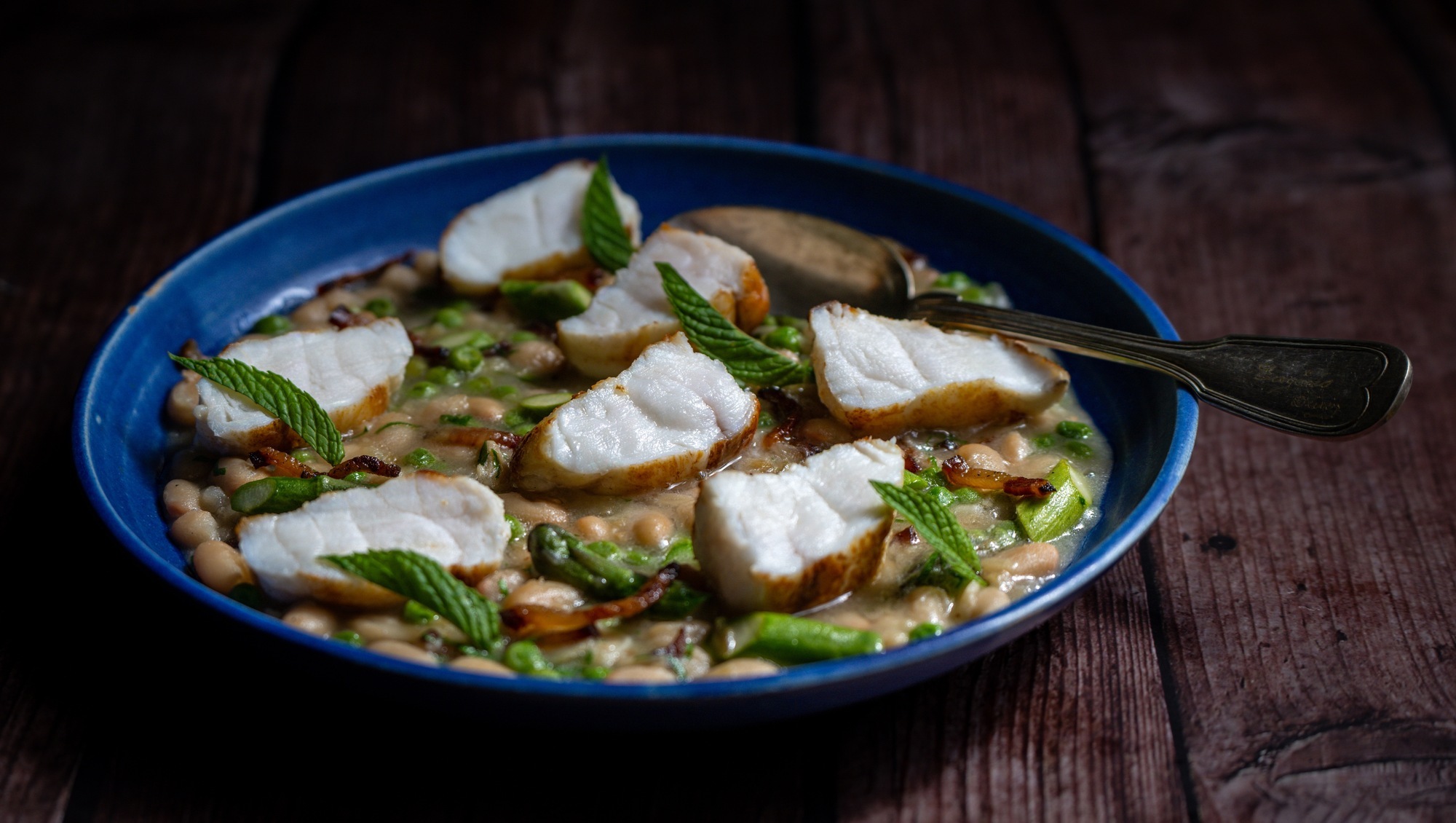
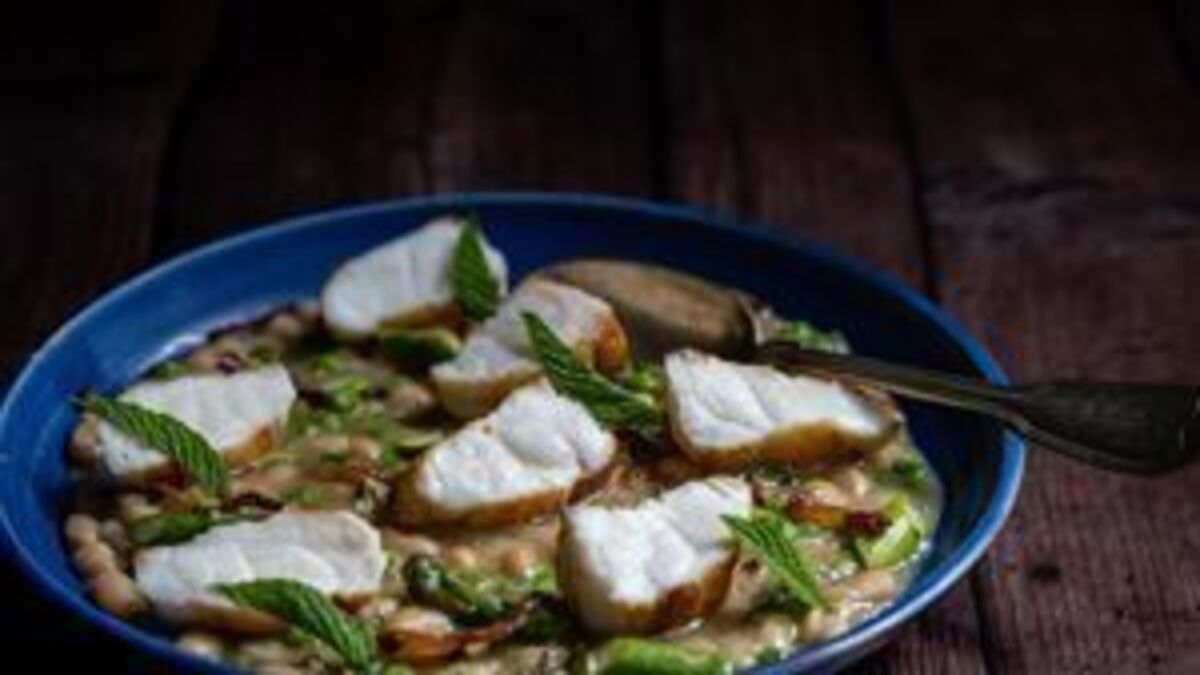
Monkfish with beans, recipe by Aishling Moore: Picture Chani Anderson

I feel very lucky indeed that I can saunter down Oliver Plunkett St, take a sharp right at Prince’s St, and pop into the English Market whenever I so choose.
We are spoilt in Cork City with such a wonderful resource. When I was picking up some locally reared lamb in O’Mahony’s butchers for Easter dinner, I spied a few packs of O’Mahony’s own guanciale.
Guanciale is an Italian cured meat made from pork cheek and is most commonly used in a classic carbonara. When thinly sliced into matchsticks and slowly cooked to render the cured fat, guanciale produces the lardon of all lardons.
At O’Mahony’s, they are using free-range pork from Peter Twomey’s Glenbrook Farm to make their guanciale. It is not only the best guanciale I have ever tasted, but I find it so very encouraging to see this level of collaboration and provenance happening in the food industry.
I have used some of that very guanciale in this weekend’s recipe: Pan-roasted monkfish with a haricot bean and pea stew. A little guanciale goes a very long way in seasoning a couple of tins of haricot beans. The pork fat emulsifies beautifully with the starchy liquor from the tinned beans.
The juice of a lemon and some fresh herbs brightens everything up and offers some relief, cutting through the fat. I have used flat leaf parsley and mint but chervil, dill, and chives would all make great additions.
Golden brown and carved monkfish tails sit atop of this bean dish elegantly, but this would be delicious too served with a pan roasted fillet of hake, ling, or pollock.
Monkfish with haricot bean, pea and guanciale stew
Preheating your frying pan is the most crucial step in pan-frying a piece of fish.
Servings
4Preparation Time
40 minsCooking Time
5 minsTotal Time
45 minsCourse
MainIngredients
400g monkfish tails skinned
2 tbsp golden rapeseed oil
Fine sea salt
For the haricot bean stew
30g guanciale thinly sliced into lardons
1 small onion, diced
3 cloves of garlic, sliced
2 x 400g tins haricot beans
100g asparagus, sliced into 2cm chunks
100g frozen peas
Juice of 1 lemon
1 tbsp flat leaf parsley chopped
2 sprigs of mint picked
Sea salt flakes
Freshly cracked black pepper
Method
To make the haricot stew, place a large heavy-based pot on a medium-low heat.
Add the guanciale lardons and cook until crisp and the fat has rendered.
Remove the cooked guanciale from the pan with a slotted spoon and set aside.
Add the diced onion and sliced garlic to the rendered pork fat.
Season with sea salt and freshly cracked black pepper and cook until softened without colour.
Add the haricot beans to the pot and warm, still on a medium heat.
Add the sliced asparagus and cook for one minute, add the frozen peas, the juice of one lemon, chopped parsley and taste to adjust the seasoning.
Keep warm while cooking the monkfish.
Remove the monkfish from the fridge 15 minutes before you intend on cooking.
Pat dry to remove any excess moisture.
Preheat a large heavy-based frying pan on high heat.
Sprinkle the monkfish with fine sea salt.
Add the rapeseed oil and allow to warm before introducing the monkfish tails to the pan. Do so, laying the monkfish away from you to avoid oil splatters.
Cook on one side until golden brown and the fish is 60%of the way cooked this will take 2- 3 minutes.
Turn the monkfish tails over and cook for a further 1-2 minutes.
Remove from the pan and allow to rest for 2 minutes before carving with a serrated knife.
To serve, place the carved chunks of monkfish on top of the haricot bean stew in warm bowls, sprinkle over the crispy guanciale and garnish with mint leaves.
Carbon steel frying pans are my preference for cooking fish. They are excellent conductors of heat and require very little upkeep.
Preheating your frying pan is the most crucial step in pan-frying a piece of fish. The goal is to achieve an even temperature across the full surface area of the pan. Cold pockets will cause your fish to stick.
Make sure you’re using a pan that’s large enough for the number of portions you’re cooking. Avoid overcrowding the pan; each addition to a cooking surface reduces the temperature of the pan. Work in batches if needs be.
The bean stew can be made in advance and warmed whilst cooking the monkfish.
Swap the asparagus for green beans, broad beans or tenderstem broccoli.