Michelle Darmody: How to bake a light and textured raspberry cream puff
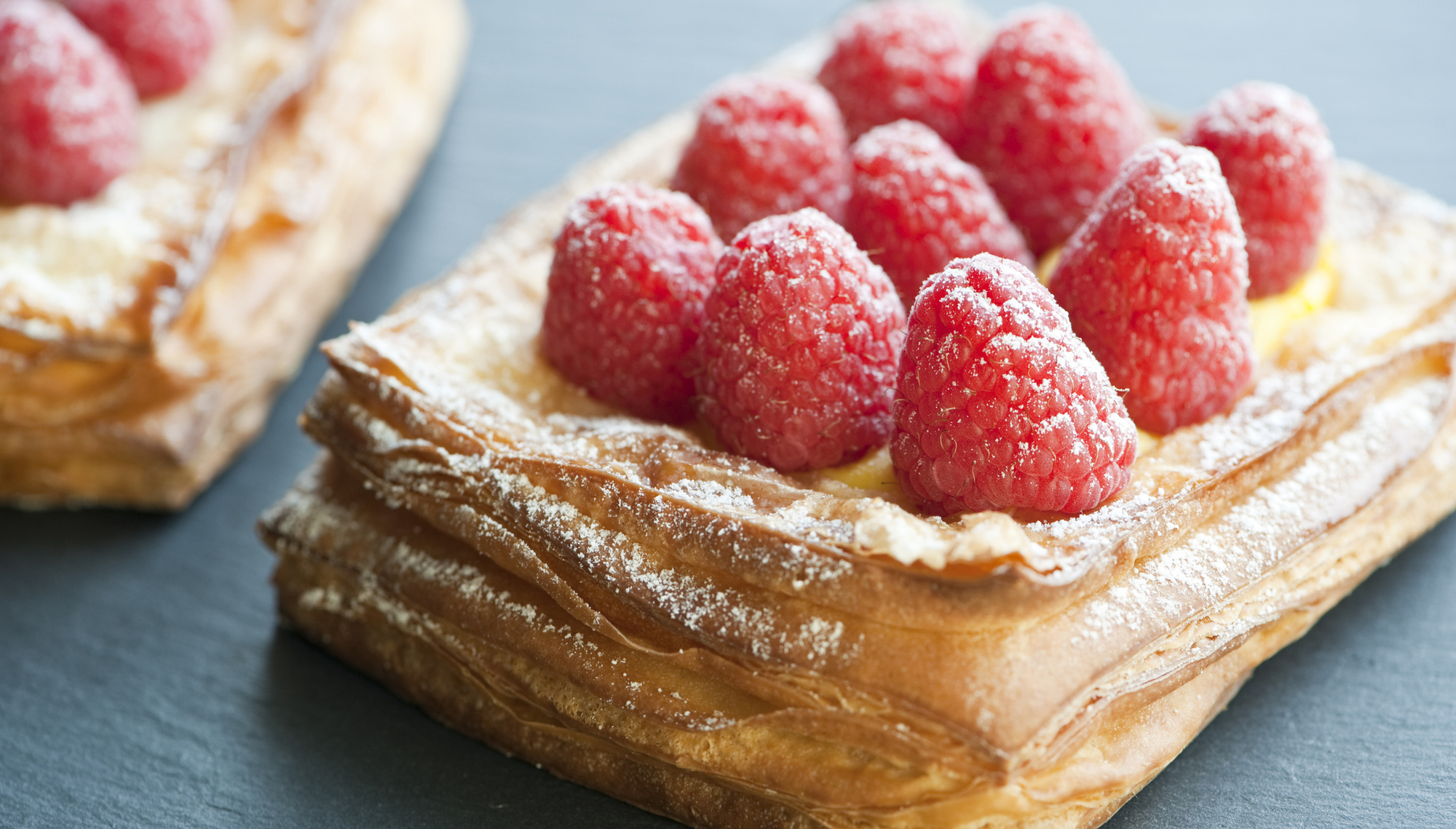
It is best not to drag a knife through the puff pastry, use a sharp edge and cut sharply. Dragging a blunt knife could destroy the layers within the pastry.

It is berry season! I know you can now get a wide selection of berries all year round, but summer berries do taste sweeter, and look plumper when they have had longer to ripen under the sun.
Raspberries are the perfect accompaniment to the sweet, soft crème pâtissière and crisp and flaky pastry in this recipe. The puff pastry is made of lots of tiny thin layers and during baking any water within the pastry turns to steam and expands these layers causing them to separate and rise up making it light and textured.
Crème pâtissière is a type of custard that is used in quite a number of French pastries.
It is a handy recipe to know as you can fill tarts or choux buns with it. It adds a structural layer to the pastries that whipped cream alone cannot do.
Egg yolks add richness and corn flour and flour act as thickeners to help stabilise the other ingredients allowing them to blend together and then stay together.
Vanilla is the most common crème pât flavouring and the one I opted for in this recipe; it can however be made with the addition of lemon or orange zest, with strong espresso or with melted chocolate
It is good to ensure you do not boil the milk and vanilla too vigorously, as this will make it more likely to curdle when the other ingredients are added.
It is important to continuously whisk crème pâtissière during cooking to prevent curdling, but also to prevent lumps.
If the corn flour and flour are not added, the ingredients can separate from each other as they cool.
There can be a strong taste if you undercook the corn flour and flour, so ensure you have taken time to stir until the mixture has thickened.
You can use all plain flour in place of the corn flour if needs be, but I find it gives a slightly duller finish. You will need to cook the crème pâtissière for slightly longer when using just flour as it can leave an aftertaste like undercooked bread. I recommended heating it for an extra two minutes. You will need five tablespoons of flour in place of two and two corn flour and flour.
To prevent a skin forming on your crème pâtissière, cover the surface directly with cling film while it is cooling.
The crème pâtissière can be made a day or two ahead of time if needed. It can also be frozen because the corn flour and flour allows it to be frozen and thawed without the ingredients separating.
If the pastry becomes difficult to work with while cutting, place it back in the fridge to firm up. It can also be helpful to chill the rectangles for 15 minutes after you have worked with them, before proceeding to place them in the oven. It will firm them up and give a crispier result.
It is best not to drag a knife through the puff pastry, use a sharp edge and cut sharply. Dragging a blunt knife could destroy the layers within the pastry.
Leave the section of pastry which you pricked with the fork free from egg wash or sugar.
These cream puffs need to be eaten pretty soon after assembling. They will not freeze well.