Michelle Darmody: How to make the classic courgette cake — and the mistakes to avoid
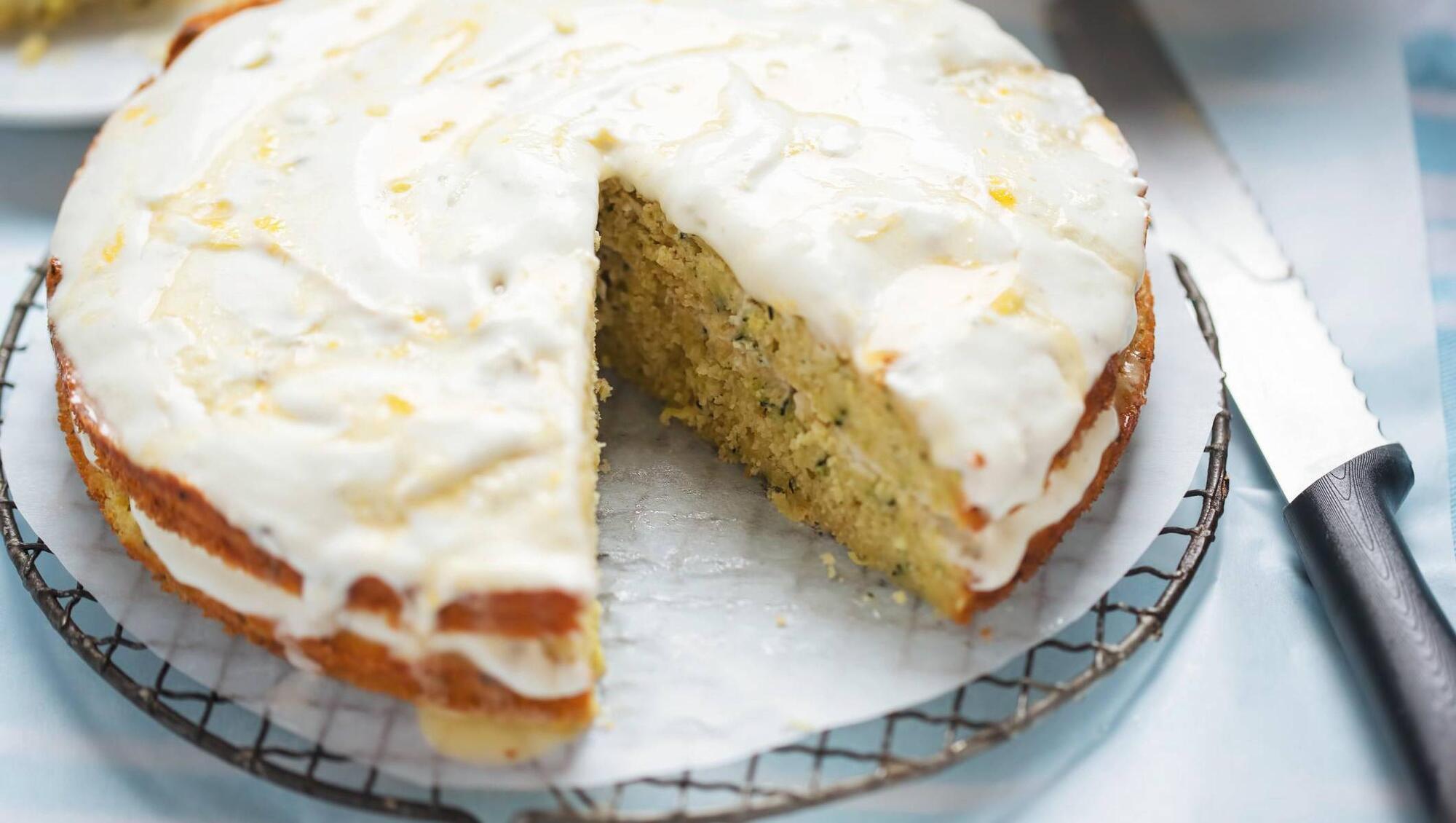
This cake is a tasty way to solve the problem of your end-season glut. It can also be made into a loaf, without the icing and the curd, for a simpler day-to-day lunchtime snack.
Michelle Darmody: How to make the classic courgette cake — and the mistakes to avoid

This courgette cake is made in a similar way to carrot cake; a light beating method is used.

This is one of my favourite cakes, zesty, flavoursome and not too heavy. 

The cake is made in a similar way to carrot cake; a light beating method is used. 

It requires the paddle attachment in a stand-mixer, or can be done by hand with a wooden spoon. 

There is not a strong or overpowering flavour from the courgettes; they are very subtle. 

They do, however, add structure, a unique texture while adding moisture. 

Courgettes hold a lot more water than carrots so the cake is softer and more moist than most carrot cakes.

For those of you lucky enough to have a garden where you grow courgettes, you will know they can all arrive at once at the end of the summer, leaving you with a dilemma. 

This cake is a tasty way to solve the problem of your glut. It can also be made into a loaf, without the icing and the curd, for a simpler day-to-day lunchtime snack.

I have fun decorating this cake, particularly now when there are lots of edible flowers in bloom. 

Along with some colourful edible flowers, you can add tendrils of lemon zest to the top of the cake. 

To make tendrils of zest, use a traditional citrus zester (a small tool that produces long, thin strips of citrus peel when pulled across the surface of the lemon) or other citrus fruit.

Courgette Cake

recipe by:Michelle Darmody

This cake is a tasty way to solve the problem of your end-season courgette glut. It can also be made into a loaf, without the icing and the curd, for a simpler day-to-day lunchtime snack.

Courgette Cake

Servings

10

Preparation Time

25 mins

Cooking Time

35 mins

Total Time

60 mins

Course

Baking

Ingredients

  • 80g golden raisins

  • 3 eggs, lightly beaten

  • 165ml light sunflower oil

  • 190g golden caster sugar

  • 200g self raising flour

  • ¾ tsp baking powder

  • ¾ tsp bread soda

  • 330g courgette, grated with the medium side of a box grater

  • 4 tbsp lemon curd for the icing

  • 200g cream cheese

  • 2 tpsp honey

  • 1 tsp lemon juice

  • Zest of 1 lemon

  • 1 tsp vanilla extract

Method

  1. Line an 9-inch round spring-form tin with parchment.

  2. Preheat your oven to 180 ºC/gas mark 4.

  3. Cover the raisins in warm water and set aside.

  4. Mix the eggs, oil and sugar until creamy.

  5. Sieve the flour, baking powder and bread soda into the bowl with the egg mixture.

  6. Drain the raisins and add them to the bowl.

  7. Stir in the grated courgettes.

  8. Scoop the mixture into your prepared tin and smooth the top.

  9. Bake for 35 minutes, or until baked through and lightly golden on top.

  10. Allow to cool in the tin, until cool enough to handle then gently place onto a wire rack.

  11. To make the icing, whisk the cream cheese, honey, lemon juice and zest as well as the vanilla. Whisk until light and fluffy.

  12. Cut the cake in half so you have two flat discs. Spread the curd over one disc of the cake and sandwich the other half back on top.

  13. Cover the top of the cake generously with the icing.

Baker's tips

  • If you don't have a good light sunflower oil you can use very light olive oil. Darker olive oils will add a little tartness and a different flavour to the cake. It will not be a particularly bad result, just a little different.
  • Grate your courgette, skin still on, with the medium side of a box grater. I do this on a large plate and then tip the grated courgette into the main bowl. 330g is generally two small courgettes or one large one. Smaller courgettes tend to be sweeter in taste. You do not need to squeeze the liquid from the courgette once grated, in fact this is what keeps your cake nice and moist.
  • You can choose the larger side of the box grater if you would like a more textured cake. This can work well if you want to adapt the cake to a simpler loaf cake. Whichever you choose, the courgette does need to be grated and not sliced. Slicing it, no matter how thinly, will give a very different result.
  • You can make a gluten-free version of this quite easily, as the recipe does not rely heavily on the flour to rise the cake. Replace the flour with a gluten-free equivalent. You can also add ¼ teaspoon of xanthan gum, if you wish. It will act as a binder, as well as a texture enhancer, by mimicking the properties of gluten. It helps gluten-free cakes to retain moisture, which is quite important in this particular case.
  • Make sure the cake has completely cooled before adding the icing. Your icing should be smooth, creamy and spreadable. It should not be runny. You can add it onto the cake with a palette knife.
  • If the cake has been iced, store it in the fridge in an airtight container or wrapped well. Bring to room temperature before eating. If it is un-iced it will store at room temperature in an airtight container.
  • I have found that the cake is not the best after freezing and defrosting. It can get mushy due to its high moisture content.

Three delicious variations

Courgette and Lime

In place of the lemon curd, use lime curd. Some lime curds tend to be lip puckeringly sour, but the flavour is a wonderful accompaniment to the soft sweetness of the courgette. 

For the icing, replace the lemon zest and juice with lime. Passion fruit curd is also good in this cake.

Pistachio

Add 65g of shelled, chopped pistachios to the mixture at the same time as you add the courgette. When you are decorating the cake use a sprinkling of finely chopped pistachios and some edible rose petals.

Loaf cake

For this version you will need to line a 2lb loaf tin with parchment. Make the mixture in the same way then scoop it into the tin. 

Spread it flat on top and make a slight impression down the centre with a knife to allow the loaf to rise evenly. It may need a little more baking time than in the wider round tin, but you can check on it with a skewer to see if it comes out clean. 

Once cool enough to handle, place the loaf on a wire rack to cool.

x

More in this section

Cookie Policy Privacy Policy Brand Safety FAQ Help Contact Us Terms and Conditions

© Examiner Echo Group Limited