Darina Allen: Three recipes inspired by my most enjoyable London meals
Darina Allen: "The ORFC, Oxford Real Farming Conference at the beginning of January was a particularly inspirational few days with over 2,000 delegates and 150 plus events in nine venues throughout Oxford."

Food and farming are my great loves so when I travel, I link up with carefully chosen farmers and food producers and eat out a lot – all in the way of research!
The ORFC, Oxford Real Farming Conference at the beginning of January was a particularly inspirational few days with over 2,000 delegates and 150 plus events in nine venues throughout Oxford.
But this is a food column so I’ll concentrate on the restaurants that have inspired and delighted me lately. On a recent visit to London, my most enjoyable meal of many, was at The Yellow Bittern on Caledonian Road.
A tiny restaurant where Hugh Corcoran and his partner, Frances Armstrong-Jones, run one of my very favourite eateries, on their own terms, so they too can have a life!
Open Monday to Friday, just for lunch, one sitting a day at 1pm. Closed on Saturday and Sunday, not open for dinner – cash only….
A set menu of delicious seasonal food and real provenance. Freshly baked wheaten bread with homemade butter. (Hugh then uses the leftover buttermilk for the soda bread).
A set price lunch, £50, half a dozen delicious Galway oysters and/or a cheese trolley of Irish Farmers cheese in perfect condition, including a beautiful crusty wheel of Mike Thompson’s Young Buck from Hugh’s hometown Belfast, an optional extra.
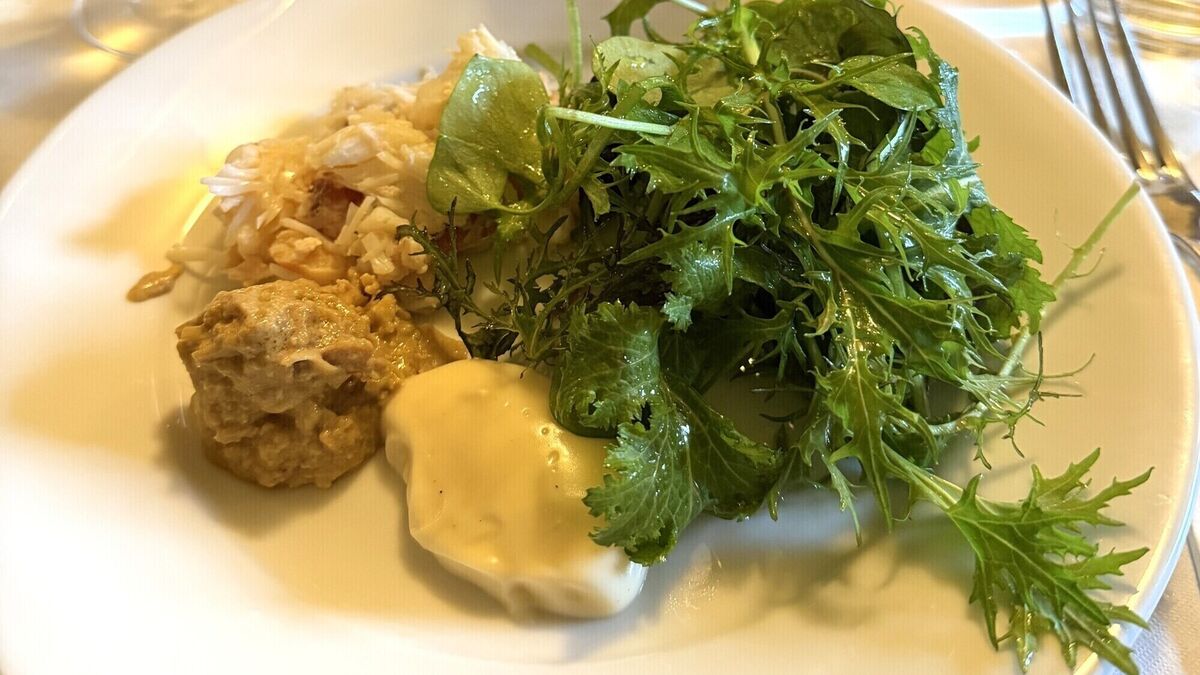
First, there was a big bowl of deeply comforting chicken broth, followed by brown and white crab meat with homemade mayo and a simple salad - pitch perfect, unpretentious and delicious.
By coincidence, the fishmonger who supplied the spanking fresh crab was sitting at the next table, tucking into one of Hugh‘s legendary pies. This time, it’s beef shin, topped with a flaky rough puff pastry lid, and accompanied by a bowl of meltingly tender cavolo nero.
Pudding was a home-made profiterole, oozing crème patisserie and smothered in dark chocolate sauce.
My criteria for a good restaurant, even if I’ve had an enjoyable meal is this: Do I want to return? Often the answer is more like…Been there, done that, don’t need to do again but it’s a resounding YES to the Yellow Bittern and also to Assassination Custard, perhaps, my favourite lunch place in Dublin.
A similar vibe in many ways, it’s even tinier than The Yellow Bittern, just three tables, two tables for two and one round table that will sit six at a slight squeeze. This can be a sharing table, so fun to make new friends.
The menu of small plates, maybe 10-12 choices, is written in Ken‘s (by his own admission) almost illegible handwriting and I always seem to want to order absolutely everything.
I recently took my friend who hadn’t been before and we literally ate our way through the menu, sharing small plates…
Taralli with Cannonata
Aubergine with Pul Biber
Pickled Mussels with Curry Leaf Aioli on strips of Grilled Focaccia
Crown Prince Pumpkin with Garlic and Agrodolce
Bitters and Guanciale
Wilted Greens on Panisse
Pumpkin with Guindillas Chillies, and shavings of Parmesan
Blood Orange and Red Onion Salad with EVOO and Sea Salt
Vitello Tonnato with Veal from Broughgammon Farm in Co. Antrim
Potatoes Stuffed with Wild Mushrooms from the Mushroom Butcher on 90 South Circular Road in Portobello
Friselle Bread with Giardiniera and Labneh
Blood Orange and Olive Oil Cake with Softly Whipped Cream
I had some cream left over so I put a dollop on my mocha coffee. I’d forgotten how totally delicious, icy cold cream is on hot coffee.
When I look back at my photos, I was astonished to see that we shared 12 dishes. At the end I was pleasingly sated but absolutely not over full.
When I read back over my text I realise that I am effusive in my praise for these two restaurants but I’d like to stress that I have no connection with either and do not accept free meals even if offered, but it’s so thrilling to get real food made from superb, fresh seasonal ingredients.
The vegetables came from McNally’s Family Farm, the food heroes of every good chef in Dublin.
Everything was made from scratch and cooked and served just before we ate each dish.
Once again, all the breads, taralli, friselle, focaccia were all house-made and still warm.
Deceptively simple, highly skilled, perfectly judged food, seemingly effortlessly cooked by Ken and Gwen, who have a rare skill for combining and highlighting flavours and creating contrasting textures.
No B/S, no green washing – a breath of fresh air, rare enough in these days of twiddles and bows and skid marks on plates. Book ahead for both places but it’s always worth contacting on the day, just in case of a cancellation.
While you’re there, pick up a little jar of the legendary piccalilli. And while you are at Yellow Bittern, check out Oisin Davies book shop located downstairs – another hidden treasure trove.
Yellow Bittern’s Crab with Homemade Mayonnaise and Winter Leaves
This yellow bittern’s crab with homemade mayonnaise and winter leaves is so simple, so perfect.
Servings
4Preparation Time
30 minsCooking Time
30 minsTotal Time
60 minsCourse
MainIngredients
1 cooked brown crab (see recipe)
Homemade mayonnaise
A little salad of seasonal leaves
Salad Dressing:
3 tbsp olive oil
1 tbsp red wine vinegar
Salt
Method
Remove the claws from the crab.
Crack the claws and extract every scrap of white meat. Put into a bowl.
Hold the crab with the underside uppermost and lever out the centre portion – I do this by catching the little lip of the projecting centre shell against the edge of the table and pressing down firmly.
The Dead Man’s Fingers (lungs) usually come out with this central piece but check in case some are left in the body. If so, remove and discard them.
Press your thumb down over the light shell just behind the eyes so that the shell cracks slightly, and then the sac which is underneath can be removed easily and discarded.
Everything else inside the body of the crab is edible.
Scoop out the brown meat from the shell and put into a separate bowl. Taste each and tweak the seasoning if necessary.
To make the salad dressing, whisk all ingredients together just before the salad is to be eaten.
To serve, put a generous dollop of white and brown crab meat side-by-side on the plate with some homemade mayonnaise and a generous pinch full of dressed leaves and maybe a segment of lemon.
Simple and utterly delicious when each of the elements are fresh and lovely.
Cooking the crab:
All types of crab are best cooked in seawater. Alternatively, cook in well-salted freshwater.
For common crab, put the crab into a deep saucepan, cover with cold or barely lukewarm water, using 175g of salt to every 2.3 litres of water.
This may sound like an incredible amount of salt, but try it: the crab will taste deliciously sweet.
Cover the saucepan, bring to the boil and then simmer from there on, allowing 15 minutes for the first 450g, and 10 minutes for the second and third (I’ve never come across a crab bigger than that!).
We usually pour off two-thirds of the water halfway through cooking and then cover and steam the crab for the remainder of the time.
As soon as it is cooked, remove it from the saucepan and allow to get cold.
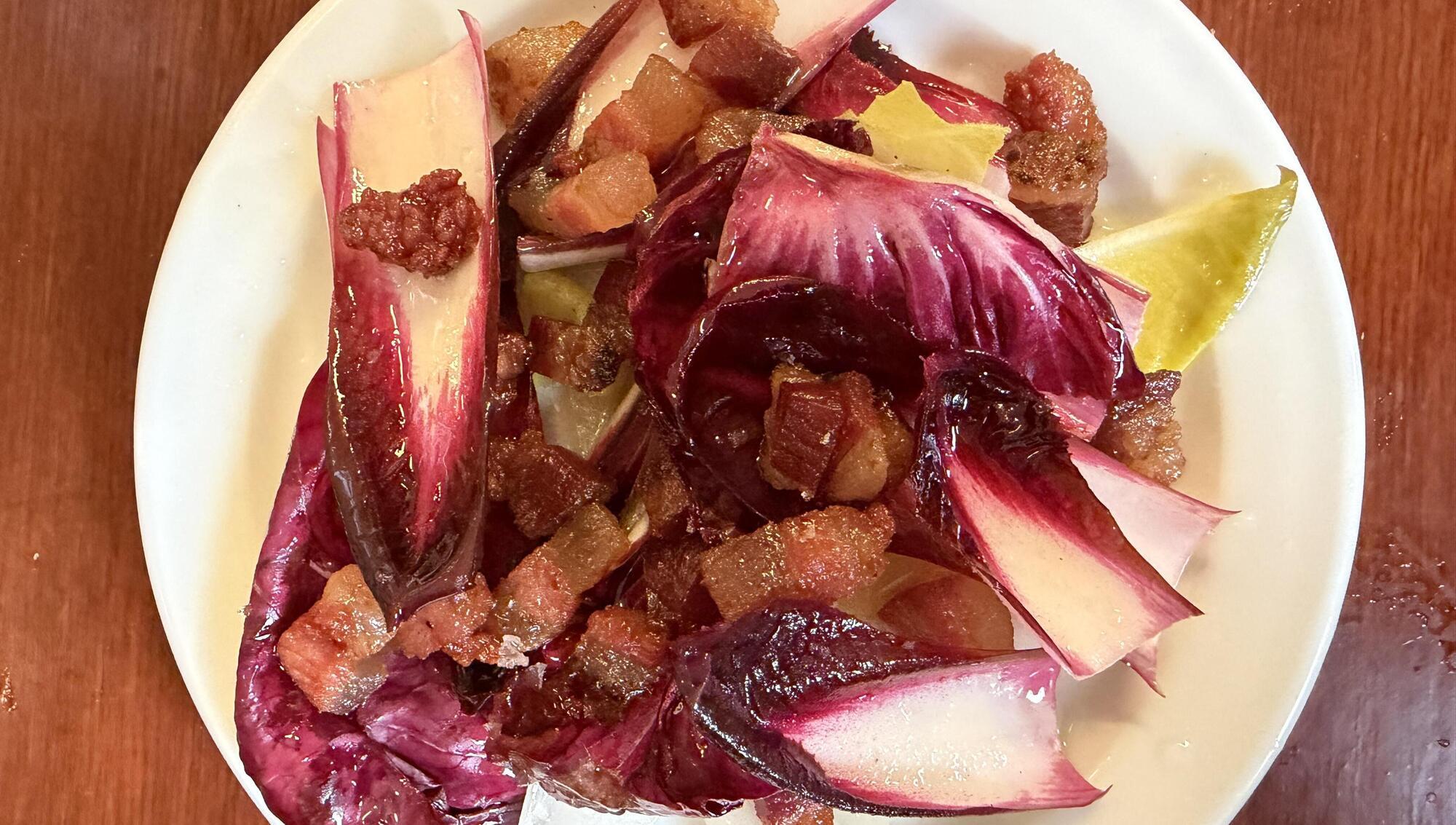
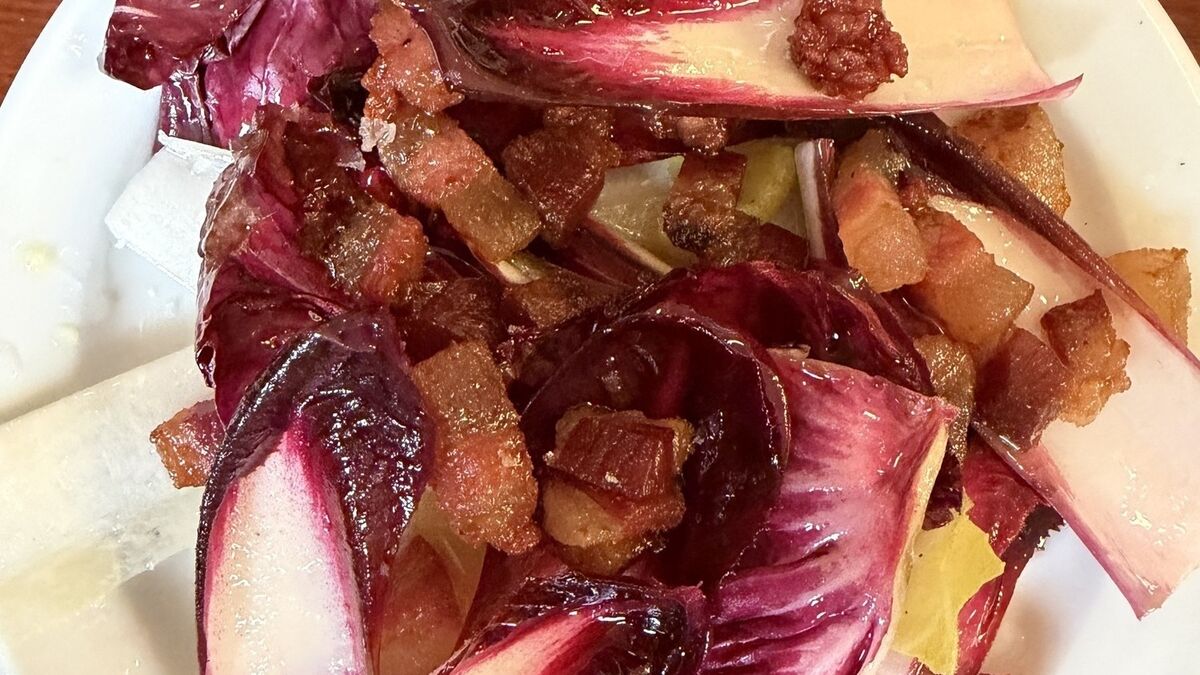
Assassination Custard’s Bitters and Guanciale
The sugar/vinegar mixture will be more than enough for this salad and the Pumpkin Agrodolce.
Servings
4Preparation Time
10 minsCooking Time
10 minsTotal Time
20 minsCourse
MainIngredients
250ml apple cider vinegar
250ml distilled vinegar
250g of granulated sugar
400g of salad leaves (a combination of)
red endive
Belgian endive
chicory
radicchio (optional)
100g guanciale
2 tbsp of olive oil
4 tbsp of sugar/vinegar mixture
Method
Heat the vinegars in a saucepan. Add the sugar to dissolve.
Cool and bottle if not using straight away.
Break the endive into its natural strips. Cut and discard the ends.
The radicchio and chicory can be chopped into similar sizes. Pop them in a bowl.
Chop the guanciale into small pieces. Fry in the pan with the olive oil until crispy.
The smoke is normal but watch it. Take the pan off the heat. Remove the guanciale with a slotted spoon and keep in a warm place.
Add about 4 tablespoons of the sugar/vinegar mixture into the pan off the heat. You want to emulsify the fat and sugar/vinegar.
Gently reheat the pan and whisk the fat and sugar mixture. Be careful. It might spit a bit.
As soon as it starts to bubble, pour over the leaves. Throw in half the guanciale. Toss everything together.
Divide between 2 large plates (for sharing) or 4 small ones. Eat while warm.
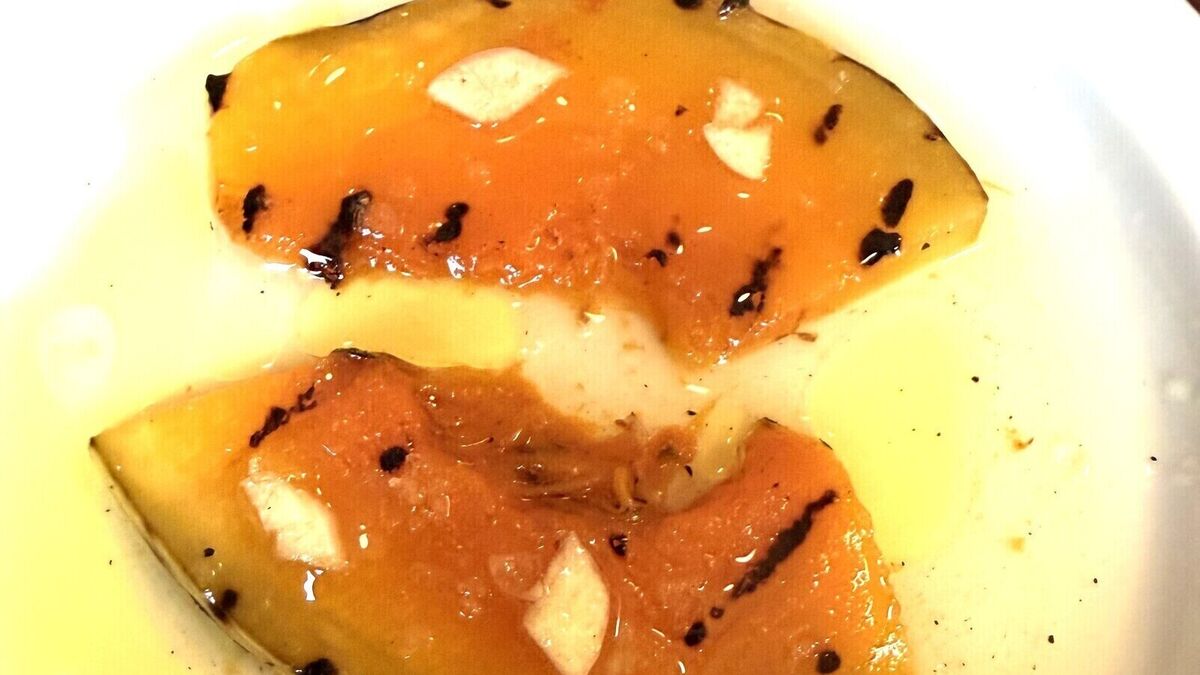
Assassination Custard’s Pumpkin Agrodolce
This recipe is time-consuming but worth the effort. It keeps in the fridge for about a week or so, if it lasts that long!
Servings
20Preparation Time
10 minsCooking Time
6 minsTotal Time
16 minsCourse
MainIngredients
1 whole small-medium Crown Prince pumpkin vinegar/sugar mixture with added water (see Bitters and Guanciale recipe)
3 garlic cloves, chopped
extra virgin olive oil
sea salt
Method
Very carefully cut the pumpkin in half.
Then even more carefully, flesh side down, slice the pumpkin in ½cm thin or whatever feels comfortable and not dangerous.
Using a griddle, pan-grill the pumpkin slices until cooked and a little charred. Approx. 2-3 minutes per side. As the pan gets hotter it will take less time.
Tumble the slices into a container and pour over enough of the sugar/vinegar mixture (with a little added water) to cover the pumpkin. Add some extra virgin olive oil. Put a lid on the container and leave overnight in the fridge.
Bring to room temperature before serving. We add a little chopped garlic just before serving.
Don’t forget to spoon over some dressing and oil. Finish with sea salt. The marinade could be used again (for this recipe) or other dressings.
As anyone who is coeliac or cooks for someone who has a gluten intolerance will testify, it can be challenging to produce really delicious, balanced meals. This half-day cookery demonstration may just be what you need.
Here at Ballymaloe Cookery School, we continue to add to our treasure trove of delicious gluten-free recipes. Suitable both for the newly-diagnosed coeliac, who has never baked before, as well as the more experienced cook, this course is ideal for those on a gluten-free diet who face the dilemma of longing to taste ‘real’ food.
You’ll learn a whole range of delicious and easy-to-prepare dishes including gluten-free sweet and savoury pastry.
Advice on alternative ingredients and lots of baking tips will help take the mystery out of successful gluten-free cooking.
ballymaloecookeryschool.ie
Delivered by Klaus Laitenberger, this course runs one day per month from February to October 2026.
This ten-day gardening course offers a unique, hands-on learning experience across the various gardens, polytunnels and glasshouses on the Ballymaloe Cookery School's 100-acre farm. Participants will learn how to grow their own vegetables, herbs and fruit.
The course is suitable for beginners as well as those with some gardening experience who wish to deepen their knowledge and practical skills in organic growing and sustainable food production.
Eligible participants working in Ireland can avail of a generous cost reduction on this course through our course partners Rural Food Skillnet – application form is available on our website.
- Visit here.