Darina Allen: Recipes to make the most of the native Irish oyster
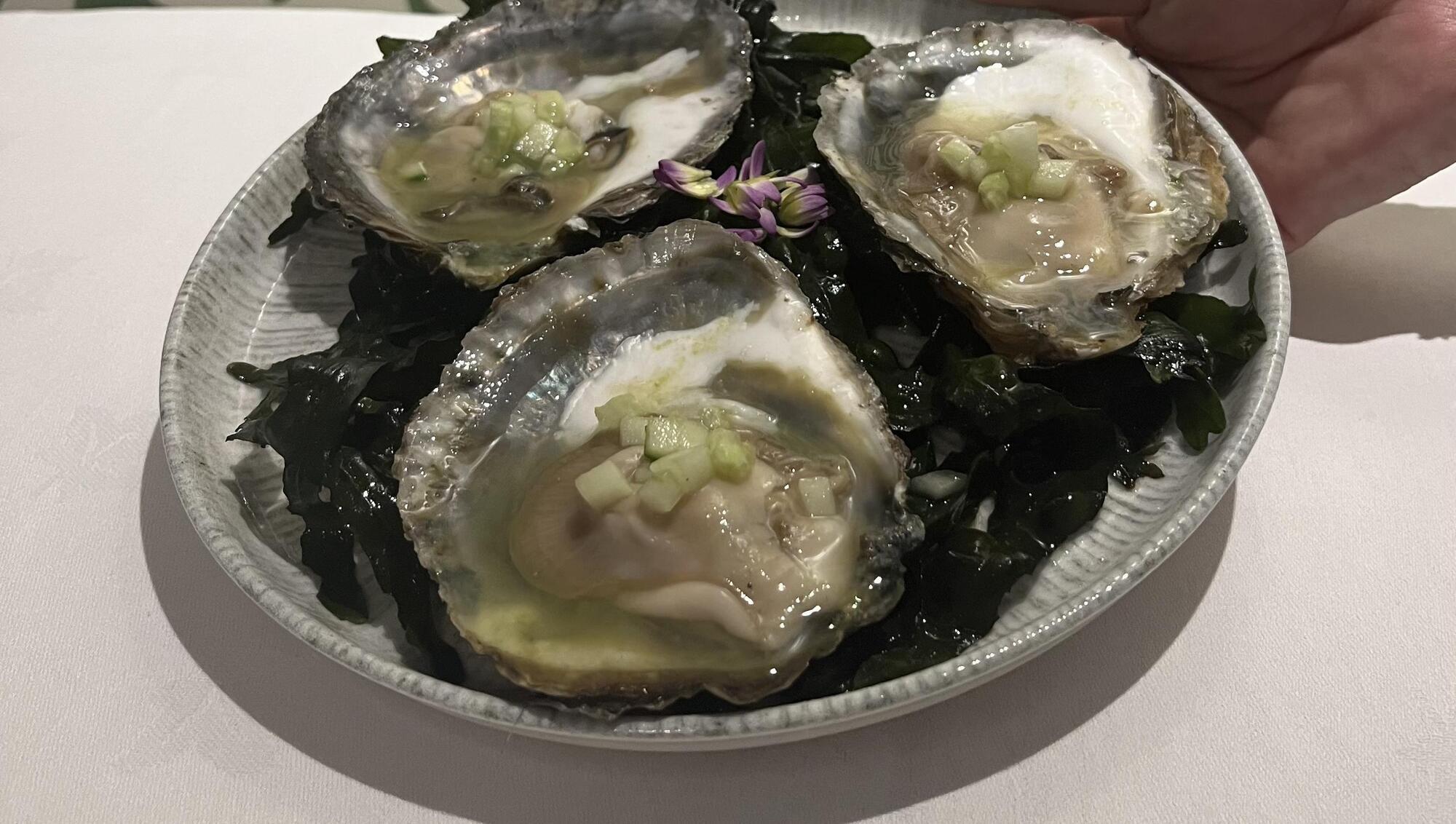

There is an R in the month… so, hurrah, we’re in oyster season again and will be until the end of April.
It’s wise to protect your hand with a folded tea towel when opening oysters.
Wrap the tea towel round your hand, then lay the deep shell on the tea towel with the wide end pointing inwards.
Grip the oyster firmly in your protected hand while you insert the tip of the knife into the hinge, and twist to lever the two shells apart; you’ll need to exert quite a lot of pressure, so it’s foolhardy not to protect your hand well.
Then, slide the blade of the knife under the top shell to detach the oyster from the shell.
Discard the top shell, then loosen the oyster from the deep shell, flip over to reveal the plump side, and don’t lose the precious briny juice.
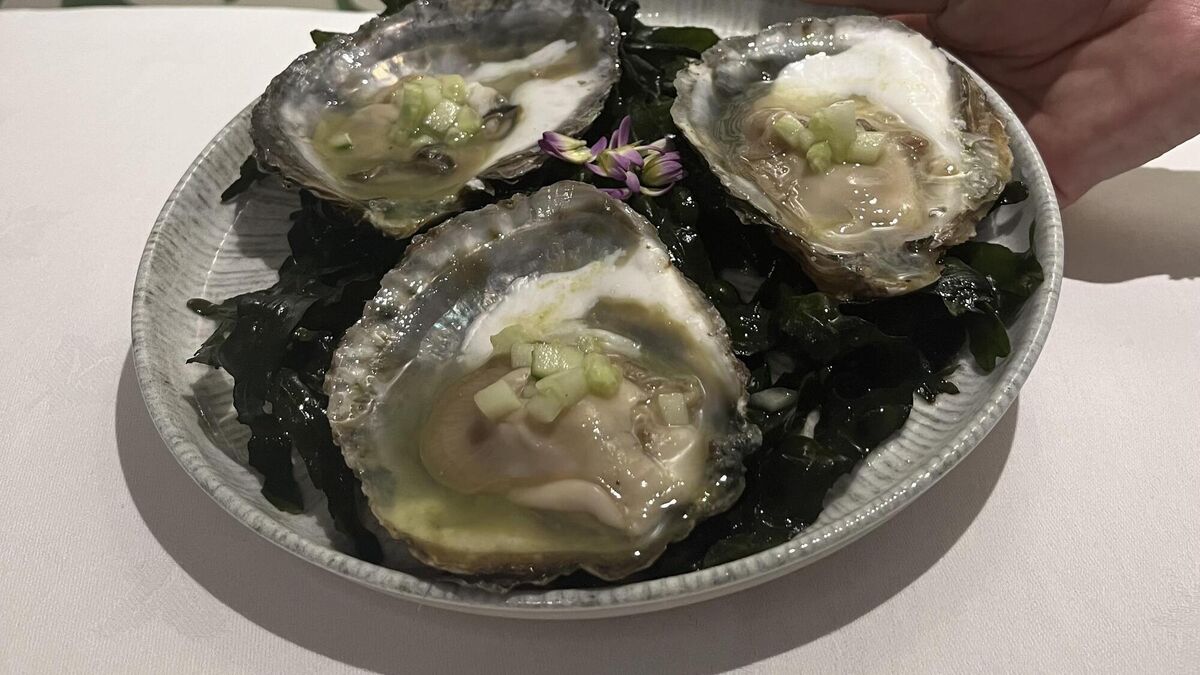
Dervilla O'Flynn's Native Oysters Three Ways
Dervilla O’Flynn, Head Chef at Ballymaloe House kindly shared her recipe for three sauces with me. We have access to beautiful oysters all year round in Ireland. The Native oysters are now available, we are using Rossmore Oyster Farm in Cork and Kelly’s i
Servings
6Course
MainIngredients
For cucumber water:
½ cucumber, not peeled
1 teaspoon rosé vinegar
¼-½ juice of 1 lime
Maldon sea salt and freshly ground black pepper
For tomato water:
500g very ripe tomatoes
7 basil leaves
½ tsp caster sugar
½ level tsp Maldon sea salt
pinch of cracked black pepper
For Rosé Mignonette:
6 tbsp good quality rosé vinegar
1 banana shallot, finely diced
½ tsp freshly ground black pepper
Method
For cucumber water:
Blend all the ingredients together with a blender. Strain through fine muslin for a clean bright green water and chill.
You can finely dice a little bit more cucumber and add it to the water if you want the texture of cucumber as well.
We sometimes freeze the water and scratch with a fork for a cucumber granita which is gorgeous served on an oyster too.
For tomato water:
Cut the tomatoes into coarse pieces and place in a large bowl. Tear up the basil leaves and add in with the sugar, salt and pepper. Use a handheld blender to pulse chop the ingredients to a rough and coarse purée. Do not over blend as you will end up with a cloudy water that will spoil the appearance of the dish. Place the mixture in a large square of muslin, tie securely and hang over a bowl to allow the water to drip from the mixture. This can be done overnight if time allows.
When ready to serve, taste the tomato water and adjust the seasoning accordingly.
For Rosé Mignonette:
Put all three ingredients in a small saucepan.
Turn on the lowest heat and stand beside it while it gently warms up. As soon as it starts to get warm, turn it off and let it cool completely.
Keep in the fridge until needed. It will keep for a few weeks.
To serve in all cases:
Nap each opened oyster with a teaspoon of cucumber water or tomato water - or only half a teaspoon of the Rosé Mignonette.
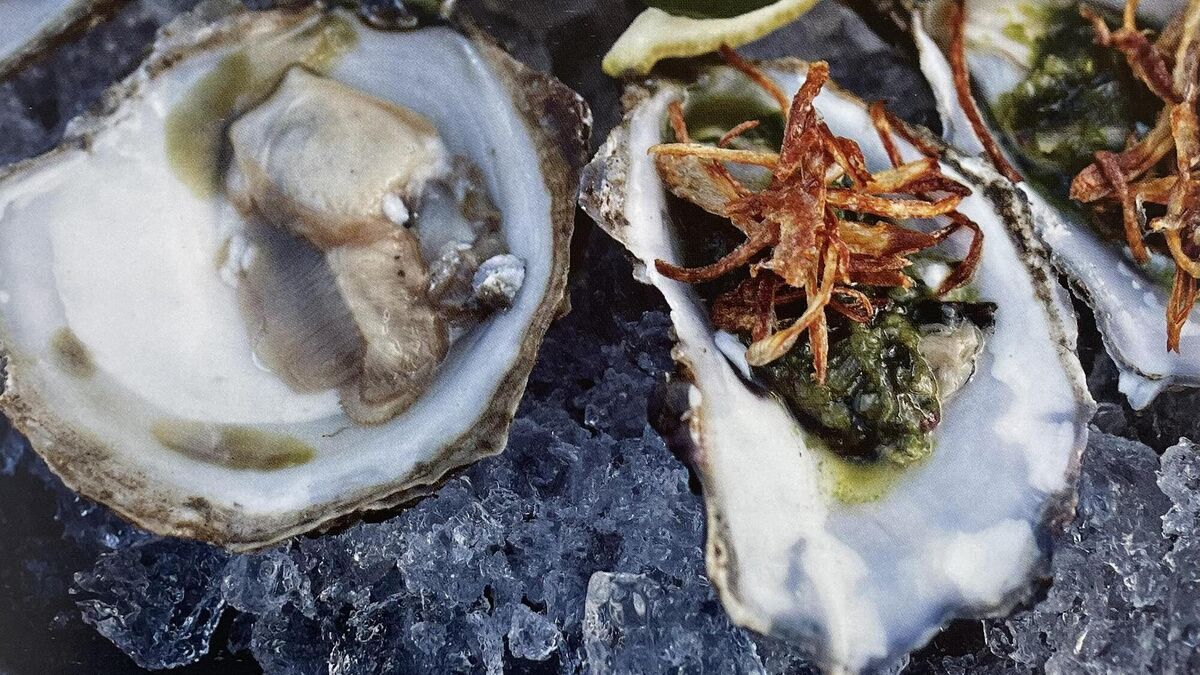
Oysters with Namjim and Crispy Onions
An addictive combination. We use the Gigas oysters for this dish.
Servings
8Preparation Time
20 minsCooking Time
10 minsTotal Time
30 minsCourse
MainIngredients
For the oysters:
4 shallots or small onions, sliced
namjim (see recipe)
extra virgin olive oil
24 Gigas oysters
fresh seaweed, if available
sprigs of fresh coriander
For the namjim:
2 garlic cloves, peeled
4 tbsp fresh coriander, chopped
sea salt
1 green chilli, deseeded and chopped
2 shallots, finely chopped
3 tbsp lime juice
2 tbsp palm sugar
2 tbsp fish sauce (nam pla)
Method
For the oysters:
Peel and slice the shallots or onions thinly.
Spread out on kitchen paper to dry.
Meanwhile, make the namjim as per the instructions and keep in a glass jam jar.
Heat about 2.5cm of oil in a frying pan, then fry the onions until crisp and golden.
Drain on kitchen paper.
For the namjim:
Place the garlic, coriander and a pinch of sea salt in a pestle and mortar and pound until well crushed.
Add the chopped chilli and continue to pound.
Add the chopped shallots, lime juice, palm sugar and fish sauce and mix.
Taste and adjust the seasoning as necessary.
To serve:
Lay a few sprigs of seaweed on each plate, if available.
Open the oysters and nestle 3 or 4 on top of the seaweed.
Spoon a generous half teaspoon of namjim on top of each oyster and top with some crispy onions and a sprig of fresh coriander. Divine!
If you have ever thought about turning your passion for food into a profession, or wondered if working in a kitchen could be for you, now is your chance to find out.
Chef Network has launched Open Kitchen Week, a new initiative where professional kitchens will invite anyone interested in a culinary career to be a guest for a day or a few hours in their kitchen to find out what it is really like.
50 establishments around the country are taking part, ranging from restaurants, hotels, and cafés to workplace catering, bakeries and even a food truck.
Open Kitchen Week takes place from 6th – 12th November, but you must book a slot in advance to take part.
- For more information, see openkitchen.ie
There are plenty of options to choose from:
- Rossmore Oysters (Cork) - @rossmoreoysters on Instagram
- Harty Oysters (Waterford) - @harty_oysters on Instagram
- Kelly Oysters (Galway) - @kellyoysters on Instagram
- Achill Oysters (Achill Island) - @achilloysters on Instagram
- Carlingford Oysters (Louth) - @carlingfordoysters on Instagram