One-third of farmed land in two Cork catchments under derogation
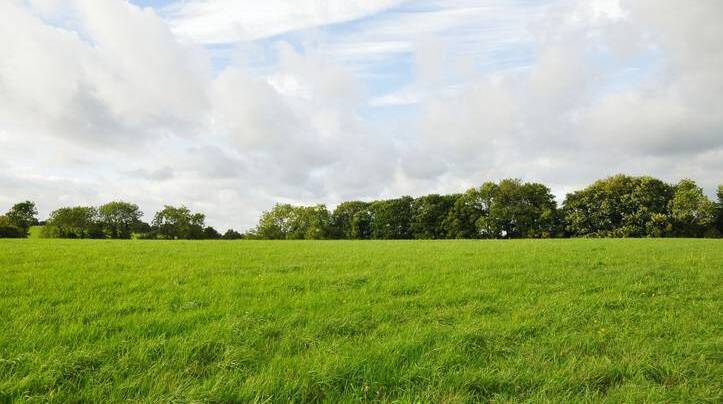
A targeted restriction of derogation farms will reduce the annual chemical fertiliser limits on grassland (by an expected 5%) in 2028, in the Blackwater, Barrow, Slaney, and Nore river basins. File picture: iStock
Two Co Cork catchments have the country’s highest share of farmed land under nitrates derogation, new figures show, as assessments continue into where water quality and protected habitats could require tighter limits.
35% of the farmed area in the Bandon-Ilen catchment is under derogation. That is the highest proportion nationally, although only marginally higher than the Lee, Cork harbour, and Youghal Bay catchments, of which 34% is under derogation.
Only 27% of the farmed area in the Blackwater (Munster) catchment is under derogation.
And Co Cork’s fourth area (shared with Co Kerry), the Dunmanus-Bantry-Kenmare catchment, has only 1-2% of its farmed area under derogation.
Large-scale dependence on nitrate derogations makes clear the economic threat to three Cork catchments if the Department of Agriculture, Food and the Marine finds itself unable to approve nitrates derogations for some farmers, following assessments under the EU's Habitats Directive and Water Frameworks Directive.
Read More
Carrying out these assessments was part of the conditions under which Ireland was granted a continuing nitrates derogation by the European Commission last year.
The Overview Report for the 46 river catchments will be followed next year by publication of 583 Sub-Catchment Overview Reports.
Minister Martin Heydon has said farmers whose derogation applications are then not approved will be given time to adjust to their new situation.
Derogation farmers in the Blackwater (Munster) and three other catchments already know that from January 1, 2028, they cannot spread chemical nitrogen within four metres of water bodies, and this setback distance will be eight metres when spreading organic fertiliser or soiled-water, and the distance increases to 20 metres if there is a slope toward water that exceeds 20%.
Additionally, a targeted restriction of derogation farms will reduce the annual chemical fertiliser limits on grassland (by an expected 5%) in 2028, in the Blackwater, Barrow, Slaney, and Nore river basins.
These will come on top of the existing maximum derogation stocking rate of 220 kg organic N/ha in Co Cork’s Blackwater (Munster) and Lee, Cork Harbour and Youghal Bay catchments.
The Bandon-Ilen catchment is split approximately half and half into maximum derogation stocking rate of 220kg and 250kg.
By comparison, 13% of the farmed area in the Tralee Bay-Feale catchment and 4% in the Laune-Maine-Dingle Bay catchment is under derogation.