Farmers want trees but not the loss of control that comes with land designation
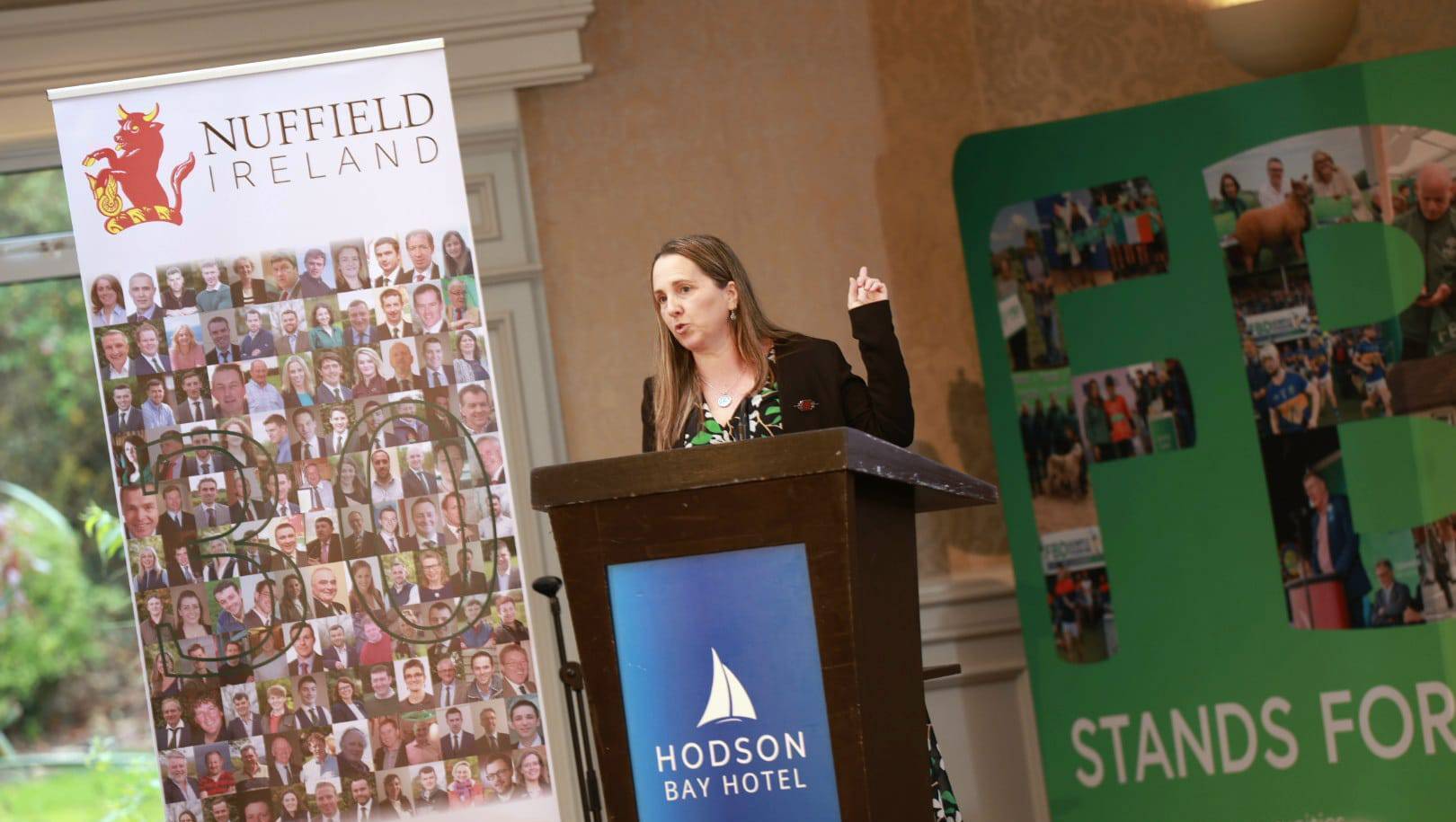
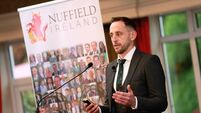
Marina Conway presenting her research at the 2026 Nuffield Ireland conference.
Farmers are interested in planting trees on their land, but concerns over forestry designation and future land-use restrictions remain a major barrier to uptake, a conference heard.
"The main barrier is the forest land designation. It's a psychological barrier around people's ability to manage their land in the future," researcher Marina Conway said.
In her research, , she found farmers were interested in integrating trees into their farms but were deterred by psychological concerns and land-use restrictions.
Ireland has the second-lowest level of forest cover in Europe at just 11.6%, compared to a European average of 38%.
"We have lots of targets in our climate action plan and our forest strategy for reaching about 8,000 hectares a year, but we're only on average reaching about 2,000 hectares a year… We're going to have to pay anything between €6bn and €21bn in fines by missing our own climate change targets," Ms Conway warned.
“If the afforestation targets that were set in Food Harvest 2020 were met, it would have allowed for carbon-neutral dairy expansion and the dairy expansion targets were met in 2018.”
Read More
She explained that over the past 30 years, agricultural intensification and afforestation policy have drawn a hard line between farmland and forestry. Agroforestry aims to blend these enterprises.
"It's not farming or forestry, but integration of both on the same land… Farming is usually on the horizontal layer, and agroforestry is about harnessing the vertical layer."
Through a survey, her research found that 65% of landowners who didn't have agroforestry said they would consider it in the future.
Surveying farmers who have already implemented some form of agroforestry on their farms, Ms Conway found that 67% of farmers reported that they would do it again.
“75% of them said it hadn't restricted their farming enterprise whatsoever," she explained.
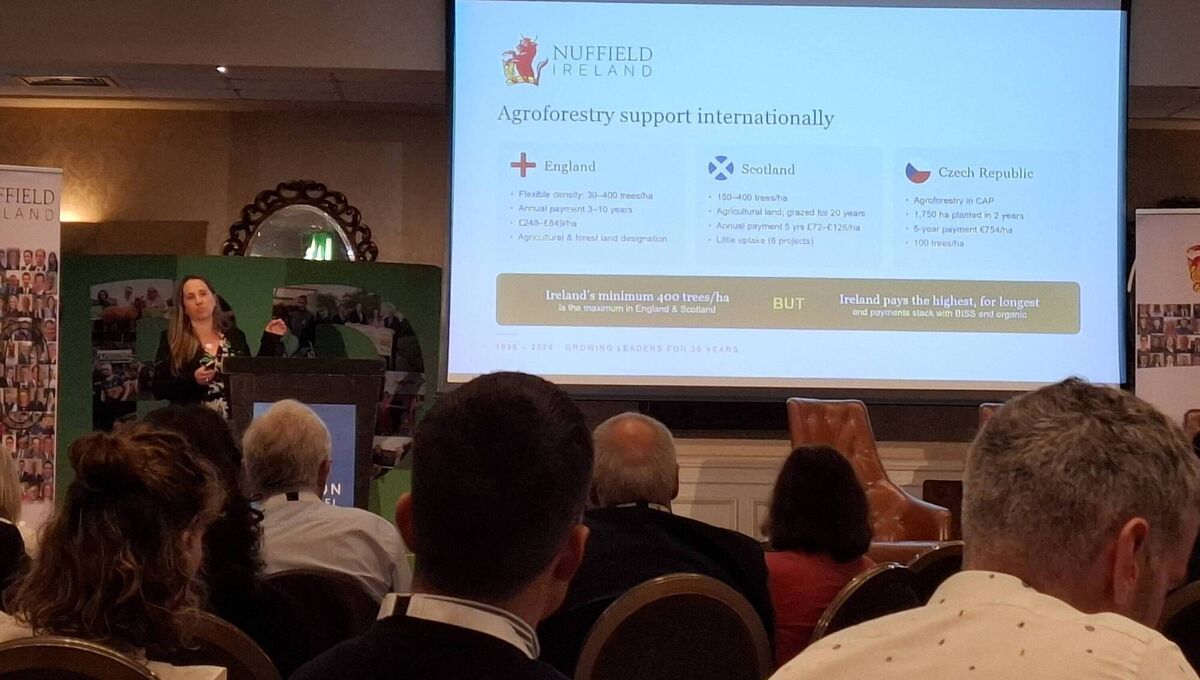
However, despite Ireland offering one of the more generous agroforestry supports in Europe, including a €1,170/ha premium for 10 years that can be combined with BISS and organic payments, farmers still described participation as a "leap of faith".
Ms Conway concluded that Irish farmers are not rejecting agroforestry because they dislike trees. They are rejecting a system they fear could limit how future generations use the land.
As part of her research, Ms Conway went abroad investigating how farmers have implemented trees into their farms. There, she discovered that farmers primarily plant trees to solve practical problems.
"Trees were solving the problem first," she said, showcasing in her presentation how trees helped farmers combat erosion and improve drought resilience, provide cheap shelter for livestock, create an alternative fodder source, aid in water protection, contribute to carbon income and diversify farms with timber, or fruit and nut production.
While abroad, Ms Conway highlighted that "farmers are really willing to integrate trees into their farm systems when they provide a clear benefit to the farm… The farmer is in the decision seat about where these trees go."
Contrasting Ireland, she explained that in the Czech Republic agroforestry remains agricultural land and requires just 100 trees per hectare, whereas the current Irish scheme requires a minimum of 400 trees per hectare.
Ms Conway proposed getting advisors on board and educating farmers on the fodder applications of forestry to provide extra dry matter, shade, manage wet fields and improve animal welfare.
"We need more options for landowners," Ms Conway said, suggesting a revised scheme with low-, medium- and high-density planting options. She said greater flexibility would reduce fears around future land use and help farmers and their successors feel less "locked in" by planting decisions.