Current afforestation efforts must triple to sustain future sawlog supply
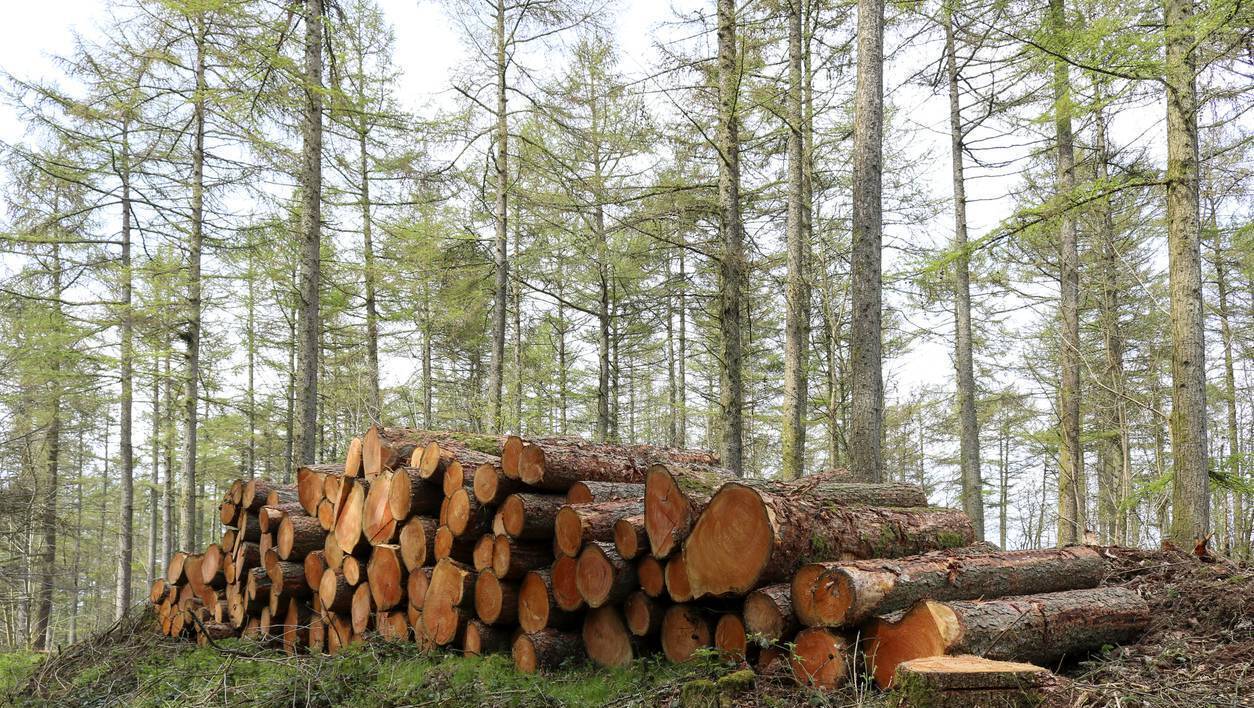
Ireland currently has 800,000 hectares of forests. The FII highlighted that commercial forestry is one of the most effective tools available to combat climate change.
An urgent call for further support for Ireland’s timber sector has been made in an attempt to preserve future sawlog supplies.
Forest Industries Ireland (FII) met with the minister of state with responsibility for forestry, Niall Collins, on November 10 with the organisation calling for a renewed strategic focus on the commercial timber business.
The FII warned that current low levels of afforestation, which is currently standing at roughly 2,000ha, must at least triple to sustain the industry’s sawlog supply into the future.
The Irish forestry and timber sector has become a major domestic business success story. Currently, the sector is worth over €2bn to the Irish economy and sustains more than 10,000 jobs.
Irish sawmills process over 1.4 million cubic metres of timber products annually, driving €200m in sawn softwood exports and over €300m in wood panel product exports, while carving out a significant market share in the UK.
To ensure the sector continues to thrive, FII is calling on the government to reinvigorate afforestation schemes within the upcoming Forestry Programme 2028-2033.
Read More
Director of FII, Mark McAuley, said: “We were delighted to meet the minister, who has a very firm grasp of the challenges facing forestry at the moment and really wants to see an increase in tree planting.”
“The focus of the new Forestry Programme must return to conifer planting, with robust incentives for farmers to plant commercial, productive forests that will yield valuable timber crops. Our sawmilling industry needs a guaranteed, sustained supply into the future to ensure we can build on Ireland's competitive advantage.”
Mr McAuley highlighted that Ireland’s warmer climate and year-round growing season put the Irish timber sector at a competitive advantage compared to competitors.
“With OECD research projecting that global demand for timber will triple by 2050, the long-term economic case for planting today is undeniable,” he said.
The domestic timber sector supplies materials for construction, pallets, packaging, garden products, and a variety of other uses. In addition, the FII highlighted that commercial forestry is one of the most effective tools available to combat climate change.
Mr McAuley said: “Ireland currently has 800,000 hectares of forests, which store over 300 million tonnes of carbon.
“FII is advocating for an increase in timber-frame construction to decarbonise Ireland's built environment.
"Cultivating conifer forests and using the resulting wood products creates a dual-action climate solution, absorbing carbon as the trees grow and locking it away long-term within the fabric of our buildings, actively reducing overall carbon emissions rather than increasing them.”