Targeted farm action 'improves water quality'
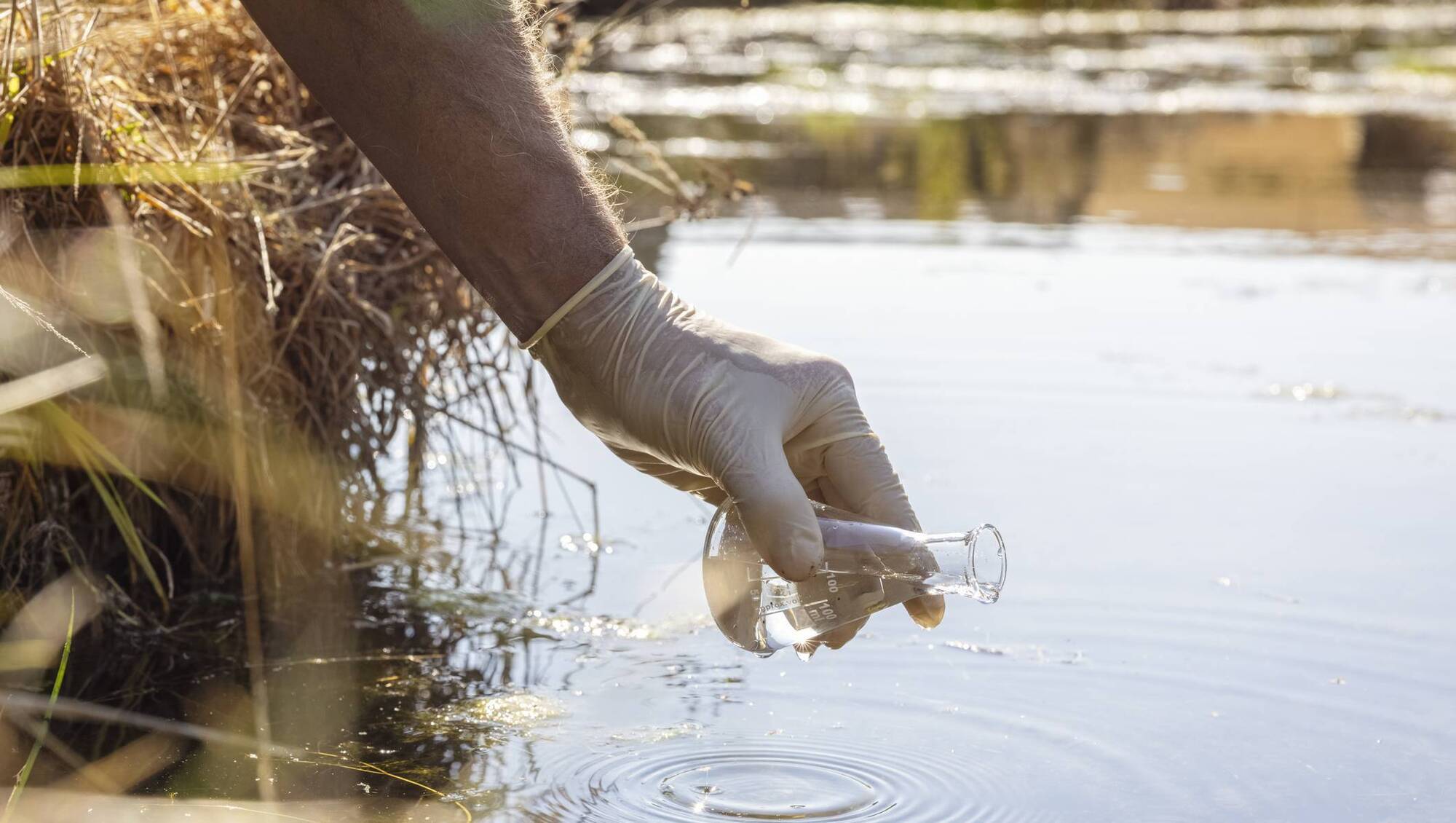
European Environment Agency data shows that Ireland still has the highest water quality among major dairy producers across Europe. Stock picture
Water quality demonstrably improved, when localised, science-led interventions were driven by ASSAP and the Farming for Water EIP, according to Dairy Industry Ireland’s new Pathway to Sustainable Dairy strategy.
According to the strategy document, recent Environmental Protection Agency (EPA) data indicating a slight decline in overall surface water health left Ireland’s Nitrates Derogation under unprecedented scrutiny.
But the quantifiable water quality improvements achieved in targeted river catchments offer “a clear, data-backed roadmap” going forward. These on-farm successes must be urgently scaled up.
The document also noted that European Environment Agency (EEA) data shows Ireland still has the highest water quality among major dairy producers across Europe.
Read More
The strategy commits milk processors to a continued focus on decarbonisation, while warning that the significant decarbonisation capital expenditure required will be challenging in the context of tighter milk volumes.
Dairy processors will continue sustainability programmes that reward farmers for targeted measures.
It was developed by the Dairy Sustainability Ireland (DSI), a formal collaboration between processors, farmers, policy makers, regulators and support agencies.
DSI will also act as the governing and oversight body to track progress on the agreed goals through an annual progress report and identify challenges as they emerge.
On water quality, it warned that expecting family farms to commit to substantial, long-term investments in expanded slurry storage without regulatory certainty is fundamentally unworkable.
A stable, predictable policy horizon is the “essential economic catalyst required to unlock the infrastructure investments needed to decisively turn the tide on national water quality”.
Securing the Nitrates Derogation extension through 2028 provided much-needed medium-term certainty, but the 2028 increase in mandatory dairy cow slurry storage capacity demands heavy capital investment, and the Tams 3 prioritisation of nutrient storage applications (with 60% to 70% grants) must continue, without ranking and selection criteria that would “bottleneck” progressive farmers.
Maximising recent 1,000 cubic metre planning permission exemptions would also be critical for delivering infrastructure in a timely manner.
The dairy sector is committed to working with regulatory authorities to ensure localised water quality data is available in a timely manner to track the impact of measures, alongside a zero tolerance approach to practices that threaten water quality.
Practical fertiliser and organic manure guidance plans tailored to local water quality data are also seen as important.
Knowledge transfer programmes will focus on reducing crude protein in concentrate feed, and successful incorporation of clover and multispecies swards.
By 2028, at least 50 water quality advisors at work, and 2,000 annual farm-level assessments, are targeted.
Extending Agnav, to incorporate water quality action plans, is another priority called for, to help farmers identify relevant actions and measure progress.
For all sustainability measures, initiatives such as Agnav would avoid duplication of effort, and minimise the administrative burden on farmers.
The climate action plan targets a 25% reduction in agriculture emissions by 2030, and a 35% reduction in processing emissions, relative to 2018.
The strategy document says emissions measures needed up to 2030 include 90% replacement of CAN with protected urea, a 25% reduction in chemical nitrogen use relative to 2018, and 75% genotyping of the dairy herd by the end of 2027.
The potential for anaerobic digestion needed to be “explored further”.
Stronger linkages between dairy and tillage farmers are called for, to optimise utilisation of organic manures.
Stated biodiversity priorities for the dairy sector include maintaining the area dedicated to nature, and habitat quality that maximises beneficial species and protects water quality.
Already, the almost 13% space for nature average for livestock farms shows a strong, voluntary commitment to maintaining biodiversity, according to the dairy sector strategy document, which says the Signpost Advisory Programme, and processor programmes, will support farm plans for biodiversity.