Kieran Coughlan: Despite years of change, where are the water quality gains?
At farm level, there is a mismatch between the efforts farmers are making, the underlying logic behind those changes and the results on water quality, writes dairy farmer and rural tax specialist Kieran Coughlan.

EPA report leaves more questions than answers on water quality Last week's EPA report on water quality leaves more questions than answers.
The nitrates derogation and the extension thereof hinge on improving the status of Ireland's water quality, and this year's report doesn't paint an improving position on either nitrogen or phosphorus.
The key overviews from the report are quite direct. Not critical, but blunt enough to get the point across without doubt, reading as follows: "Overall, the report shows no major change in water quality in 2025. Nutrient levels remain too high in a large proportion of water bodies. Levels fluctuate year on year but are not improving overall over the long term. The biological health of our rivers and lakes has shown little change, with slightly more than half (54%) in good or better biological quality."
At farm level, there is a mismatch between the efforts farmers are making, the underlying logic behind those changes and the results on water quality.
Pretty much all farmers have had to make changes on farm over recent years and it is wholly disappointing to see that the dial isn't shifting, or at least isn't shifting in a more discernible way on water quality.
Let's recap on some of the changes that have occurred for farmers. There have been reductions in the amount of chemical nitrogen allowed to be used on farms, there is an increase in the amount of organic nitrogen deemed to be produced by dairy cows. High-production dairy cows are deemed to produce higher nitrogen, leading to less allowable chemical nitrogen.
There have been further restrictions in the time periods during which slurry and soiled water can be spread. Farmers wishing to export slurry to another farmer can only do so where the importing farmer has undertaken soil samples, and the movement of slurry must be recorded with the Department of Agriculture.
The use of traditional urea-based fertiliser is no longer permitted, with protected urea now the alternative.
Many of those farmers looking to stock their farms at a higher rate have seen their maximum stocking rate reduced as a result of a reduced cap on the maximum organic nitrogen levels from 250kg N to 220kg N in large swathes of the country.
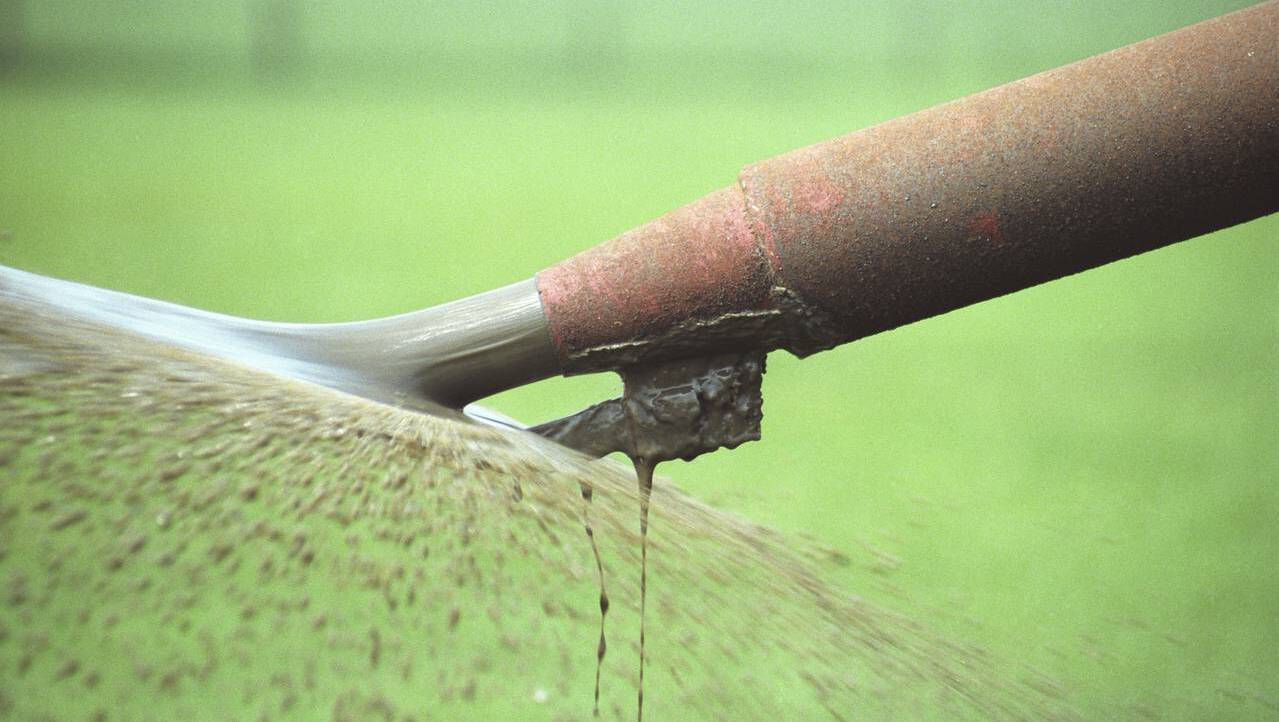
On farm, pretty much all farmers are now spreading slurry via low-emission slurry spreading equipment, either by trailing shoe or dribble bar.
Many farms have signed up for ASSAP and EIP schemes designed to encourage additional measures to protect water bodies. Local county councils have actively carried out inspections on farm, aiming to bring improved compliance.
And yet, despite all of these changes, there is very little improvement in water quality.
The EPA has been crystal clear, spelling out that water quality will not improve unless nutrient pollution is reduced. They say there is no clear sign of long-term reductions in nutrient levels, making it unlikely that we will see meaningful improvements in water quality any time soon.
What's not clear to farmers is if there was 100% compliance in every aspect of the myriad of regulations, would there be a discernible improvement in water quality?
This leaves big questions.
Is farming land in a productive manner, from a farmer's perspective, at a pace that will support farmers to farm in an economically viable manner, actually compatible with meeting water quality targets, particularly where other drivers such as population densities and wastewater infrastructure result in high base loads of nutrients in our water bodies?
How much of the nitrate and phosphorus load in our water bodies would exist from background environmental and population factors if no farming activity was carried on at all?
At a very basic level, pretty much any form of agricultural activity on farmland does, in of itself, cause a nitrogen load and, yes, the more intensive the farming activity, generally the higher the nitrogen load.
From a livestock farming perspective, it is well known that livestock grazing pasture causes a nitrogen loading to groundwater, as urine patches can contain too much nitrogen to be absorbed.
Whether there are 20 cows in one field or 20 cows spread across 20 fields in the same catchment, will water quality improve in what would be perceived to be more extensive farming?
Big questions remain on the direction of travel for Irish farming and for the near-50% of dairy farmers, predominantly smaller farmers, who rely on Ireland's nitrates derogation.
Should we develop a national policy around access to farmland to move farmers away from reliance on the derogation in light of the fact that water quality is not improving at a rate that may be seen as acceptable to our EU peers?
Should we develop a national scheme, backed with financial support, to encourage slurry transfers to reduce nitrogen loadings in particular catchments?
Should a livestock quota be introduced to prevent further increases in overall livestock numbers within particular catchments where water quality is in serious trouble? This, in turn, could see an improvement in land availability within these high-pressure zones, which can be part of the solution.
Heaping more regulations on farmers in a blanket manner hasn't worked.
The EPA report says that sectors must continue to increase the amount and pace of actions to reduce nutrient losses to water nationwide.
As farmers, we've done a lot already for what seems little reward. It's about time that an honest discussion is had between all stakeholders as to our direction of travel and what level of water quality is acceptable or compatible with maintaining an economically viable farming community.
Maybe, arising from the same, we might see some more radical approaches to fixing what seems to be a stubbornly persistent problem.
- Kieran Coughlan is a specialist in farm tax advice and is Principal at Coughlan Accounting & Taxation Services Limited. Kieran is a Chartered Tax Adviser (CTA) and Fellow of ACCA. Kieran is an active member of the Irish Tax Institute Branch Network and is a regular columnist with the Irish Examiner on farming tax and finance issues.