Silage feeding takes 14 hours a week on average, survey finds
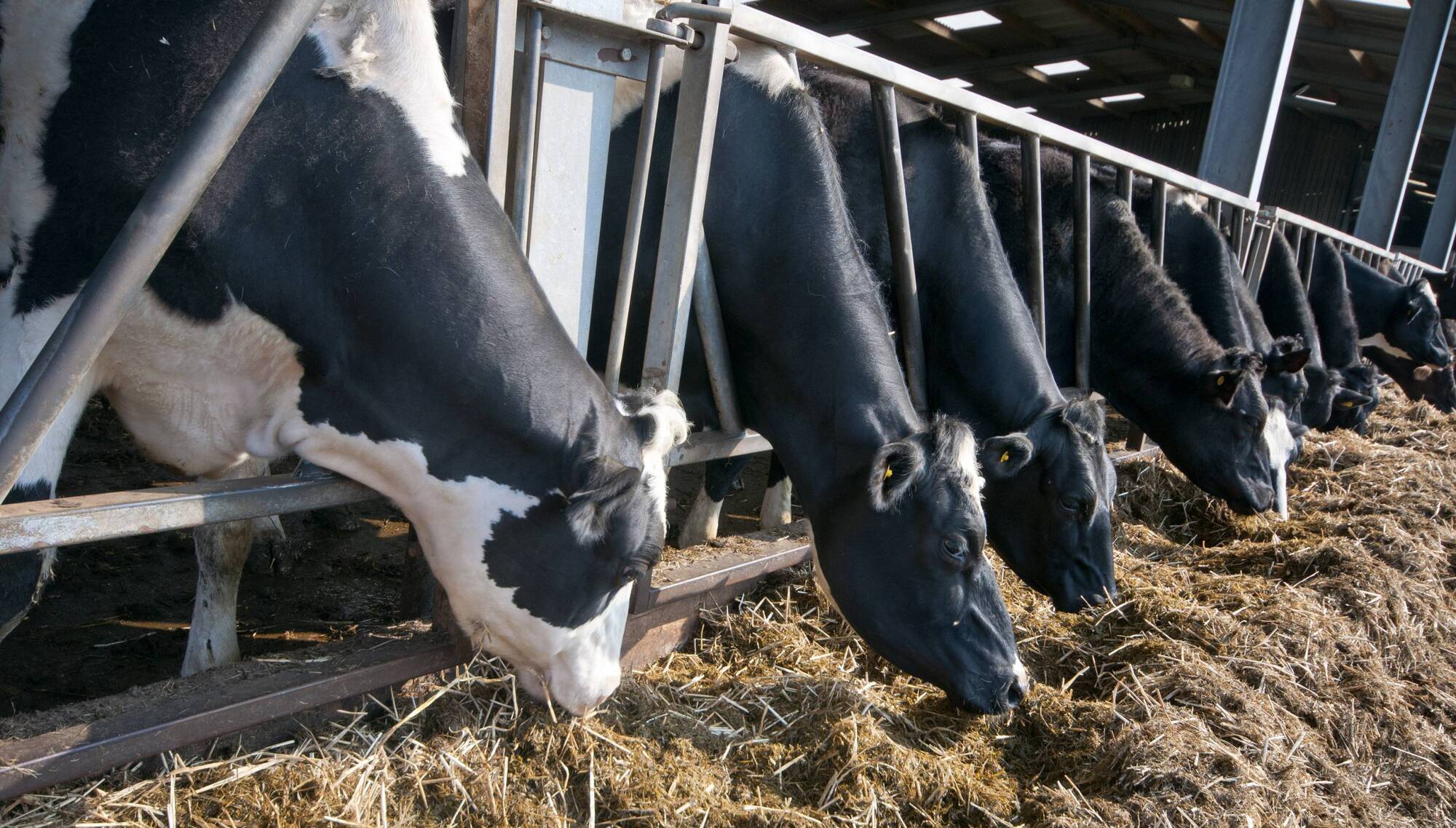
A Teagasc survey finds that feed space, equipment and farm layout can make a big difference to silage feeding time.
Dairy farmers have been urged to analyse their routines, after a survey showed farmers spent an average of 14 hours per week feeding silage, but varying widely from farm to farm.
In a recent podcast, Teagasc dairy specialist Martina Gormley reported the findings from a survey of 70 dairy farmers. On average, they fed the equivalent of eight bales per hour. But this ranged from less than two bales to as high as six tonnes of silage per hour.
The time spent feeding was broken down into minutes per week per livestock unit. “Six minutes was the average time per livestock unit per week in terms of feeding. The most efficient were up on two minutes,” Gormley said.
“Half of the farmers said they didn't have enough feed space. That's going to affect the feed process in terms of how much silage they can feed out and how often,” she explained.
Older sheds may have passageways that are too narrow, or corners, nooks or crannies for feeding. She suggested putting fewer cows into those sheds to make them work better from a cow flow point of view and from a feeding point of view.
Unsuitable equipment was another source of extra work. “Forty percent of the farmers were still using a fork at some stage for some sheds.”
Farmers feeding pit silage were generally using a five-foot shear grab; the biggest used was eight foot. She said many farmers have the horsepower to operate a bigger shear grab that would save time but had not got round to purchasing one.
Feeding bales of silage was labour-consuming for many. “Some farmers have invested in a bale shears or a machine that'll roll out the silage for you. That certainly has saved time. There's a grant available for it,” Gormley said.
“Some farmers were working out of two and three yards. That definitely had a relationship with the amount of time spent feeding,” Gormley said.
One survey question asked the distance silage was being drawn, either from a pit or bales, to the feeding-out location. On some farms, feed was being transported from a considerable distance away.
As a long-term plan, Gormley advocated being able to store sufficient feed in the home yard, ideally beside the sheds.
The number of times per week cattle were fed was another factor influencing labour time. “There were farmers who had enough feed space, but maybe it was a tradition or habit, and they were going in feeding every day.
"I could see in the survey that the farmers that were saving time were feeding every second day, or every third day. So that could be one to consider, if you have enough feed space,” Gormley advised.
To analyse their own feeding routine and target labour bottlenecks, Gormley advised farmers to pick a week when all the cows are in, and time feeding-out, pushing-in and pit management.
She mentioned the case of a farmer who has 173 cows, but only spends five hours per week feeding.
“For him, it's the bales. That's where he needs to make little investments”.