Cork City students champion country values in competition final
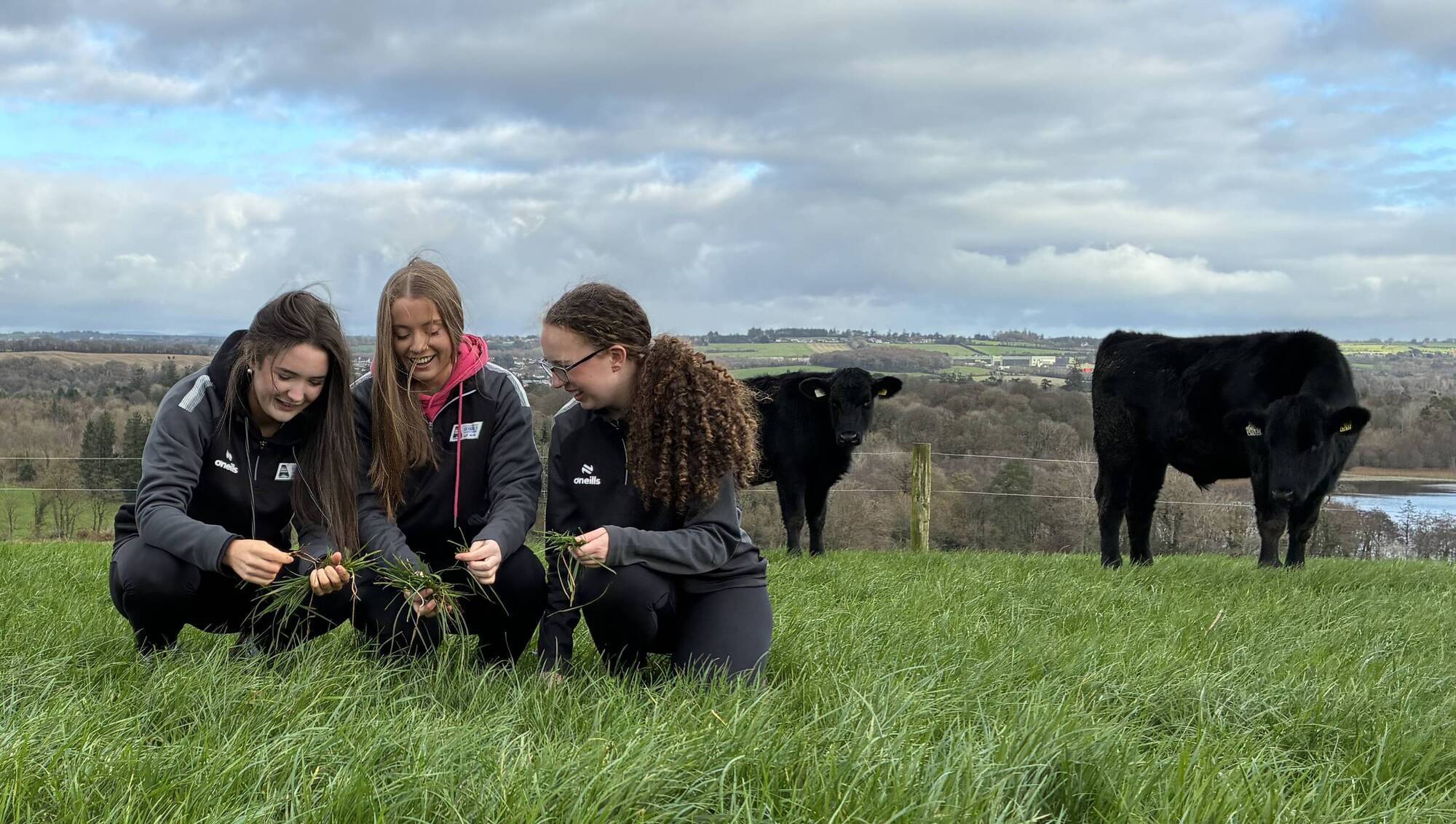
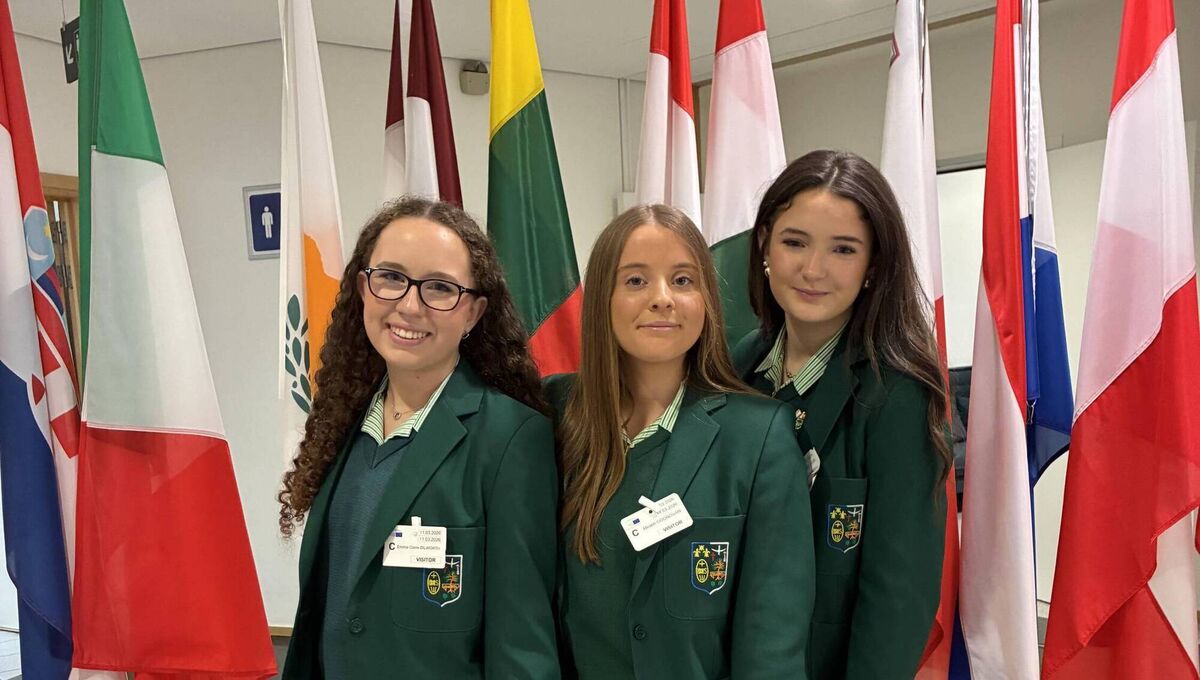
St Angela's College team, from left: Mary-Clare O'Connell, Meabh O'Donovan, and Emma Dilworth, finalists of the 2025-2026 Certified Irish Angus Schools Competition with the Angus cattle they won as finalists.
In an effort to challenge misconceptions in both consumers and farmers on organic beef production in Ireland, a team from Cork City has shot to the final of the Certified Irish Angus schools competition.
Although a city centre school is not the most obvious source of agricultural enthusiasts, the all-women team from St Angela's are trailblazers in class and in their local community.
The team, comprising Emma Dilworth, Meabh O’Donovan and Mary-Clare O’Connell, all come from farming backgrounds, with Ms O’Donovan and O’Connell hailing from dairy farms and Ms Dilworth coming from an organic beef farm.
The team reached the final of this cycle of the competition with their project titled: ‘How organic farm practices can produce sustainable Certified Irish Angus beef’.
Discussing their initial interest in the competition, Ms O’Connell said: “We all come from farming backgrounds, but we have a huge interest in farming… We never ever thought it would take us here and we're so happy we entered.”
The team’s project looked into researching organic farming practices and whether they could be incorporated into conventional farming systems, reducing emissions on farms, increasing biodiversity on farms through multispecies swards, and what effects it may have, the importance of beef in a diet and highlighting women in the agricultural industry.
Read More
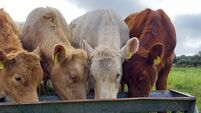
Once reaching the final, the team were gifted their five cattle at the National Ploughing Championships last year. Housed on Ms O’Connell’s home farm, the cattle have become local celebrities dubbed “the Famous Five” by those who know them. The team were also lucky enough to secure a Dairygold sponsorship for their cattle meal.
Discussing how eye-opening and vital receiving the cattle were, the team said being able to apply knowledge collected at events or from speakers and researchers and to determine whether it could apply to their own cattle or help with improving their knowledge was invaluable.
“We had to think like the farmers,” Ms O’Donovan explained. “We can go to different events, and we can see and understand it, and that’s why having the cattle is so important,” Ms O‘Connell added.
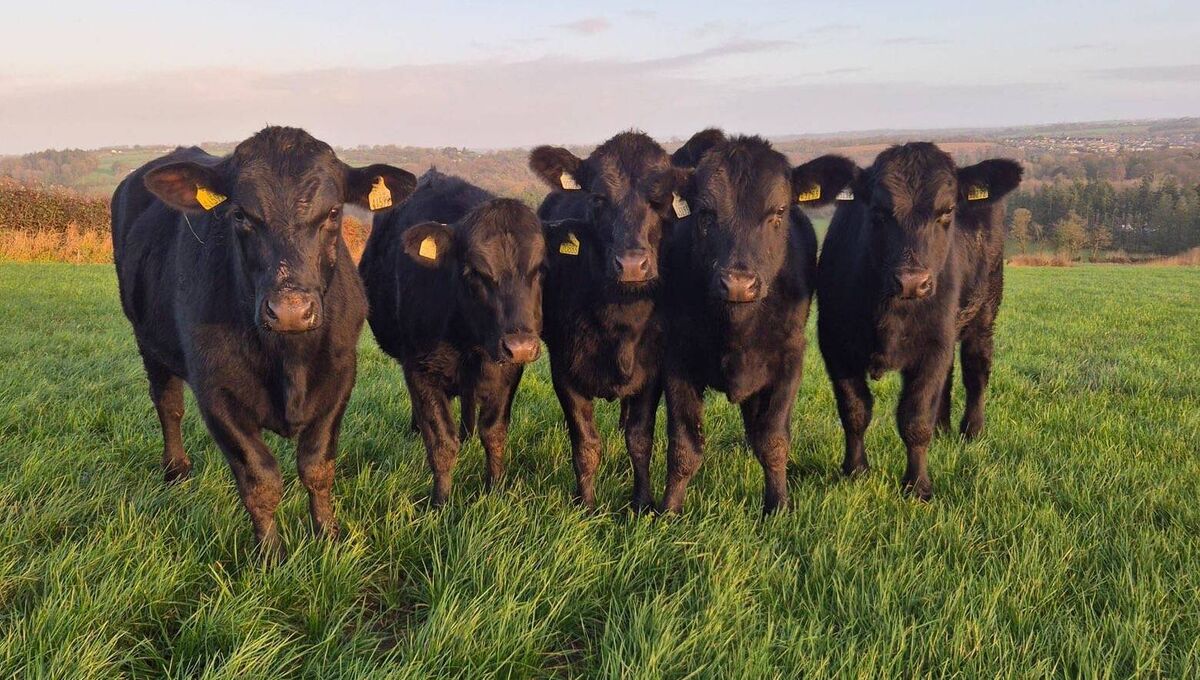
The team, ever the advocates for their research, hosted a naming competition in their school, allowing the teachers to supply one name, the junior cycle supplied two and the senior cycle provided the remaining two. The cattle were subsequently christened: Bull McCabe, Rebel, Killeagh, Ferdinand and Cnoc.
The St Angela’s team all pitched in helping with the feed and upkeep of the Famous Five. The cattle were weighed every 100 days to monitor progress and were scheduled to go to the factory in August.
“It will be really sad to see them go… it was a great hands-on experience,” Ms Dilworth admitted.
Despite educating classmates on the realities from farm to fork, the team explained they were relieved the cattle were going to slaughter in August before school resumed so they could break the news gently to their fellow classmates.
“It’s a part of farming, and we will have to show them that part too,” Ms O’Connell said.
Through their advocacy and tireless work promoting and exposing their city-dwelling peers to a life of agriculture, the team have also boosted interest for St Angela's students to do agricultural science as a subject, with the school subsequently offering it on the curriculum for the first time last year instead of an after-school extra.
Alongside their teachers, Ms O’Donovan and Mr Barry-Murphy, a big supporter of the team's work was their principal and beef farmer, Mr Curran, who has provided a listening ear to the girls over any snags they came across with their project.
The team focused on multispecies swards, red clover, animal health and the environment as the main pillars of their research.
The cattle were monitored: they had faecal samples taken, and the results were then used to determine whether the animals were dosed for coccidiosis.
With their sponsorship from Grasstech and help from FBA Labs, the girls were able to compare organic multi-species sward growing on Ms Dilworth’s farm to conventional perennial-rye grass on Ms O’Connell’s farm, with the multi-species performing similarly to the conventional fertilised grass.
At FBA Labs, the team tested and compared silage samples between conventional silage and organic red clover silage. Through their trials, they found on conventional silage their cattle were putting on 0.4kg/day, but on organic red clover silage they were putting on double at 0.8kg/day.
With their trials, the girls also visually observed more pollinators and biodiversity with the multi-species swards when compared to conventional.
The team contacted local organic farmers, and under the guidance of Kay O’Sullivan, who farms an organic beef suckler and sheep farm out in Mourneabbey in Cork, she was able to offer insight into organics and educate them on soil testing.
Reaching out to other influential women in agriculture, the team spoke with Katherine O’Leary from the , who offered advice to the team, who described Ms O’Leary as a “trailblazer” and “mentor” in helping to navigate their project.
The team also met with Aileen Sheehan, a local teacher and farmer who won FBD Young Farmer of the Year in 2025 as the first woman to win the award, with the team crediting her as a “great inspiration” for them.
While the research focused on biodiversity, animal health, grass growth and nutrition, the students said the biggest lesson they learned was that organic and conventional farming are not as far apart as many people believe.
Throughout the project, the team worked to challenge misconceptions among both farmers and consumers, arguing sustainability does not have to come at the expense of productivity.
For the St Angela's team, it was never about encouraging every farmer to convert to a fully organic system. Instead, they hoped to show small, practical changes could make a meaningful difference on farms of all types.
Their central message is one they hope farmers, consumers and policymakers alike take on board.
Looking back on nearly three years of research, farm visits, presentations and caring for their “Famous Five” cattle, the students believe the future of Irish farming will involve adopting sustainable practices that work alongside existing systems rather than replacing them entirely.
It is a conclusion backed by the team's research as part of the competition and one they hope will encourage more farmers to see sustainability not as a challenge to their businesses, but as an opportunity to strengthen them for the future.