Kieran Coughlan: Lack of major overhaul for Ireland's farm tax relief is welcome (for now)
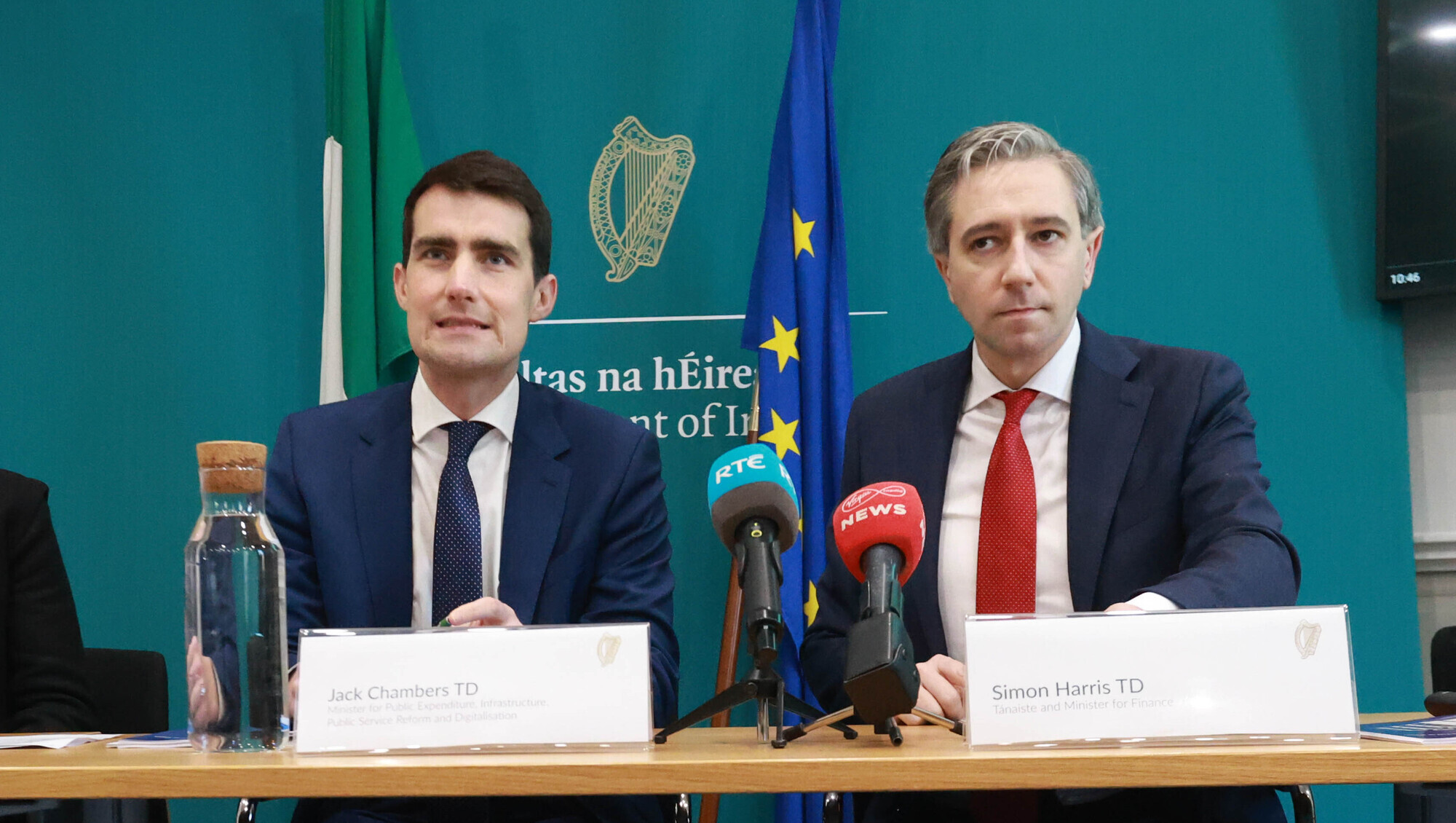
Minister for Public Expenditure Jack Chambers and Tánaiste and Minister for Finance Simon Harris. Picture: Sasko Lazarov / © RollingNews.ie

Following comments from An Taoiseach Micheál Martin recently at the Ploughing Championships, it looks like there will not be a major overhaul of Ireland’s main tax relief allowing for the tax-efficient intergenerational transfer of farm holdings.
As the saying goes, No deal is better than a bad deal, and in that context the Taoiseach's comments are somewhat welcome, as the previous proposals to amend agricultural relief left many undesirable outcomes. To put some scale on the value of the tax break, the tax relief was worth €263m to beneficiaries for the year 2025, with over 1,700 successors availing of the relief in 2025.
The relief is presently uncapped, meaning that transferees who meet the requirements of the relief can have 90% of the value of the benefits they receive disregarded for gift or inheritance tax, and the scope of the relief is quite wide, allowing successors to avail of the relief in both circumstances where they will proceed to farm the land but also in cases where the successor leases out their farm.
There is some disquiet that the farm relief is over generous and this view is further bolstered following pretty serious restrictions now having been introduced in the UK under their main farm relief entitled Agricultural Property Relief.
Figures released by Revenue suggest that at the upper end of the scale, 73 successors were able to avoid gift or inheritance tax on agricultural assets transferred to them in 2025, with a combined value of €240.7m, saving €69m in taxes in the process. For the ordinary farmer with a relatively large farm of, say, 200 to 300 acres, most would agree that agricultural relief or the alternative relief in the case of a going concern called business relief should be available. However, most would also agree that granting relief on the transfer of farm property which has not been farmed by the transferor and will not be farmed by the transferee at an unlimited value is not a desirable outcome for a variety of reasons, including a distortion of the land market.
The UK recently brought in a restriction on the value of land that can be passed with the benefit of Agricultural Property Relief at £2.5m per person. The reliefs work differently in the two countries, and there are aspects of the UK legislation which carry some merit. For instance, inheritance tax applies in the UK only for transfers on or within the 7 years prior to an individual’s death. This rule means that in some instances where a farm is transferred in good time ahead of a person's demise, there is no gift tax and the £2.5m cap is irrelevant.
Taking that UK situation a little further, earlier transfers of land (not on one’s passing) carry the potential for capital gains tax or lock the successor into a latent capital gains tax exposure. Without getting overly technical, the key point here is that the UK system has the capacity to catch the transfer of high-value farmland for at least one tax, either capital gains tax or inheritance tax, whereas the Irish system can allow the intergenerational transfer of high-value farms owned by non-farmers at Nil or super low effective rates of inheritance tax, Nil capital gains tax and Nil stamp duty where land is transferred via an individual's will.
No system is perfect, and the system we have in Ireland has worked well over many years, but in the context of increasing demands for land for non-farming use, and against a backdrop of reduced land ownership by active farmers, and increased reliance on off-farm incomes, the question arises: does Ireland’s tax system sufficiently favour productive and active farmers? Perhaps the government is shying away from interfering with agricultural relief for fear of unintended consequences, but the introduction of a cap, even at a high level of say €6m, would at least allay some concerns that the super-rich are using land as a mechanism to convey wealth efficiently to the detriment of the ordinary farmer.
Steering clear of Agricultural Relief, other less complicated options to reduce the incentives for intergenerational transfers of land by inactive land owners are available to the Government such as restricting the lease land exemption for a maximum period of say 20 years across generations, or introducing a minimum tax rate on lease income – meaning the incentive to hold onto land for its income tax free rent status is reduced with the expectation of creating more churn in the land market.
When introducing the income tax exemption in 1985, the then Minister of Finance Alan Dukes stated the relief was being introduced in order to promote the long-term leasing out of land by persons who are unable to work it to its proper potential, with the exemption applying to a maximum of £2,000 of leasing income obtained each year by a lessor of agricultural land who is over 55 years of age or who is incapacitated. With up to €40,000 of lease income now being exempted per year, and no age restrictions or prior requirements to have farmed the land, is the leased land exemption over-egging the incentive for intergenerational transfer of land by inactive landowners and the super-rich?