EU presidency limits Taoiseach’s hand in CAP fight — Christophe Hansen
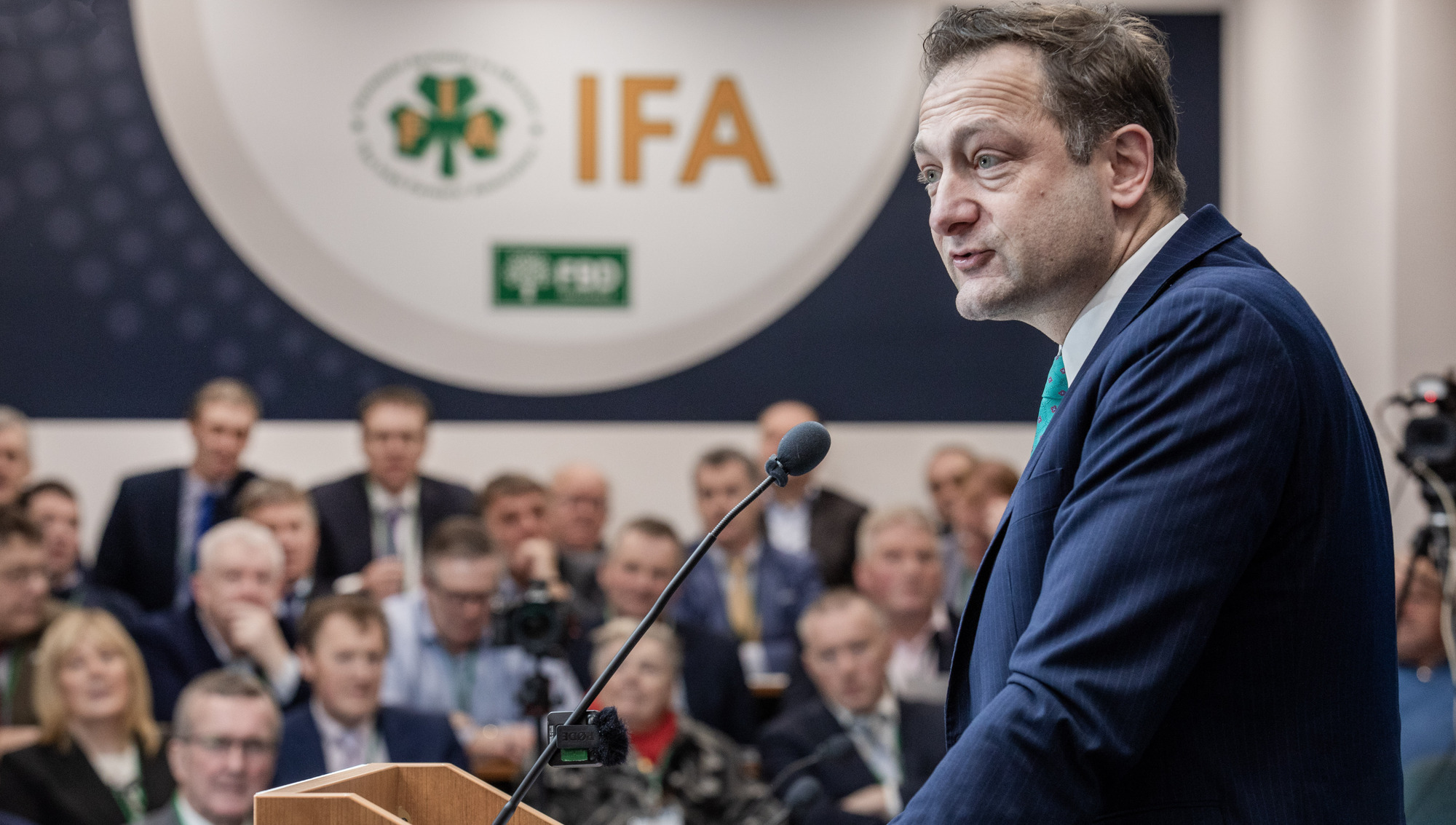
EU commissioner for agriculture Christophe Hansen: 'It’s not always the cheapest option in the short term that will be the cheapest in the long term.' File picture: Finbarr O'Rourke
The Taoiseach cannot simply advance Ireland’s position in negotiations over the future of the Common Agricultural Policy while Ireland holds the presidency of the Council of the European Union, EU agriculture commissioner Christophe Hansen has said.
Mr Hansen was responding to IFA president Francie Gorman’s call for the Taoiseach to lobby harder on behalf of Irish farmers.
“The Taoiseach is now in the difficult situation of the Irish presidency, so he cannot blankly put forward the Irish position,” the commissioner said.
He indicated that attention should instead be focused on persuading countries, including Denmark and the Netherlands, to support a stronger agricultural budget.
ICMSA president Denis Drennan said four issues stood “head and shoulders” above all others in negotiations on the post-2027 CAP.
He identified an adequate CAP budget, effective measures to control price volatility, meaningful simplification and an EU-wide definition of an active farmer as the priorities requiring the most urgent attention.
Mr Drennan said CAP had “lost the thread” of its original purpose of supporting food-producing farmers. He said farmers faced increasing regulation, declining support and an absence of effective measures to address damaging price volatility, while simplification remained a “buzzword” at EU level rather than a reality on farms.
Mr Hansen was also warned that Irish tillage farmers were “going to be decimated”, with no margins remaining in the sector.
Farm representatives described the industry as being in a “crisis situation” and highlighted the particular challenges facing producers in a country on the periphery of Europe.
The commissioner also heard that rising fuel prices were causing major difficulties for farmers.
Responding to those concerns, Mr Hansen said the option that appeared cheapest immediately would not necessarily prove least expensive over a longer period.
“It’s not always the cheapest option in the short term that will be the cheapest in the long term,” he said.
Mr Hansen said Europe had neglected domestic energy production over time and suggested that farmers could contribute to improving energy security.
“We see a lot of potential as well for farmers to be part of the solution when it comes to bioenergy in different forms,” he said.
“I think the farmers can deliver a lot.”