Stephen Cadogan: Did Brussels back the wrong climate battle?
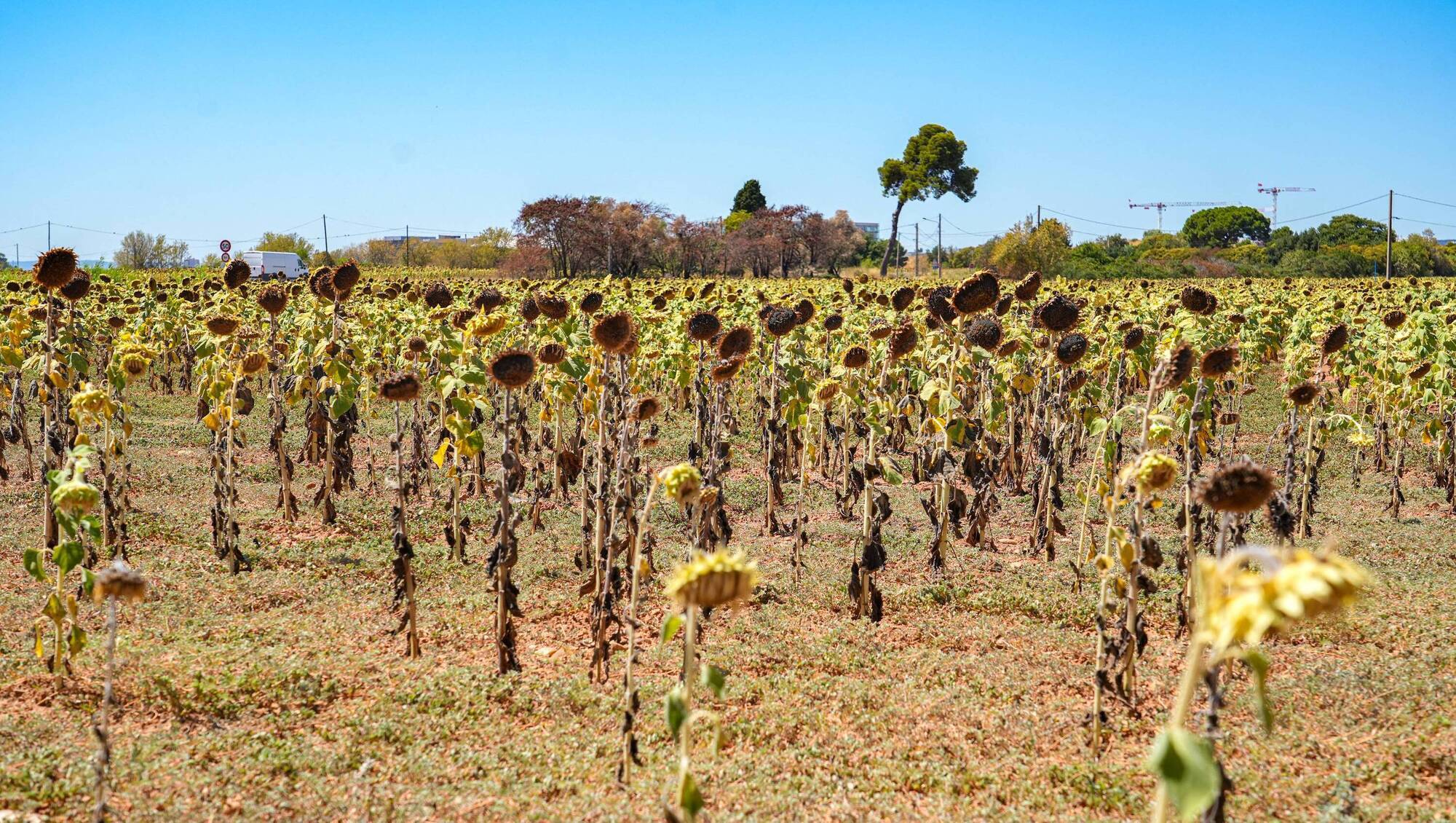
EU farmers are in the front line of the havoc wreaked by record heat and drought. Picture: Nicolas Guyonnet / Hans Lucas / AFP via Getty Images
Fingers are being pointed at Brussels for spending only 18% on adapting the EU to cope with climate change, compared to 72% on trying to slow or stop climate change, and 9% on measures which cover both areas.
As the baking continent now tries to cope, in hindsight it looks like a disastrous breakdown of how €662 billion was to be spent on climate objectives between 2021 and 2027.
With at least 35% of the upcoming seven-year EU budget earmarked for climate and environment measures, how much of that to spend on adapting to a harsher climate is sure to be a burning topic, when budget negotiations resume.
The arrival of another huge area for spending, with adaptation joining competitiveness, digital transformation, defence, accession of new members, regional development, the environment, research and development, energy, etc, could push agriculture funding even further back, not to mention short-term funds to keep drought-ravaged farmers going.
There will be major headaches for Ireland as EU president with the responsibility of steering negotiations, and on into 2027, because of a necessary new emphasis in budget talks on climate (always one of the most sensitive areas of EU decision-making).
With the EU split between members clamouring for more spending, and many of the bigger nations preferring spending cuts, there will be particularly harsh words over climate.
Meanwhile, the rest of the world did little to cut back on greenhouse gas emissions, for fear of the economic cost. For example, India continues to get 70% of its electricity from coal, and together with China, accounts for about 70% of all coal use globally, to drive their economies.
Read More
Many will use that as an argument in EU budget talks for scaling back climate change measures, and diverting spending to adaptation, for example fire breaks, better irrigation systems, reinforced dams and other flood defences, whatever is needed to get the EU through increasingly cruel seasons.
On one side, the more outspoken critics of EU climate action, often found in the right-wing parties getting closer to power, say the EU has been the only region to sacrifice its prosperity on the altar of climate puritanism.
At the other extreme are powerful member states like Germany, committed to a legally binding target of reaching climate neutrality by 2045, putting the emphasis on reducing greenhouse gases via renewable energy expansion and energy efficiency.
But Germany and other leading member states have to face up to heatwaves cutting their economies by significant amounts this year. It is possible that not even the expected eurozone economic growth of just 1% this year can be achieved, such is the heatwave damage.
The record heat and droughts this summer have wreaked havoc across the continent in power production, transport and public health systems, and the effects of wildfires, due to Europe warming faster than on any other continent.
Unfortunately, EU farmers are in the front line. Who would have thought that as the heat brought harvests forward, grape pickers in Spain would start work at 3am under headlamps, for protection from day temperatures of up to 45C?
But the major heatwave economic setback will be in the grain harvest, with the smallest EU maize crop in nearly 20 years expected, and an 8% reduction in wheat and coarse grain yields predicted.